
Reviewed · JERUSALEM OLD CITY TOURS
Private Tour Jerusalem Old City
Jerusalem’s Old City is best understood on foot, and this private tour gives you a guide for your own group as you move from Jaffa Gate to the Western Wall, the Via Dolorosa, and the Church of the Holy Sepulchre. You cover Jewish, Christian, Muslim, and Armenian areas in about five hours, with biblical stories and archaeological remains along the way.
I like the small-group format, which lets you ask questions and adjust the pace more easily than on a large walking tour. I also like the route itself: it connects major sacred places with less famous stops such as the Broad Wall and the Roman Cardo. The main drawback is that five hours is a tight schedule for so much ground, and entrance fees are not included.
Key points to know before booking
- A private group of up to six: The $500 price is charged per group, not per person, making the tour far better value when shared by five or six people.
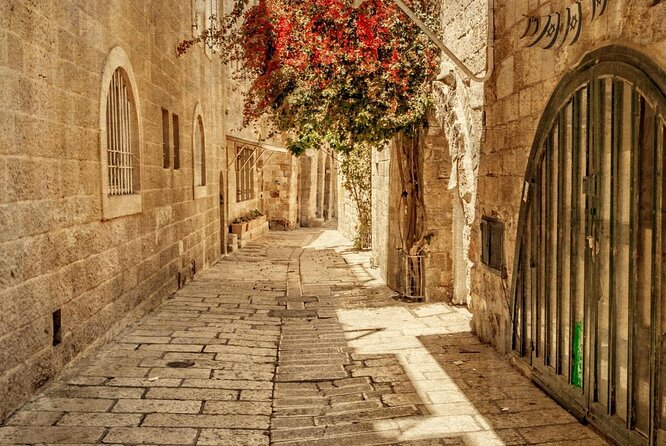
- Four quarters in one walk: You pass through the Armenian, Jewish, Christian, and Muslim quarters, each with its own character and religious traditions.
- Major sacred sites included: The route takes in the Western Wall, Temple Mount area, Church of the Holy Sepulchre, Mt. Zion, and the Via Dolorosa.
- A named guide option: Chava is one guide associated with the experience and is praised for covering many corners of the Old City and helping with a restaurant suggestion.
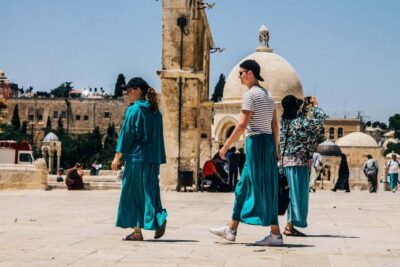
- Dress carefully: Knees and shoulders must be covered for places of worship and selected museums. Shorts and sleeveless tops can lead to refused entry.
- Temple Mount restrictions matter: This stop cannot be visited on Friday, Saturday, or Jewish and Muslim holidays.
Why a private Jerusalem Old City tour can be worth it
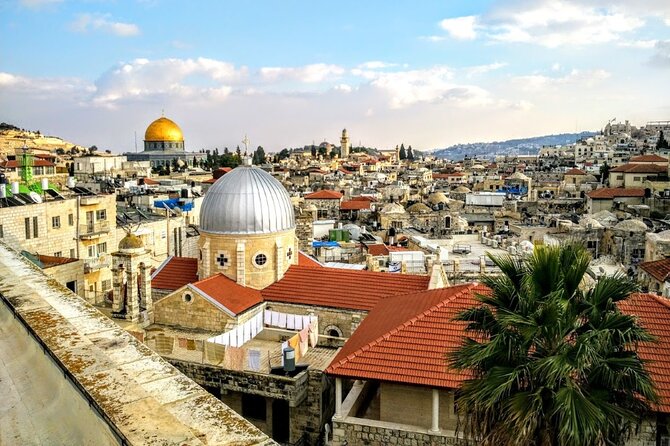
Jerusalem’s Old City is compact on a map but confusing on foot. Streets change character quickly. A commercial lane can lead to a prayer area, an archaeological display, or a small passage with no obvious sign. A private guide helps connect these places instead of leaving you with a string of disconnected photo stops.
This tour is especially useful if you want religious and historical context in the same walk. You move between Jewish, Christian, Muslim, and Armenian sites, while the guide explains how the city’s layers overlap. That matters here because the same hill, wall, or street can carry different meanings for several faiths.
The five-hour length gives you a serious introduction, but it does not allow unlimited time at every stop. The schedule lists several brief visits, along with hour-long periods in the Jewish, Christian, and Muslim quarters. In practice, the route is best understood as a broad orientation walk rather than a slow, museum-style day.
The private format is the biggest advantage. You are not sharing the guide with a coachload of people, and only your group participates. With six people, the cost works out to about $83 per person. For two people, it is $250 each, so the value depends heavily on group size and how much you want personal guidance.
More Private Tours in Jerusalem
- JERUSALEM private tour with ELAD VAZANA – Life in Israel & Palestine Then & Now
★ 5.0 · 115 reviews - Palestine Revealed: 2-Day Private Tour from Jerusalem
★ 5.0 · 110 reviews - Jerusalem Private Full Day Tour
★ 5.0 · 110 reviews
Starting at Jaffa Gate and the Tower of David
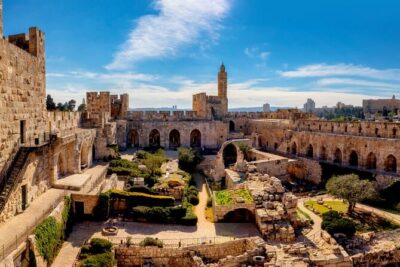
The walk begins at Jaffa Gate, one of the Old City’s eight gates. It is a sensible meeting point because you enter directly into the walled city and immediately encounter the Tower of David.
The tower occupies the remains of defensive structures linked to the palace of Herod the Great. Even if you do not enter the museum, the exterior helps you see Jerusalem as a fortified city rather than simply a collection of religious buildings. Your guide can use this opening to explain how rulers and armies shaped the city’s boundaries.
Allow about 20 minutes here. The stop is free according to the tour details, though the broader booking information advises that entrance fees are your responsibility. If you want to enter a museum or paid site, confirm the cost with your guide before committing to it.
Temple Mount and the city’s most contested ground
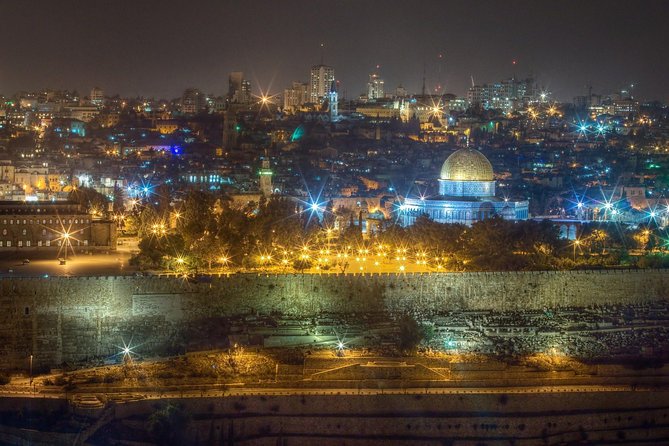
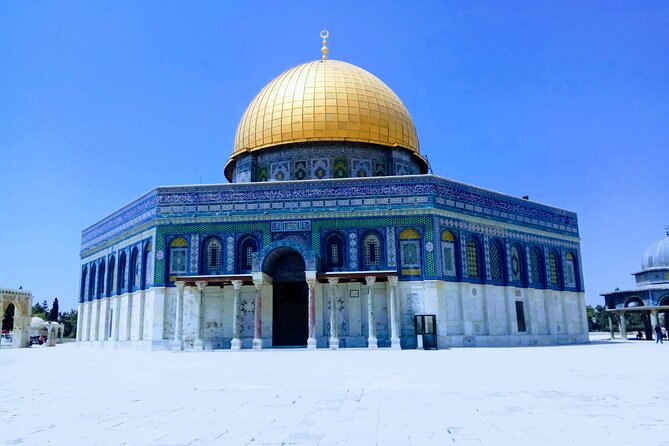
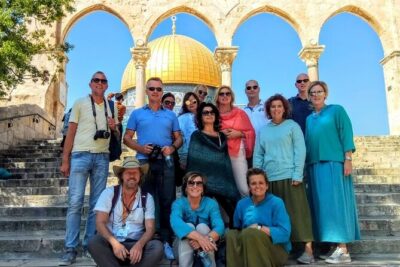
The Temple Mount is one of the most important places on the route. It was the site of the two Jewish Temples, later served as headquarters for European Christian Crusaders, and is now home to the Al Aqsa Mosque and the Dome of the Rock shrine.
You receive about 30 minutes in this area. The value is not only visual. This is the point where Jerusalem’s Jewish, Christian, and Muslim histories meet most sharply, so a guide can provide the context needed to understand why the site matters to several communities.
Access is restricted. The tour specifically notes that this stop is not possible on Friday, Saturday, or Jewish and Muslim holidays. Check your date before booking, especially if this is one of your main reasons for choosing the tour. The rest of the route may still operate, but the Temple Mount portion will not be available on those days.
The Western Wall and the Jewish Quarter
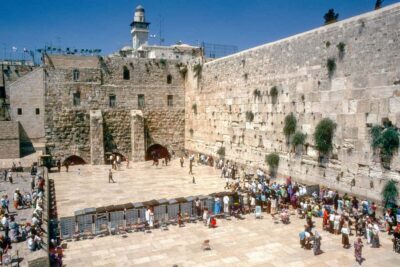
The Western Wall, also called the Kotel, is the most significant prayer site in the world for Jewish people. The visit lasts about 20 minutes, enough to pause, observe, and understand the religious importance of the wall.
You should treat this as a place of worship rather than a quick photo stop. Dress modestly, follow local instructions, and allow people space to pray. The required clothing standards apply to both men and women, with knees and shoulders covered.
The Jewish Quarter receives about an hour in the schedule. This gives the guide more room to explain the area than a short stop at a single monument would. The route also includes the Broad Wall, where archaeology and the Old Testament connect with the days of Hezekiah in the seventh century BC.
The Broad Wall is a useful counterpoint to the famous religious sites. It brings the city’s earlier defensive history into view and shows how much of Jerusalem is understood through a mix of excavated stone, written tradition, and religious memory.
More walks through the Old City:
- Jerusalem: Guided Walking Tour of the Old City
★ 4.7 · 386 reviews - Best seller! Jerusalem old city four quarters tour
★ 5.0 · 123 reviews - All Inclusive Walking Tour Old City Jerusalem
★ 5.0 · 83 reviews - From Tel Aviv: Jerusalem Old City Guided Tour
★ 4.6 · 59 reviews
The Cardo and the Roman city beneath your feet
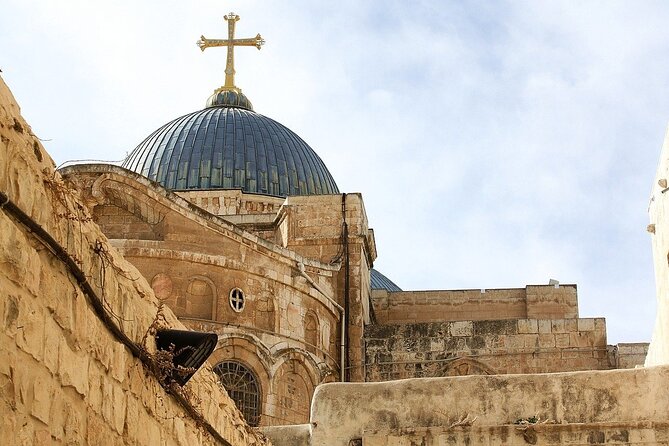
In the Jewish Quarter, you also visit the Cardo. This Roman street once served as a main route for commercial and social activity. Today, it helps you picture Jerusalem as a Roman city with a formal street plan and busy public life.
The scheduled visit is about 10 minutes, so do not expect a long archaeological lecture or extended shopping time. Its strength is as a compact stop that changes your view of the Old City. After seeing sacred walls and prayer spaces, you see the practical structure of daily life in an earlier Jerusalem.
This is one reason a private guide adds value. Without explanation, the Cardo can look like another old passage. With context, it becomes evidence of how the city worked, not just how it worshipped.
Mt. Zion, the Abbey, and the Room of the Last Supper
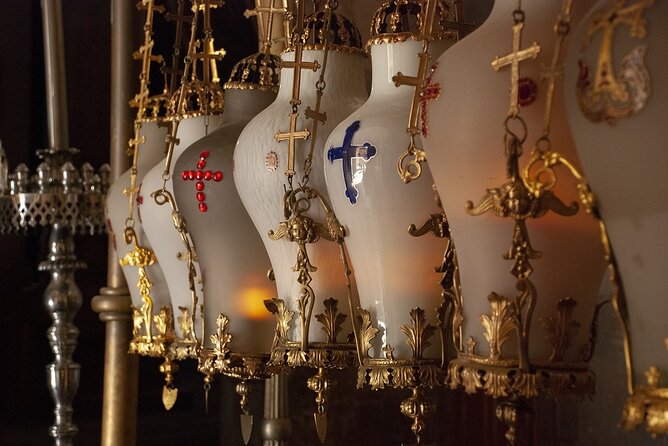
The tour also includes Mt. Zion, where biblical stories and Christian traditions come to the forefront. The itinerary highlights the Dormition Abbey and the nearby Room of the Last Supper.
The Dormition Abbey is tied to Christian tradition and gives the route a quieter religious stop away from the busiest paths. The Room of the Last Supper is another important nearby site, though the supplied details do not promise a private interior visit or include admission fees.
Plan on listening closely here. Sites connected with biblical events often involve layers of tradition, interpretation, and later construction. A good guide should help you understand what is based on archaeology, what belongs to religious tradition, and what has changed over time.
The Via Dolorosa and a rooftop view
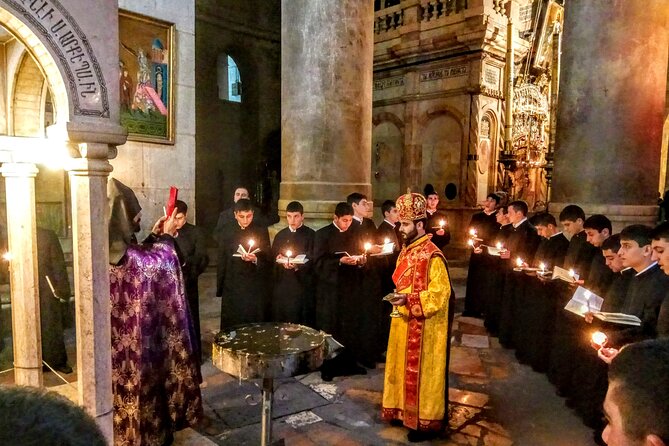
The route follows part of the Via Dolorosa, the path associated with Jesus on the way to his crucifixion. The stop connects with the third station, after a rooftop view of the Mount of Olives from the Austrian Hospice.
That view is a welcome change from the narrow streets. From above, you can better understand the Old City’s position and see how its walls, hills, and surrounding religious sites fit together. The rooftop pause is one of the more unusual details in this tour and gives you a visual break during a long walk.
The Via Dolorosa itself is not a single isolated monument. It is a route through the Christian Quarter and Muslim Quarter, with religious meaning layered onto ordinary city streets. The scheduled portion is about 10 minutes, so expect a concise introduction rather than time at every station.
Four quarters, four different experiences
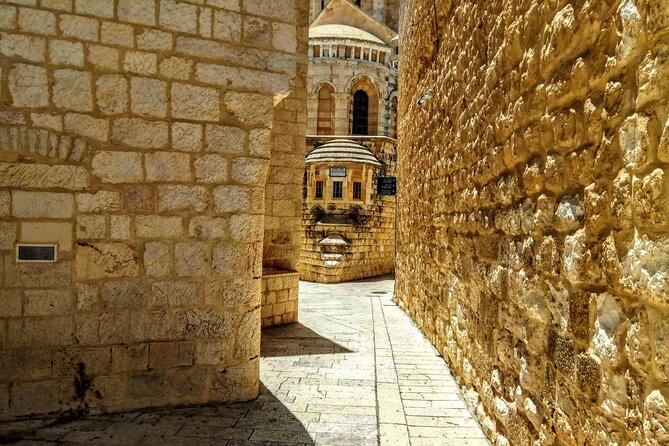
The itinerary includes the Armenian, Jewish, Christian, and Muslim quarters. This is a major strength for anyone who wants more than a single-faith tour.
The Armenian Quarter is one of the four quarters of Jerusalem and receives about 20 minutes. It gives you a look at a community with its own religious and cultural presence inside the Old City.
The Jewish Quarter receives about an hour, partly because it contains the Western Wall area, the Broad Wall, and the Cardo. Here, you see the strongest blend of archaeology, Jewish tradition, and restored streets.
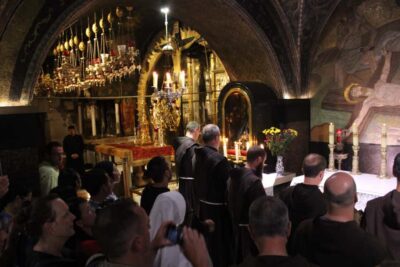
The Christian Quarter also receives about an hour. The Church of the Holy Sepulchre is the key stop. According to Christian tradition, Jesus was crucified on Golgotha and buried in a nearby tomb. The church is tied to the Tomb of the Resurrection, making it one of Christianity’s central places of faith.
The Muslim Quarter receives about an hour as well and overlaps with parts of the Via Dolorosa. The route gives you a chance to see how the Old City’s daily streets and religious sites share the same close quarters.
The quarter sections are not four separate walking tours. They flow into one another, and some major sites sit near boundaries or routes shared by different communities. That overlap is part of the point, but it also means the schedule should be treated as approximate.
The Church of the Holy Sepulchre
The Church of the Holy Sepulchre is one of the tour’s major highlights. Christian tradition identifies this area with Jesus’s crucifixion and burial, and the church remains a central place of Christian faith.
You have about 20 minutes scheduled here. That is enough to enter, take in the setting, and hear the core explanation, but it may feel short if you want to study every chapel or wait in a long line. The tour does not promise guaranteed entry to every section or any included admission.
This is a place where modest clothing is essential. Cover your shoulders and knees, and remember that the same dress standard applies at other worship sites and selected museums on the route.
Food, entrance costs, and walking demands
Food and drinks are not included. A helpful detail associated with the guide Chava is that she has taken a group to an excellent restaurant, but you should treat that as a possible guide recommendation, not part of the package.
Hotel pickup and drop-off are not included either. You meet at Jaffa Gate hostel at Jaffa Gate, and the activity ends back at the meeting point. The location is near public transportation, which makes the start and finish fairly practical if you are staying outside the Old City.
The tour calls for moderate physical fitness. You will be walking through historic streets for about five hours, and the route includes several quarters and religious sites. Even without a stated list of stairs or steep sections, comfortable shoes and water are sensible choices.
Entrance fees are at your own expense. Many of the listed stops show no admission ticket included, but the booking terms clearly place any applicable entry costs on you. Ask what is optional and what is expected before entering a museum or paid site.
Who should book this private walk
I would choose this tour if you want one guide to connect the Old City’s major Jewish, Christian, Muslim, and Armenian sites in a single outing. It suits families, couples, and small groups who prefer to ask questions freely rather than follow a fixed large-group script.
It is also a good fit for a first visit. Jaffa Gate, the Western Wall, the Church of the Holy Sepulchre, the Via Dolorosa, the Cardo, and the four quarters give you a strong first framework for exploring Jerusalem later on your own.
I would think twice if you want long, quiet visits inside each religious building or a museum-focused day. The route covers a lot, and some stops are only 10 or 20 minutes. The Temple Mount restriction is another reason to check your date carefully.
The tour has free cancellation up to 24 hours before the start time. Cancellations or changes made less than 24 hours in advance are not refunded, and the cut-off uses local time.
Should you book the Private Tour Jerusalem Old City?
Book it if your group can share the $500 cost and you value a personal guide, a broad route, and direct help making sense of Jerusalem’s religious and archaeological layers. The strongest feature is the combination of famous sites with smaller stops such as the Broad Wall, Cardo, and Austrian Hospice rooftop view.
For the best value, fill as many of the six places as possible. Check your date against Temple Mount restrictions, dress for worship sites, and expect a brisk walking tour rather than a leisurely visit at every stop. If you want a well-organized first look at the Old City with your own guide, this is a strong choice.
FAQ
How long does the private Jerusalem Old City tour last?
The tour lasts approximately five hours.
How many people can join the private tour?
Each group can include up to six people.
What is included in the price?
A private guide is included. Food, drinks, hotel pickup, hotel drop-off, and applicable entrance fees are not included.
Where does the tour start and finish?
The tour starts at Jaffa Gate hostel at Jaffa Gate and ends back at the meeting point.
Which major sites are included?
The route includes Jaffa Gate, the Tower of David area, Temple Mount, the Western Wall, the Church of the Holy Sepulchre, the Broad Wall, the Cardo, the Via Dolorosa, Mt. Zion, the Dormition Abbey, and the four Old City quarters.
Can the Temple Mount be visited every day?
No. The Temple Mount stop is not possible on Friday, Saturday, or Jewish and Muslim holidays.
What should I wear?
You must cover your knees and shoulders. Shorts and sleeveless tops are not allowed at places of worship and selected museums, and you may be refused entry if you do not follow the dress code.
Is the tour suitable for people with limited fitness?
The tour requires a moderate level of physical fitness because it is a walking tour lasting about five hours.
Just added around Jerusalem
- Tel Aviv & Old City of Jaffa – Tiny group from Tel Aviv★ 4.5 · 9 reviews
- Tel Aviv; Jaffa Old City, Port & Shuk Hapishpishim Walking Tour★ 4.5 · 11 reviews
- Discover the Secrets of the Underground Jerusalem with a private tour★ 5.0 · 4 reviews
- Private Tour : Jerusalem Old City Day Trip from Tel Aviv★ 5.0 · 19 reviews
- Private Tour from Tel Aviv to Jerusalem★ 5.0 · 3 reviews
- Luxury Private Tour to Jerusalem from Tel Aviv★ 5.0 · 22 reviews
- Tel Aviv Airport (TLV) to Jerusalem Hotels – Private Transfer★ 4.0 · 19 reviews
- Palm Sunday in Jerusalem: Mass at Bethpage and Via Dolorosa Procession with Transport from Tel Aviv★ 5.0 · 3 reviews
Jerusalem Old City Tours, compared.
City of David and Underground Jerusalem Day Tour
Read our review →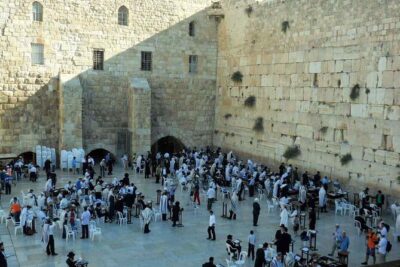
Full-Day Private and Guided Tour of the Jerusalem’s Old City
Read our review →Browse the lists this tour appears in