
Reviewed · JERUSALEM OLD CITY TOURS
Old City of Jerusalem Guided Walking Tour
Jerusalem’s Old City is best understood one sacred site at a time, and this tour brings the major ones together in a single walk. You move from the Church of the Holy Sepulchre to Temple Mount, the Western Wall, Via Dolorosa, and the Arab souk, with a guide explaining why each place matters to different faiths.
I like the cross-religious focus and the fact that guides such as Nimrod, Orna, Shimon, Yoni, and Tania bring different strengths, from storytelling to humor and careful discussion of sensitive subjects. I also like the four-hour route, which gives you a useful first look before you return on your own for more time.
The main drawback is the pace. The Old City is crowded, the group can include up to 30 people, and several stops deserve far more than the allotted minutes. Temple Mount is also closed on Fridays, Saturdays, and various religious holidays, when the tour uses an overlook instead.
Key points to know before booking
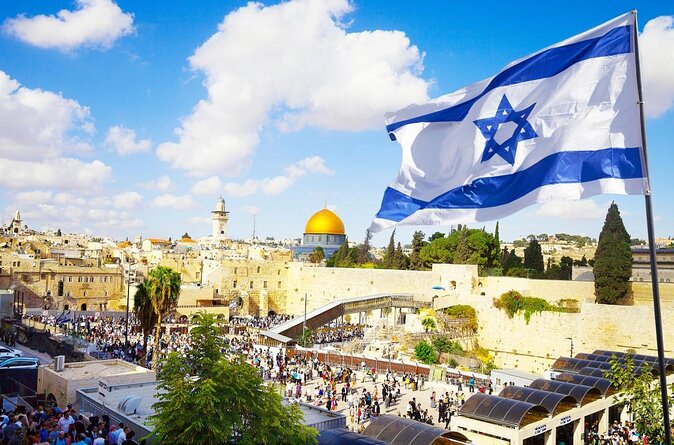
- Five major Old City stops: See the Church of the Holy Sepulchre, Temple Mount, Western Wall, Via Dolorosa, and the Arab souk in one outing.
- Guides make the difference: Past guides including Orna, Yoni, Shimon, Shahar, Yariv, Nimrod, and Tania were praised for storytelling, humor, patience, and clear explanations.
- Sensitive subjects are handled carefully: The tour addresses the importance of Jerusalem to Judaism, Christianity, and Islam without asking you to arrive with a fixed political view.
- Temple Mount has a schedule catch: It is closed to visitors every Friday, Saturday, and during various Muslim and Jewish holidays.
- A brisk four-hour walk: You cover a lot of ground, so comfortable shoes and a willingness to keep moving matter.
- Good value at $45: The price includes the guide, but not food or drinks, and admission to the listed stops is free.
Why this four-hour walk works as a first look at Jerusalem
Jerusalem can feel confusing even when you have a map. Narrow lanes twist through different quarters, sacred buildings sit close together, and every stone seems to carry several names and meanings. A guide gives you a framework, so you are not simply wandering from one famous doorway to the next.
This route is especially useful if you have just arrived in the city. It introduces the Christian Quarter, the Temple Mount area, the Jewish Quarter, the Via Dolorosa, and the Muslim Quarter souk without requiring you to plan the order yourself.
The tour is not designed for long, quiet visits at every site. Its value comes from connection. You learn how the locations relate to one another, then you can return later to the places that caught your attention.
The group limit is 30 people. That is not a private walk, and crowds inside the Church of the Holy Sepulchre can make listening difficult. Still, guides have used headsets and earpieces for groups, which can help when the lanes are noisy or the group spreads out.
More Walking Tours in Jerusalem
- Jerusalem: Guided Walking Tour of the Old City
★ 4.7 · 386 reviews - All Inclusive Walking Tour Old City Jerusalem
★ 5.0 · 83 reviews - Jerusalem Walking Tour: In the Footsteps of Jesus
★ 4.5 · 67 reviews
Church of the Holy Sepulchre: the emotional center
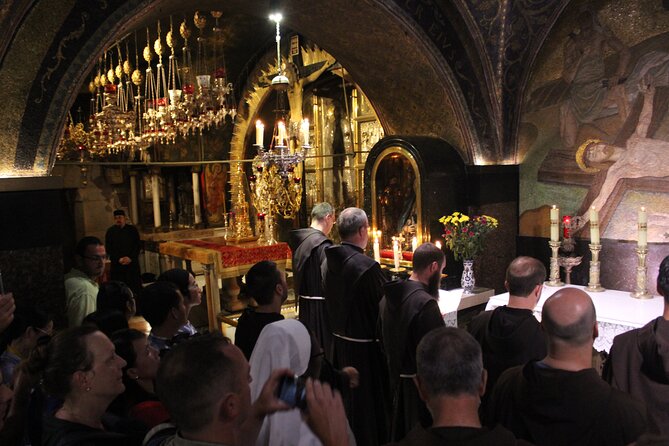
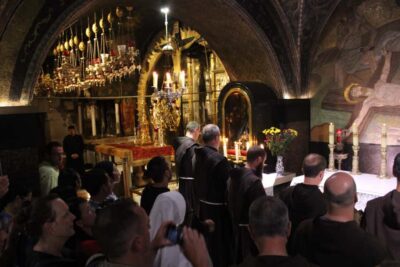
The Church of the Holy Sepulchre is in the Christian Quarter and is believed to contain two of Christianity’s holiest places: the site of Jesus’s crucifixion and the tomb where Christians believe he was buried and resurrected.
The church is not a simple, open hall where you can take in everything at a glance. It is a complex of chapels and sacred points, with several Christian traditions sharing responsibility for the building. The setting can feel crowded and intense, especially when groups gather near the most important shrines.
The scheduled 45 minutes gives your guide enough time to explain the central beliefs and point out the major areas. It may not give you enough time for a slow personal visit, prayer, or a long wait at a particular site.
I would treat this stop as an introduction rather than a final visit. Listen closely to the explanation, note what you want to see again, and return later if the church speaks to you. The guide’s context is particularly valuable here because the building’s importance is not obvious from its busy interior.
Temple Mount: the tour’s most important timing issue
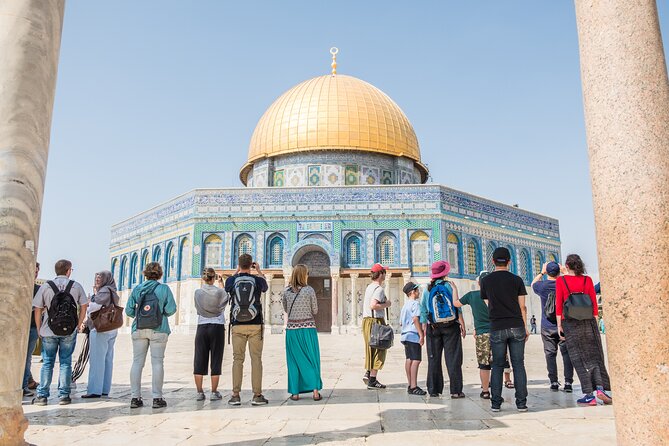
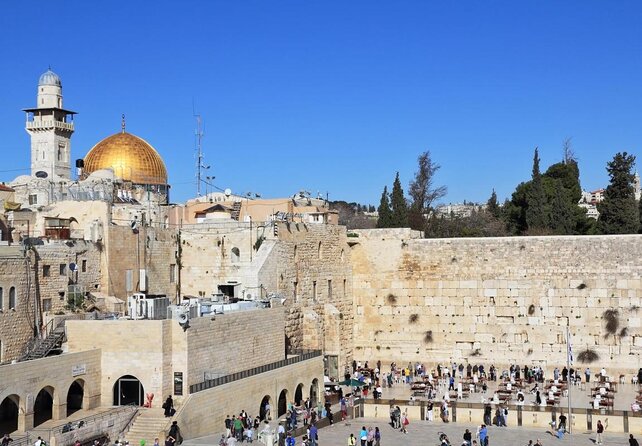
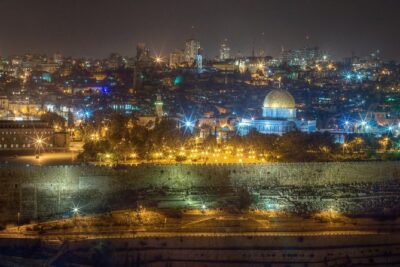
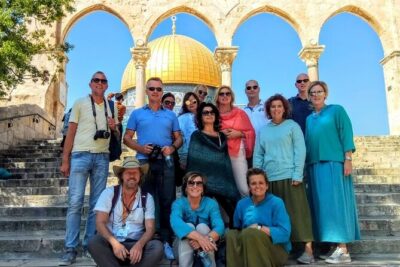
Temple Mount is a hill in Jerusalem’s Old City revered by Judaism, Christianity, and Islam. It includes the area associated with the Dome of the Rock and Al-Aqsa Mosque, making it one of the most important and sensitive religious sites in the world.
The scheduled hour makes this the longest stop. That extra time matters. The site requires more than a quick photograph because its meaning changes depending on the faith and historical period being discussed. A careful guide can explain those overlapping connections without reducing the place to a single religious story.
This is also the point where the calendar matters most. Temple Mount is closed to visitors every Friday, Saturday, and during various Muslim and Jewish holidays. On those dates, the tour replaces the visit with a viewpoint overlooking the area.
That alternative can still help you understand the site, but it is not the same as entering Temple Mount. Check the date before booking if this stop is one of your main reasons for taking the tour.
The Temple Mount section also shows why a good guide matters. One guide, Shahar, was praised for presenting sensitive issues in a neutral way and with humor. That balance is useful here, where careless wording can distract from the place itself.
Western Wall: a living place of prayer
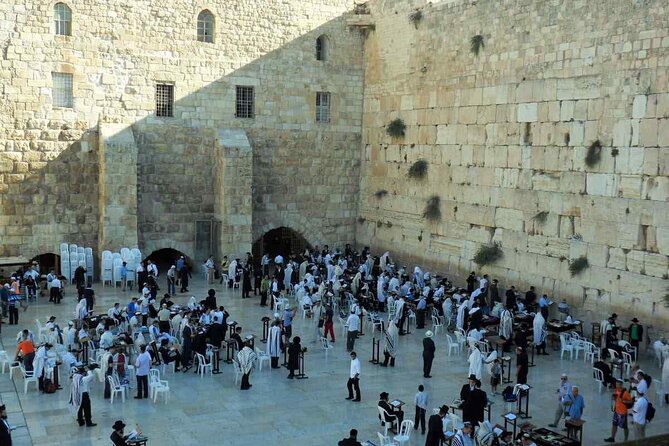
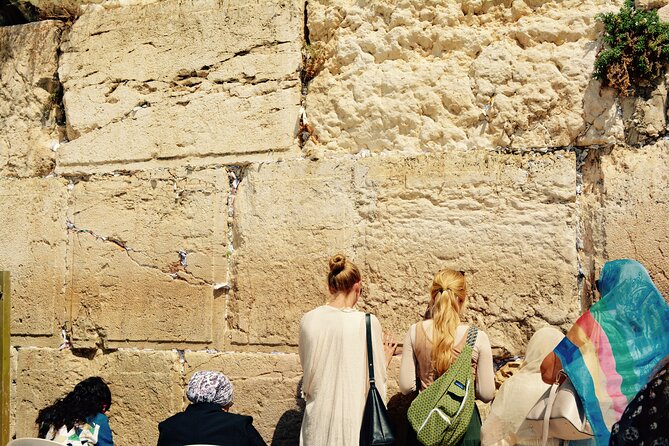
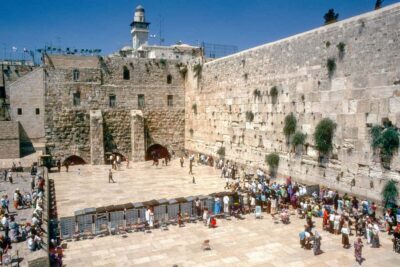
The Western Wall is the holiest place where Jews are permitted to pray. It is an ancient limestone wall that formed part of the expansion of the Second Jewish Temple begun by Herod the Great.
The 45-minute visit allows time for explanation and observation. Unlike a site that exists mainly as a museum piece, the Western Wall remains an active place of prayer. You are not just looking at old masonry. You are seeing a place used by people for worship, reflection, and religious occasions.
Your guide can help you understand the wall’s connection to the former temple complex and its importance in Jewish life. The visit also gives you a chance to notice how the mood changes from the narrow market lanes to the open prayer area.
Remember that this is a sacred place, not simply a photo stop. Follow the guide’s instructions and watch how people around you are using the space. The tour provides the setting and explanation, but your own quiet observation can be just as useful.
More walks through the Old City:
- Best seller! Jerusalem old city four quarters tour
★ 5.0 · 123 reviews - Private Tour Jerusalem Old City
★ 5.0 · 118 reviews - From Tel Aviv: Jerusalem Old City Guided Tour
★ 4.6 · 59 reviews - City of David and Underground Jerusalem Day Tour
★ 4.5 · 53 reviews
Via Dolorosa: following a processional route
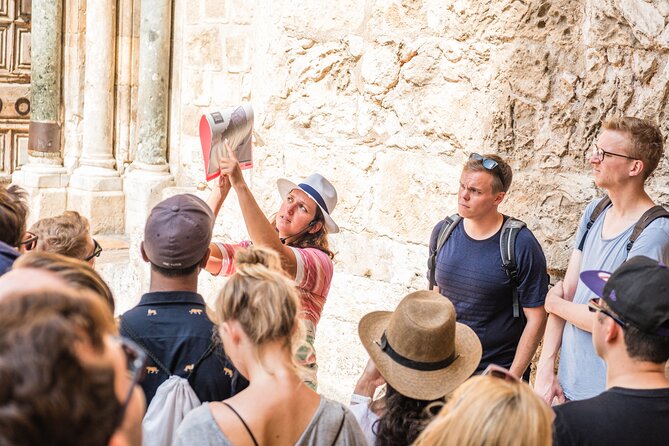
The Via Dolorosa is a processional route through the Old City. It represents the path Jesus is believed to have taken under Roman guard on the way to his crucifixion, from the former Antonia Fortress toward the Church of the Holy Sepulchre.
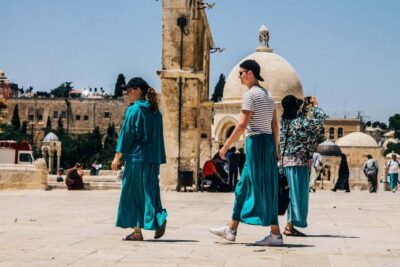
The route is scheduled for 30 minutes. That is enough for an overview, especially because the street itself is part of the experience. You move through an ordinary Old City setting of shops, doorways, and passing pedestrians while considering its place in Christian devotion.
This stop works best when your guide explains how the route relates to the church and to the traditional Stations of the Cross. Without context, it can be easy to see only a narrow lane. With context, the walk becomes a link between the city’s streets and Christian pilgrimage.
The short time also means you should not expect a full devotional pilgrimage. Think of it as a guided orientation to the route. If it matters to you personally, you may want to walk it again at a slower pace after the tour.
Al Souq: Jerusalem beyond the monuments
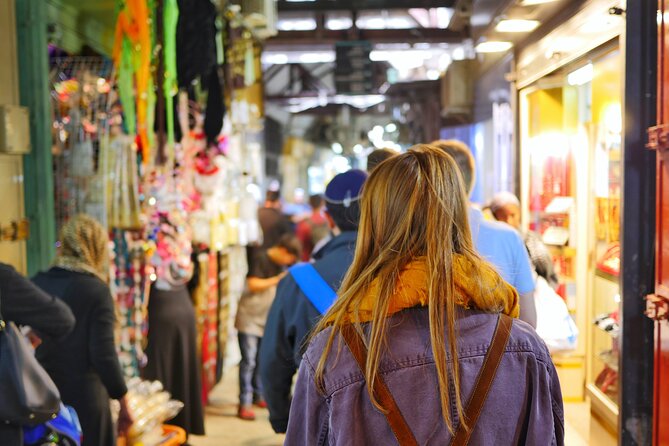
The Old City souk, also called the Arab Souq or Suq El-Bazar, is a large bazaar within the Old City. This 30-minute stop adds daily life and commerce to a route otherwise centered on sacred buildings.
I like this part because it keeps the tour from becoming a procession of famous religious sites only. You see the city as a place where people shop, work, eat, and pass through, not just as a collection of monuments.
Thirty minutes is enough to get your bearings and notice the character of the market, but it is not a serious shopping session. Food and drinks are not included, so any purchases are your responsibility. Some guides have offered restaurant suggestions, including places in the Muslim Quarter, which can be useful if you plan to eat after the walk.
Keep your group in sight. A souk is a poor place to drift away from a guided party, especially when the lanes are crowded and the schedule is tight.
The guides shape the experience
The operator uses different guides, so the tone will depend on who leads your walk. The strongest guide descriptions point to a clear pattern: storytelling, historical context, humor, patience, and an ability to discuss religion and politics with care.
Orna was praised for bringing history to life and using a headset with earpieces for a group of 16. Yoni was described as engaging and funny, with a talent for holding attention from beginning to end. Shimon focused on the holiness of each location and the importance of Jerusalem to several religions.
Other guides bring different strengths. Yariv kept a group moving despite the crowds and offered restaurant advice. Tania provided detailed explanations across the Old City. Nimrod was singled out for patience and consideration, while Shahar was appreciated for small details, humor, and a measured approach to difficult subjects.
You cannot assume you will receive a particular guide unless the operator confirms it. Still, the range of names and praise suggests that the guide is central to the experience, not a minor addition to the route.
Is $45 a fair price?
At $45 per person, the tour is reasonably priced for a four-hour guided walk through the Old City. Admission to the listed stops is free, so you are paying mainly for the guide’s time, route planning, explanations, and help with the practical challenge of moving a group through a crowded historic center.
The value is strongest if this is your first visit to Jerusalem or if you want a clear introduction before exploring alone. A good guide can save you from spending half a day trying to work out what you are seeing and why it matters.
The value is weaker if you prefer long, unhurried visits at each place. You might find the schedule too compressed, particularly at the Church of the Holy Sepulchre and Western Wall. In that case, use the tour as a first pass and return independently.
Food and drinks are not included. That keeps the base price clear, but you should plan for your own refreshments before or after the walk.
Meeting point, group size, and walking demands
The tour begins at Omar Ben el-Khatab Street 26 in Jerusalem and ends back at the meeting point. It is near public transportation, which makes it practical if you are staying elsewhere in the city.
The activity lasts about four hours. You will be walking through old lanes and crowded areas, with stops for explanations. Most people can participate, but the route is not a sit-down sightseeing experience.
A maximum of 30 people keeps the tour from becoming enormous, but it is still large enough that you need to stay alert and close to the guide. Crowds inside the Church of the Holy Sepulchre can make the group harder to manage.
Book ahead if your schedule is fixed. The experience is booked, on average, 49 days in advance. You receive confirmation when booking, and the mobile ticket makes the entry details easy to keep on your phone.
Free cancellation is available up to 24 hours before the start time. Cancellations within 24 hours are not refunded. The tour also requires suitable weather and a minimum number of participants. If poor weather or low enrollment cancels it, you are offered another date or a full refund.
Who should book this Old City tour?
I would recommend it to first-time visitors who want the major religious and historic locations explained in a sensible order. It is also a good choice for families with older children. One group found the format suitable for daughters aged 11 and 13, though the four-hour length still calls for patience and comfortable shoes.
It suits you if you want stories and context rather than only photographs. The guides bring in theology, politics, history, local customs, and practical restaurant advice, giving you more to think about after the walk.
It may not suit you if you need a private guide, dislike crowds, or want to spend an hour quietly inside each major site. The maximum group size and tight schedule are real limitations.
Should you book it?
Book this tour if you want a strong first orientation to Jerusalem’s Old City for $45. The route covers the sites most people hope to see, and the best guides turn a difficult city to read into a series of understandable connections.
Before booking, check the date for Temple Mount access. If your visit falls on Friday, Saturday, or a listed Muslim or Jewish holiday, you will see the area from a viewpoint instead.
My advice is to take the tour early in your stay, then return on your own to the Church of the Holy Sepulchre, Western Wall, or souk that deserves more time. Used that way, this is not a complete Old City experience. It is a useful, well-priced beginning.
FAQ
How long does the Old City of Jerusalem tour last?
The tour lasts approximately four hours.
How much does the tour cost?
The price is $45 per person.
Where does the tour begin?
The meeting point is Omar Ben el-Khatab Street 26 in Jerusalem.
Where does the tour end?
The activity ends back at the meeting point.
What sites are included?
The route includes the Church of the Holy Sepulchre, Temple Mount, the Western Wall, the Via Dolorosa, and Al Souq.
Is admission to the sites included?
Admission tickets are listed as free for the stops on the route. The tour includes a guide, but not food or drinks.
Is Temple Mount always open during the tour?
No. Temple Mount, including the Dome of the Rock and Al-Aqsa Mosque, is closed to visitors every Friday, Saturday, and during various Muslim and Jewish holidays. A viewpoint overlooking Temple Mount is included instead.
How large can the group be?
The tour has a maximum of 30 participants.
Is the tour close to public transportation?
Yes. The meeting point is near public transportation.
Can I cancel for a full refund?
Yes, if you cancel at least 24 hours before the experience start time. Cancellations made less than 24 hours in advance are not refunded.
Just added around Jerusalem
- Tel Aviv & Old City of Jaffa – Tiny group from Tel Aviv★ 4.5 · 9 reviews
- Tel Aviv; Jaffa Old City, Port & Shuk Hapishpishim Walking Tour★ 4.5 · 11 reviews
- Discover the Secrets of the Underground Jerusalem with a private tour★ 5.0 · 4 reviews
- Private Tour : Jerusalem Old City Day Trip from Tel Aviv★ 5.0 · 19 reviews
- Private Tour from Tel Aviv to Jerusalem★ 5.0 · 3 reviews
- Luxury Private Tour to Jerusalem from Tel Aviv★ 5.0 · 22 reviews
- Tel Aviv Airport (TLV) to Jerusalem Hotels – Private Transfer★ 4.0 · 19 reviews
- Palm Sunday in Jerusalem: Mass at Bethpage and Via Dolorosa Procession with Transport from Tel Aviv★ 5.0 · 3 reviews
Jerusalem Old City Tours, compared.
City of David and Underground Jerusalem Day Tour
Read our review →
Full-Day Private and Guided Tour of the Jerusalem’s Old City
Read our review →Browse the lists this tour appears in