
Reviewed · JERUSALEM OLD CITY TOURS
Tel Aviv & Old City of Jaffa – Tiny group from Tel Aviv
Tel Aviv’s modern story makes the most sense when you walk it toward ancient Jaffa. This small-group tour links Neve Tzedek, the city’s first neighborhood, with Bauhaus Tel Aviv, a converted railway station, and Jaffa’s old port streets in about three hours. You get a useful first look at both cities without spending half the morning collecting people from hotels.
I like the maximum of 10 participants, which should make it easier to ask questions and keep the walking pace sensible. I also like the route itself: Neve Tzedek, HaTachana, and Jaffa form a clear story from new city to old port. The main caution is the price, $139 per person, which is a serious outlay for a walking tour that does not include food or drinks.
Key points to know before you book
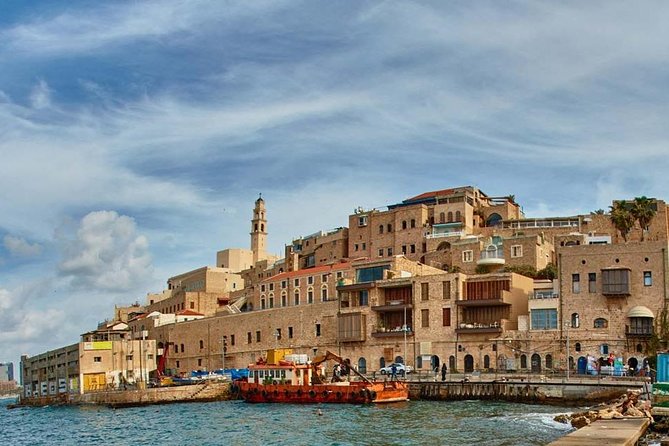
- The route connects two very different places: Tel Aviv’s early neighborhood and Jaffa’s ancient port district.
- Small groups are capped at 10 people, with a minimum of three required for the tour to operate.
- The White City explanation adds value: the guide puts Tel Aviv’s Bauhaus buildings and UNESCO status into context.
- The tour ends in Jaffa, at the Clock Tower, leaving you in a useful spot to continue exploring.
- Expect a three-hour walking experience: comfortable shoes are important, and winter weather may call for warm clothing and an umbrella.
- The price is easiest to justify if context matters to you, not if you only want a quick list of sights.
Why this route works for a first look at Tel Aviv

Tel Aviv can feel scattered at first. The beach, modern streets, early neighborhoods, market areas, and historic Jaffa do not form one tidy old town. This tour solves that problem by giving you a simple line to follow, from the southern side of Tel Aviv into Jaffa.
You begin at the Dan Panorama Tel Aviv on Kaufmann Street at 10:00 am. From there, the route is on foot. That matters because the city’s character changes block by block, and a bus ride would skip the small details that make Neve Tzedek worth seeing.
The experience is sold as a three to four hour tour, while the itinerary gives a three-hour duration. I would plan on at least three hours and keep some extra time afterward, especially if you want lunch or a longer look around Jaffa.
The guide is a licensed professional, and the strongest part of the experience is meant to be explanation rather than admission to a paid site. You are paying for the route, the historical connections, and the chance to ask questions in a small group.
More walks through the Old City:
- From Tel Aviv: Jerusalem Old City & Dead Sea Guided Day Tour
★ 4.4 · 389 reviews - Jerusalem: Guided Walking Tour of the Old City
★ 4.7 · 386 reviews - Best seller! Jerusalem old city four quarters tour
★ 5.0 · 123 reviews
Neve Tzedek, Tel Aviv’s first neighborhood
Neve Tzedek is the right opening chapter. The tour focuses on the neighborhood’s local houses and its distinct personality, rather than treating it as just another modern Tel Aviv street.
The value here is visual. You get an early sense of how Tel Aviv began before the city spread outward. The houses provide a contrast with the later Bauhaus apartment blocks, and the short walk helps you notice the difference between a neighborhood built around smaller homes and a city later shaped by modernist architecture.
The route includes the Suzanne Dellal Centre, a cultural center in the old neighborhood. This stop adds a present-day layer to the story. You are not only looking at preserved or adapted buildings, but also seeing how an older part of the city has found a new cultural role.
I would pay attention to the guide’s explanation here. The buildings alone may take only a few minutes to see, but the point is understanding how Neve Tzedek fits into Tel Aviv’s early growth. One of the best comments about the tour praised the way the guide explained modern Israel in the context of the region’s much older past. That is the kind of connection to listen for.
HaTachana and the railway story
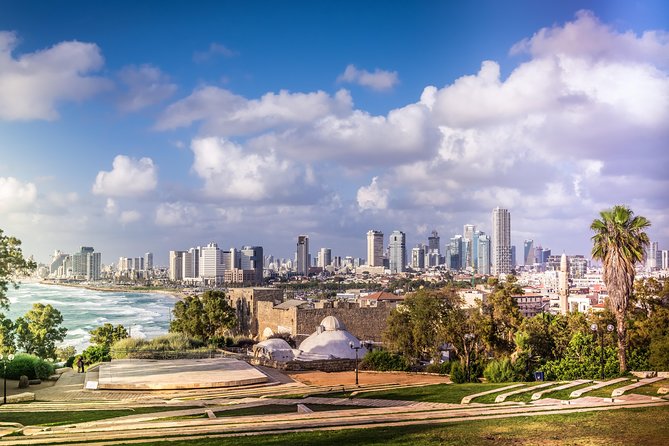
From Neve Tzedek, the tour continues to HaTachana, the old railway station from the 19th century. Its structures have been converted for modern use, so this is not simply a stop at a ruin or a closed transport site.
HaTachana gives the route a useful change of pace. Neve Tzedek is about homes and neighborhood identity. HaTachana points to movement, trade, and the links between Tel Aviv and Jaffa. The converted buildings also show how an old transport site can be given a new purpose without losing its visual character.
The itinerary describes the station as having unique structures, but the exact amount of time spent there is not specified. You should expect an exterior and area visit within the walking route, not a separate museum program with a long indoor presentation.
This is also where the tour’s small size can help. A group of up to 10 people is easier to keep together around a compact historic site than a large coach group. If you have a question about the station or the shift from old Jaffa to modern Tel Aviv, you are more likely to get a direct answer.
Seeing Tel Aviv’s White City on foot
Tel Aviv’s Bauhaus buildings are one of the tour’s central subjects. The White City designation is tied to the city’s large collection of modernist buildings, and the guide explains why the area received UNESCO World Heritage status.
This is not just an architecture checklist. The useful question is why these buildings matter and how they help explain Tel Aviv. A guide can point out the clean lines, practical forms, and shared visual traits that make the city’s architecture different from the older houses of Neve Tzedek and the Ottoman structures of Jaffa.
The tour does not list a precise set of Bauhaus buildings or a dedicated architecture museum visit. That makes the guide’s commentary especially important. The quality of this section will depend on how clearly the guide links what you see to the city’s development.
I like this part for first-time visitors because it gives you a way to keep noticing buildings after the tour ends. You may not remember every architectural term, but you should come away with a clearer sense of why Tel Aviv is often called the White City.
More of Old Jaffa on foot:
- Tel Aviv Jaffa Guided Bike Tour
★ 4.5 · 178 reviews - Tel Aviv: Jaffa Half-Day Walking Tour
★ 4.5 · 70 reviews - Tel Aviv: Florentin Saturday Walking Tour
★ 3.5 · 65 reviews - Tel Aviv: Jaffa & Carmel Market Walking Tour
★ 4.7 · 60 reviews
Entering Jaffa through the Clock Tower
The tour ends at Jaffa’s Clock Tower on Yefet Street. This is a practical finish because the Clock Tower is an easy landmark and places you right at the edge of the Old City.
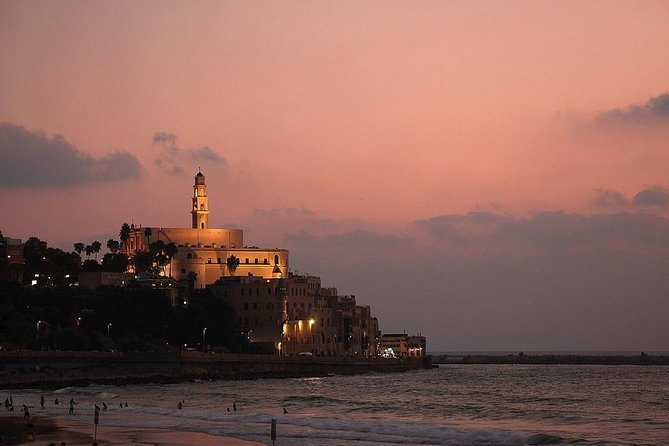
Jaffa is presented as one of the oldest cities in the world and as an ancient port. Its value on this tour is the contrast with Tel Aviv. The newer city is associated with planned growth, modern architecture, and the White City. Jaffa brings you into older streets and buildings shaped by Ottoman rule and a much longer urban story.
The Clock Tower is an obvious meeting point, but it is also a useful marker for understanding the district. From here, the tour moves into the Old City, where the streets and structures feel different from the planned areas of Tel Aviv.
The route includes the Ottoman Seraya building. This is a specific detail worth remembering because it keeps the Jaffa portion from becoming a generic old-town walk. The guide can place the building within the Ottoman period and show you how that era remains visible in the city.
What you get from the Old City walk
The Jaffa section is where the tour’s broad historical idea comes together. You have already seen Tel Aviv’s early neighborhood, its railway connection, and its modernist buildings. Jaffa then provides the older setting that gives the whole area its depth.
I would use this portion to ask practical questions about what to see after the tour. One guide was specifically praised for pointing out places in Jaffa worth exploring later. That is useful because the tour ends before you have exhausted the Old City, and the final stop puts you in a good position to continue on your own.
The route description does not promise food stops, shopping time, or entry to specific museums. That keeps the tour focused, but it also means you should not expect a long break or a meal included in the price.
You may want to stay in Jaffa after the official end. The end point is the Clock Tower, not the starting point in Tel Aviv, so you will need to make your own plans from there. The one-way route is an advantage if you want to continue in Jaffa, but less convenient if you need to return immediately to your hotel near the start.
The guide makes the difference
The tour’s strongest reviews focused on the guide’s ability to explain history, not just point at buildings. One guide was described as cheerful, flexible, and particularly good at connecting recent Israeli history with the much older history of the region.
That is a strong fit for this route. Tel Aviv and Jaffa can be easy to oversimplify. One is not simply modern and the other simply ancient. The area includes multiple periods, changing communities, political shifts, and buildings that have taken on new uses.
A small group gives the guide more room to adjust. If the group wants more detail about architecture, the guide may be able to spend longer on the White City. If the group is more interested in Jaffa, questions can shape the conversation. The advertised limit is 10 people, though the tour also requires at least three to run.
There is one scheduling warning. One booking began about 30 minutes late, and the operator said a delay had been sent by message and communicated by phone. If your start time matters, check your phone and booking messages before leaving, and do not schedule a tight activity immediately afterward.
Is $139 a fair price?
At $139 per person, this is not a budget walking tour. The price does not include food or drinks, and there are no paid admissions listed. You are mainly paying for the licensed guide, the small group, and the historical interpretation.
I would judge the value by your travel style. If you want a quick orientation and are happy to read signs or walk around on your own, the cost may feel high. If you want the city’s architecture and history explained as one connected story, the price becomes easier to defend.
The small group is important here. A maximum of 10 is much more personal than a large city walk, even though the group is not private. You spend less time gathering people and may have a better chance to ask questions.
The tour also covers a lot in a short time. You see Neve Tzedek, the Suzanne Dellal Centre, HaTachana, the White City area, Jaffa’s Clock Tower, the Seraya building, and the Old City. That is good coverage, but it also means the visit is an introduction rather than a detailed study of each site.
A positive account described the experience as more satisfying and in-depth than expected for the area and duration. That suggests the guide’s commentary can make the difference between a basic walk and a worthwhile history lesson. Still, I would book it for interpretation, not for entry tickets or refreshments.
Walking conditions, timing, and weather
You need a moderate level of physical fitness. Comfortable shoes are recommended because the experience is a walking tour through several neighborhoods and historic areas.
The supplied details do not give an exact distance, number of steps, or a full accessibility description. If you have concerns about walking for roughly three hours, ask the operator before booking rather than assuming the route will be easy.
The start time is 10:00 am. Morning is a sensible time for a city walk, but weather can affect the experience. In winter, bring warm clothing and an umbrella. The tour requires good weather, and a cancellation caused by poor conditions offers either another date or a full refund.
You should also leave room in your day for the possibility that the tour runs closer to four hours. It is better to finish with time to explore Jaffa than to rush away for a fixed appointment.
Who should book this Tel Aviv and Jaffa tour?
I would recommend this experience to a first-time visitor who wants a clear introduction to Tel Aviv and Jaffa in one outing. It suits you particularly well if architecture, urban history, and recent Israeli history interest you more than shopping or food.
It is also a good choice if you prefer a small group but do not need a private guide. The 10-person limit keeps the scale manageable while preserving the social feel of a group tour.
You may want to skip it if your main goal is a relaxed stroll with long breaks. The route covers several areas, and the guide’s historical explanation is a central part of the experience. It may also be poor value if you only want to see the Clock Tower and Old City, since you could spend less time and money exploring that section on your own.
The tour requires at least three participants. Confirmation is sent within 48 hours, subject to availability, so you should not treat the booking as final until it is confirmed.
Should you book it?
Book this tour if you want the why behind Tel Aviv and Jaffa, not only a set of photo stops. The best reasons are the small group, the one-way route from Neve Tzedek to Jaffa, and the guide’s ability to connect Bauhaus Tel Aviv with Ottoman Jaffa and modern Israeli history.
Think twice if $139 feels high for a three-hour walk or if you want included meals, transport, or paid attractions. For the right visitor, the value is in making the city easier to understand. Afterward, you can keep exploring Jaffa from the Clock Tower, now with a better sense of how the old port and modern Tel Aviv fit together.
FAQ
How long is the Tel Aviv and Jaffa tour?
The experience lasts approximately three to four hours. The listed itinerary gives a three-hour duration.
Where does the tour start?
The tour starts at 10:00 am at the Dan Panorama Tel Aviv, Kaufmann Street 10, Tel Aviv-Yafo.
Where does the tour end?
The tour ends at the Clock Tower on Yefet Street 14 in Tel Aviv-Yafo, in the Jaffa area.
How many people can join the tour?
The group has a maximum of 10 participants. At least three people are required for the tour to operate.
What places are included?
The route includes Neve Tzedek, the Suzanne Dellal Centre, HaTachana railway station, Tel Aviv’s White City and Bauhaus architecture, Jaffa’s Clock Tower, the Ottoman Seraya building, and the Old City.
Are food and drinks included?
No. Food and drinks are not included in the tour price.
Can I cancel for a full refund?
Yes, you can cancel up to 24 hours before the experience start time for a full refund. Changes or cancellations made less than 24 hours before the start time are not accepted for a refund.
Just added around Tel Aviv
- Private wine tour of Northern Israel★ 5.0 · 4 reviews
- Package VIP Skip Line Services in BGN Airport with Transfer to Tel aviv Hotels★ 5.0 · 3 reviews
- Israel Holy Land Christian Tour Package 7 days – Private Tour Package★ 5.0 · 31 reviews
- VIP Tel Aviv airport Terminal 3 Fast Track Skip Line From plane★ 4.5 · 9 reviews
- Tel Aviv and Jaffa Most Exciting Private Tour★ 4.5 · 13 reviews
- Food & Drink Private Guided Tour in Tel Aviv★ 5.0 · 3 reviews
- Urban Walking & Food Tour in Tel Aviv★ 5.0 · 7 reviews
- Tel Aviv & Jaffa Urban Bike Expedition★ 5.0 · 33 reviews
Jerusalem Old City Tours, compared.


City of David and Underground Jerusalem Day Tour
Read our review →
Browse the lists this tour appears in