
Reviewed · 2-DAY EXPERIENCES
Palestine Revealed: 2-Day Private Tour from Jerusalem
The most striking part of this tour is its range. In two days, you move from Israeli settlements and military checkpoints to the Cave of the Patriarchs, Bethlehem’s churches, a refugee camp, and the art-covered separation barrier. I like that the route does not treat Palestine as a collection of biblical monuments. It also asks you to look at who lives here now, and how politics shapes ordinary streets.
I especially like the private format, which gives your group room to ask direct questions and adjust the pace. I also like the local encounters, from a Hebron glass workshop to families in Aida Camp. The main consideration is that this is not a light sightseeing trip. Some places, including Hebron and the barrier, are difficult and politically charged, and the schedule can feel full.
Key points to know before booking
- Hebron is the emotional center: You see Kiryat Arba, the Cave of the Patriarchs, Shuhada Street, checkpoints, and settler compounds in one concentrated visit.
- The private guide matters: Your English-speaking guide explains the history and politics throughout the drive and walks, with your own group taking part.
- It includes both sides of the story: The program visits Israeli communities and Palestinian neighborhoods, then adds direct contact with Palestinian families.
- The religious sites require care: Bring your current passport and dress modestly for Hebron and Bethlehem.
- Day two mixes scenery and politics: Mar Saba and the Church of the Nativity lead into the separation barrier, Banksy’s art, and Aida Camp.
- The price covers more than transport: At $1,245.65 per person, you are paying for a two-day private service with accommodation, meals listed as included, a guide, and door-to-door transfers.
What this two-day West Bank tour is really about
This is best understood as a guided introduction to a contested place, not simply a biblical highlights trip. You will see major religious sites, but the guide also points out settlements, military control, restricted streets, refugee life, and the daily effects of political decisions.
That approach gives the tour its value. Many visitors to Jerusalem see the Old City and perhaps Bethlehem as a quick excursion. Here, you spend enough time in Hebron and Bethlehem to notice how religious claims, modern borders, security measures, and local livelihoods overlap.
The tour is private, so only your party takes part. That can make a major difference in a setting where questions often become personal and complicated. You can ask for clarification without waiting for a large group to catch up, and your guide can explain what you are seeing as the day develops.
The company’s wider guiding team includes people such as Anas, Yamen, Mustafa, and Rami, but your booking information should confirm who will lead your particular departure. Guides on these routes have been described as passionate, friendly, and willing to handle difficult questions. Still, this is a politically focused experience, so come ready to listen as well as ask.
More Private Tours in Jerusalem
- Private Tour Jerusalem Old City
★ 5.0 · 118 reviews - JERUSALEM private tour with ELAD VAZANA – Life in Israel & Palestine Then & Now
★ 5.0 · 115 reviews - Jerusalem Private Full Day Tour
★ 5.0 · 110 reviews
Day one: Gush Etzion and Kiryat Arba
Pickup begins at about 8:30 a.m. from your hotel in Jerusalem or Tel Aviv. The air-conditioned vehicle is practical here because the itinerary covers considerable ground, and you will be getting in and out repeatedly for short walks and longer visits.
The first stop is the Gush Etzion settlement bloc, south of Jerusalem. Your guide explains the history and current status of the Israeli communities here. This is an important opening because it introduces the settlement issue before you enter Hebron, rather than presenting the city without context.
You should expect a spoken explanation and an outside look at the area, not a conventional attraction with an entrance hall or formal exhibit. The 30-minute stop is short, but it sets up questions that return throughout the day: who claims this land, how communities are protected, and how movement is managed.
Next comes Kiryat Arba, an Israeli suburb at the edge of Hebron. It is a controversial place, and the itinerary includes Baruch Goldstein’s tomb. This is not a casual photo stop. The guide will place the site within the broader political and religious tensions of Hebron, and you should expect the subject matter to be upsetting or uncomfortable.
That discomfort is part of the point, but it also means this tour may not suit anyone looking for a relaxed cultural outing. The route asks you to face specific events and competing interpretations rather than offering a neat explanation.
The Cave of the Patriarchs and Hebron’s divided streets
The Cave of the Patriarchs, also called Me’arat Hamachpela and Al-Haram Al-Ibrahimi, is one of the most important religious sites on the trip. It is associated with Abraham’s tomb and has both Muslim and Jewish areas. The visit offers the opportunity to enter the mosque side and the synagogue side.
Bring your passport. This is a firm practical requirement, and forgetting it could affect your ability to enter. Modest clothing is also important. The guidance for Hebron and Bethlehem is conservative: trousers are safest for everyone, shirts should cover the shoulders and come close to the neck, and shorts are not appropriate. In hot weather, loose, light clothing is the sensible compromise.
Allow about 90 minutes here. The significance of the building is religious, but the visit also reflects the city’s present division. Your guide helps connect the sacred space to the broader reality outside its walls.
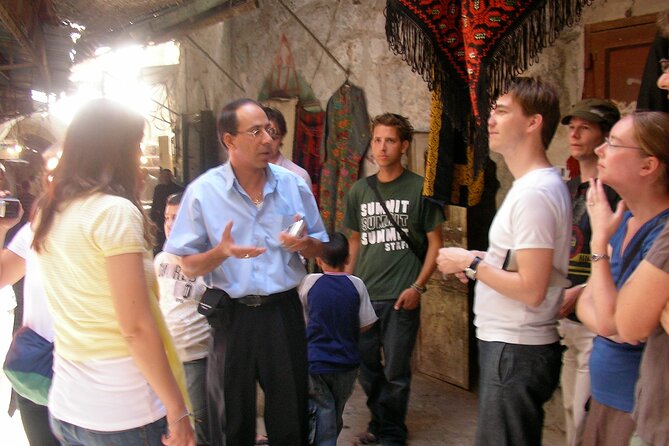
From there, you walk through Hebron’s Old City and along Shuhada Street. You see settler compounds, military positions, checkpoints, and the route linking them. This is where the tour shifts from historical explanation to visible evidence of how control affects an urban neighborhood.
The walk lasts about two and a half hours, including lunch in the Old City. Wear comfortable shoes. You are not just stepping off a vehicle for a quick look, and the combination of walking, stops, security checks, and conversation can make this the most demanding part of the first day.
Hebron can be confronting because the political situation is not kept at a distance. You see closed or restricted areas alongside working streets and local businesses. The experience is valuable if you want to understand the city as a lived place, but it can feel intense if you prefer a more neutral, monument-by-monument tour.
A Hebron glass workshop and the human scale of the visit
The final listed stop on day one is a local glass and ceramics factory. Glassmaking is a common industry in Hebron, and this visit adds a useful economic angle to the day.
After so much political discussion, a working craft shop helps bring the city back to ordinary life. You see a local trade rather than only conflict sites and religious monuments. It also gives you a chance to buy something directly connected with Hebron, although personal purchases are your own expense.
The day includes one night of accommodation, with double or triple occupancy included. A single room costs extra unless your booking specifies otherwise. A three or four-star hotel upgrade may also require an additional payment, so check the room category before you commit to the advertised price.
Breakfast and dinner are included, while the meal arrangements should be checked carefully for your departure. Lunch is described at the Old City on day one and at a local restaurant on day two, but food and drinks are generally not included unless specified. Alcoholic drinks with meals are not included.
A few more Jerusalem half-days to weigh up
- 2-Day Petra Tour from Jerusalem
★ 4.5 · 212 reviews - Petra and Wadi Rum 2 day tour from Jerusalem
★ 4.0 · 28 reviews - 2 Day Petra Tour from Jerusalem
★ 3.5 · 28 reviews - 2 Days Petra Private Guided Tour
★ 5.0 · 4 reviews
Day two: Mar Saba and the Judean Desert
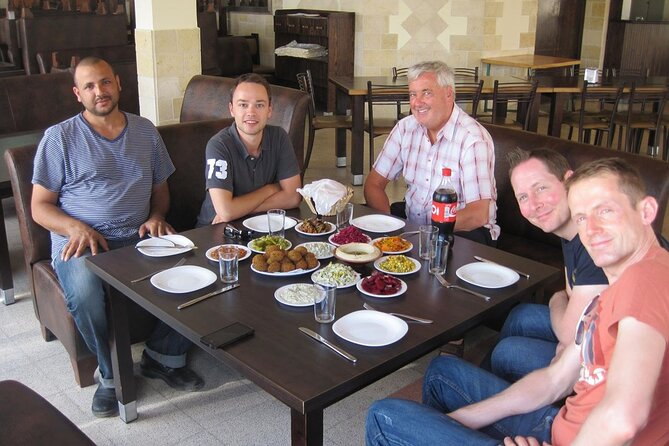
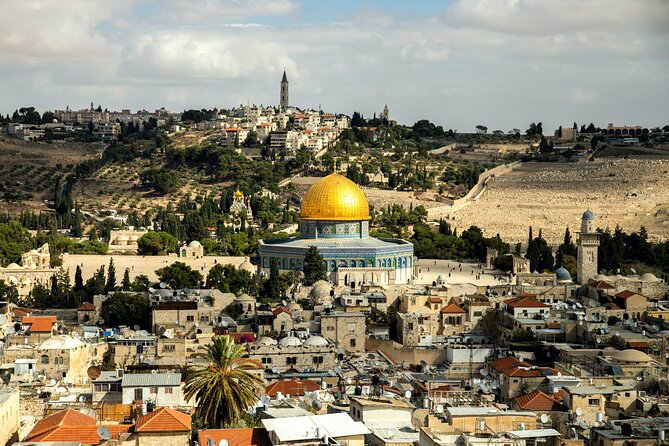
Day two begins at Mar Saba Monastery. The monastery and the surrounding Judean Desert provide a sharp change from Hebron’s crowded streets and political tension. You get about 90 minutes here, including time to take in the views and the striking setting of the monastery.
This stop is scenic, but do not expect the entire day to become a nature excursion. Mar Saba is a brief part of a much wider program, and the focus remains on connecting religious places with the region’s history.
The setting also gives the schedule some breathing room. After the first day’s emotionally heavy walking route, the desert views offer a quieter start before the tour returns to the built-up areas around Bethlehem.
Bethlehem’s Church of the Nativity and Old City
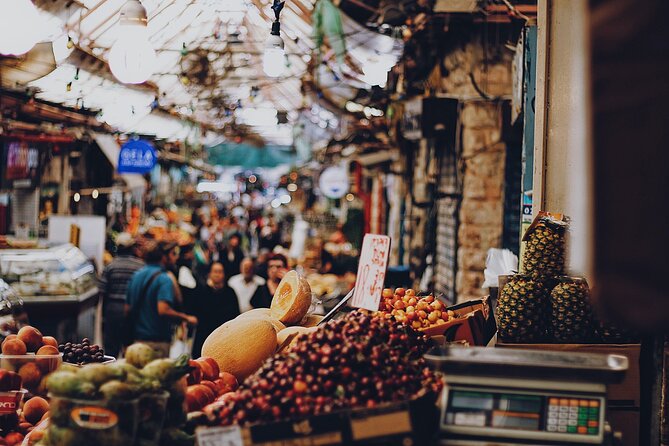
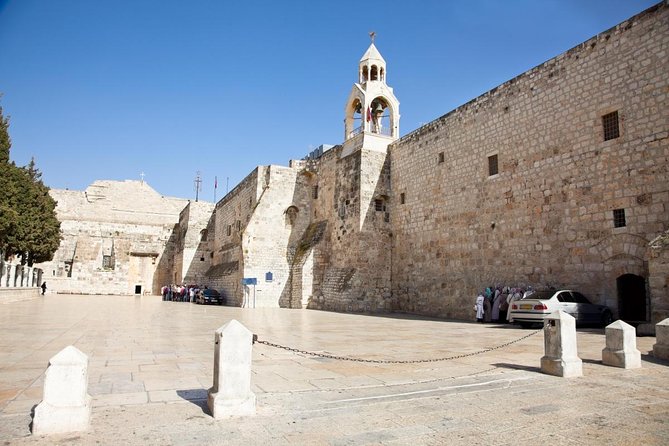
From Mar Saba, the group continues to Manger Square and the Church of the Nativity. You have about two hours for the church and a walk through Bethlehem’s Old City.
This is the major Christian pilgrimage site of the tour, but the program does not treat Bethlehem as a single shrine. Walking through the Old City lets you see the surrounding streets and local setting, rather than arriving only for a brief interior visit.
As with Hebron, dress modestly and expect a religious atmosphere. The schedule allows useful time here, though crowds and site conditions can affect how quickly you move through the church. The guide can explain the place and its importance while also helping you understand Bethlehem beyond its biblical association.
A traditional Palestinian lunch at a local restaurant follows. Food is one of the tour’s more direct cultural experiences, and this meal helps balance the heavier political content. Since meal inclusions can vary by the exact booking details, carry money for anything not covered, as well as for personal purchases.
The separation barrier and the Walled Off Hotel
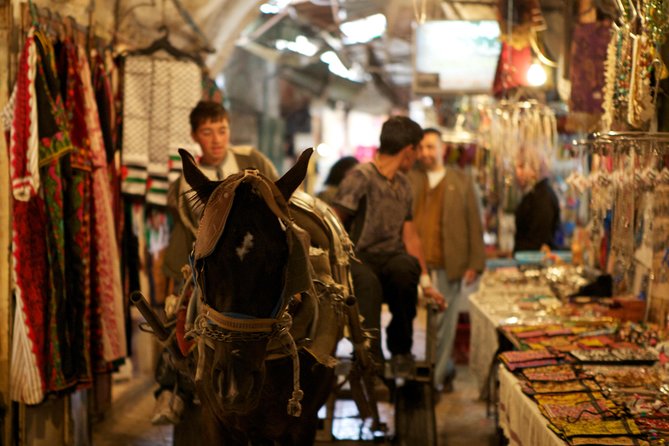
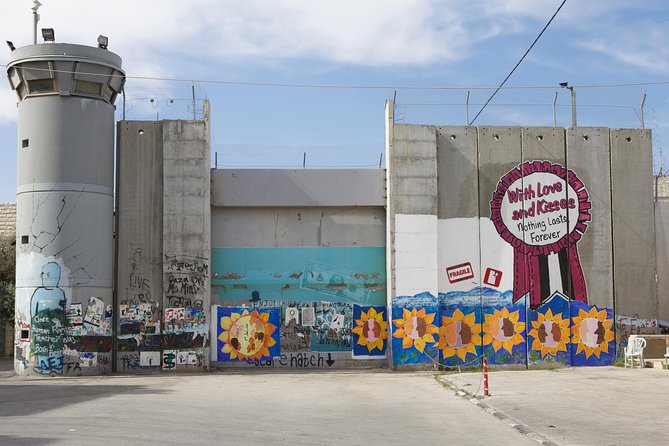
The afternoon turns toward modern Bethlehem. Your guide takes you for a close walk along the separation barrier and explains its effect on Palestinians living in the city. The wall has also become a surface for political art and graffiti, including work associated with Banksy.
This section can be particularly useful if you want to understand how the barrier appears in daily life rather than seeing it only from a vehicle. You can consider both its security role and its effect on movement, neighborhoods, businesses, and public space.
The Walled Off Hotel adds an art and museum component. The property was developed to draw visitors to an area that had previously seen little tourism, with an interior museum about the occupation and a gallery for local artists. Admission costs 20 NIS and is not included.
Plan about two hours and 15 minutes for lunch, the barrier walk, and the hotel visit. The hotel is not simply a place to look at Banksy-related art. It is part of the tour’s wider effort to show how political history is presented through local creative work.
You may find this portion more accessible than the Hebron visit because art gives you another way into the subject. Still, it does not remove the serious nature of the material. The setting is designed to make you think about the occupation, not to turn it into a novelty stop.
Meeting families at Aida Camp
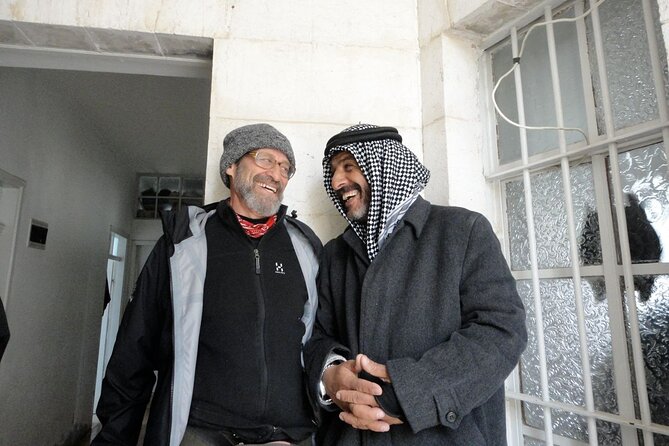
The last stop is Aida Refugee Camp, where you have the opportunity to meet local people and hear their stories. Allow about an hour.
This encounter gives the tour its most personal finish. Earlier, you have heard about borders, settlements, security, and policy. Here, you listen to how those issues connect to family life and memory. The visit is not a substitute for studying the wider political situation, but it puts human voices beside the maps and explanations.
Approach this stop with respect. You are entering a residential community, not a staged attraction. Listen carefully, avoid treating private stories as entertainment, and allow your guide to explain how the meeting is arranged.
The first-hand element is one reason this tour has earned a 4.8 rating from 110 reviews and a 95 percent recommendation rate. People who want a serious introduction to Palestinian life tend to value the chance to speak with local families rather than only hearing a guide’s interpretation.
Price, comfort, and what you receive
The listed cost is $1,245.65 per person. That is a significant price, but this is not priced like a basic group bus excursion. The fee covers a private two-day service, pickup and drop-off from your hotel in Jerusalem or Tel Aviv, an English-speaking guide, air-conditioned transport, one night’s accommodation, breakfast, dinner, and coffee or tea.
The private arrangement is the biggest factor in the value. A large group tour can lower the cost, but it also limits questions and makes personal meetings less flexible. If you are traveling with family or friends and want focused discussion, the price may make sense.
You still need to budget for lunch unless your confirmation says it is covered, drinks, alcohol, personal expenses, the 20 NIS Walled Off Hotel admission, and any room upgrade. Single occupancy is extra, as is a three or four-star hotel upgrade if you request one.
The tour is available from Jerusalem or Tel Aviv, but the two-day schedule can feel long if you are staying in Tel Aviv and want a relaxed holiday pace. Pickup removes much of the transport hassle, which is useful in an area where crossings, checkpoints, and local arrangements can complicate independent planning.
Who should book this experience
I would choose this tour if you want more than religious sightseeing. It suits you if you are interested in modern politics, local perspectives, settlement policy, refugee life, and the way history is used by different communities.
It also suits people who value privacy. A family, couple, or small group can ask sensitive questions and spend more time on subjects that matter to them. Past company guides such as Anas, Yamen, Mustafa, and Rami have been praised for warmth, humor, clear explanations, and a willingness to discuss difficult issues, though your specific guide may be different.
I would not choose it if you want an easygoing two-day escape with little walking or political discussion. Hebron can be emotionally heavy, and the schedule includes religious sites, long explanations, local encounters, and several stops with limited downtime.
Book only if you can follow the practical rules. Bring your passport, dress conservatively, carry money for lunch and extras, and keep some flexibility for site access. You can cancel for a full refund at least six full days before the start time. Cancellation two to six full days ahead receives a 50 percent refund, while cancellations less than two full days ahead are not refunded.
Should you book the Palestine Revealed two-day tour?
Book it if you want a structured, private introduction to Palestine that includes both famous religious sites and the present-day political reality. The route from Gush Etzion and Kiryat Arba to Hebron, Bethlehem, the barrier, and Aida Camp gives you far more context than a quick church visit.
The strongest reason to go is the combination of places and voices. You see settlements, sacred buildings, military checkpoints, local workshops, refugee housing, political art, and Palestinian families within one carefully connected program.
Skip it if you want a neutral-feeling sightseeing day or if $1,245.65 per person is beyond your budget. For the right visitor, though, the private format, door-to-door transport, overnight stay, and direct local contact make this a serious and worthwhile use of two days.
FAQ
Where does the tour begin?
Pickup is offered from your hotel in Jerusalem or Tel Aviv. The listed start time is 8:30 a.m.
Is this a private tour?
Yes. Only your own group takes part in the activity.
Is an English-speaking guide included?
Yes. A personal English-speaking guide is included.
Do I need to bring my passport?
Yes. A current valid passport is required on the day of travel, especially for the Cave of the Patriarchs visit.
What should I wear?
Dress modestly in Hebron and Bethlehem. Trousers are recommended, and shirts should cover the shoulders and come close to the neck. Shorts are not appropriate. In hot weather, light, loose clothing is suggested.
Is accommodation included?
Yes. One night of accommodation is included in double or triple occupancy. A single room and a three or four-star hotel upgrade may cost extra.
Is food included?
Breakfast and dinner are included. Food and drinks are otherwise not included unless specified, and alcoholic drinks with meals are excluded.
Is admission to the Walled Off Hotel included?
No. Admission costs 20 NIS and is paid separately.
What is the cancellation policy?
A full refund is available when you cancel at least six full days before the start time. Cancellation two to six full days ahead receives a 50 percent refund. Cancellations less than two full days before the experience are not refunded.
Just added around Jerusalem
- Tel Aviv & Old City of Jaffa – Tiny group from Tel Aviv★ 4.5 · 9 reviews
- Tel Aviv; Jaffa Old City, Port & Shuk Hapishpishim Walking Tour★ 4.5 · 11 reviews
- Discover the Secrets of the Underground Jerusalem with a private tour★ 5.0 · 4 reviews
- Private Tour : Jerusalem Old City Day Trip from Tel Aviv★ 5.0 · 19 reviews
- Private Tour from Tel Aviv to Jerusalem★ 5.0 · 3 reviews
- Luxury Private Tour to Jerusalem from Tel Aviv★ 5.0 · 22 reviews
- Tel Aviv Airport (TLV) to Jerusalem Hotels – Private Transfer★ 4.0 · 19 reviews
- Palm Sunday in Jerusalem: Mass at Bethpage and Via Dolorosa Procession with Transport from Tel Aviv★ 5.0 · 3 reviews
2-Day Experiences, compared.
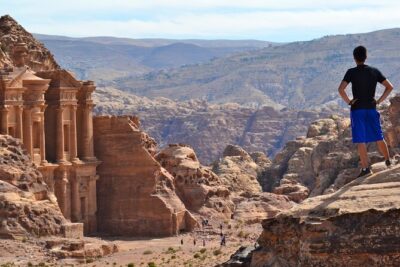
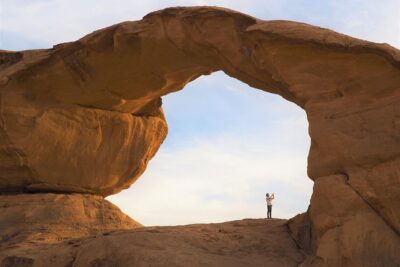
2 Day Tour to Petra and Wadi Rum from Tel Aviv
Read our review →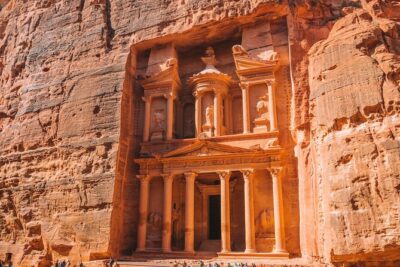
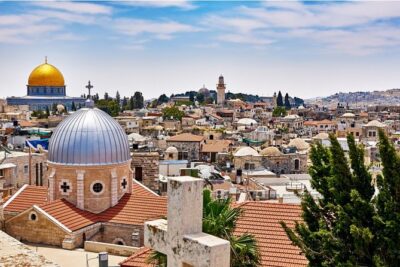
2-Day Best of Israel Tour from Tel Aviv: Jerusalem, Bethlehem and Masada Tour
Read our review →
Browse the lists this tour appears in