
Reviewed · JERUSALEM OLD CITY TOURS
Explore Jerusalem’s Old City
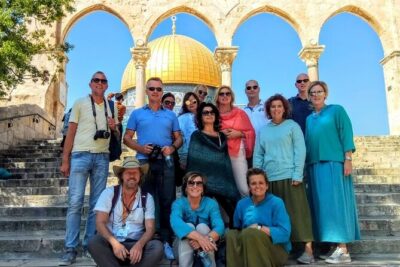
Jerusalem’s Old City is best understood one layer at a time, and this private tour gives you room to connect those layers. With Roni Peled, you can move from Jaffa Gate and Mount Zion to the Western Wall, Muslim Quarter, Via Dolorosa, and Church of the Holy Sepulchre while hearing how Jewish, Christian, and Muslim stories overlap in the same few streets.
I especially like the flexible route and the guide’s personal connection to Jerusalem. Roni grew up near the Old City and the Israel-Jordanian border before 1967, and he brings those memories into the discussion of the city’s modern divisions. I also like that the price is per group of up to 15, not per person, which can make a private guide a sensible choice for families or larger groups.
The main consideration is pace. The full route covers a lot, and the City of David section includes dark, wet tunnels with flashlights. Lunch at Lina is not included, and admission to City of David National Park costs extra, so the final expense will be higher than the tour price alone.
Key points at a glance
- A private route through Jerusalem’s four quarters: Shape the day around Jewish, Christian, Muslim, and Armenian sites.
- Roni Peled’s first-hand Jerusalem stories: Expect history alongside personal memories of the city before and after 1967.
- The City of David adds an active adventure: Hezekiah’s Tunnel involves walking through water in the dark with a flashlight.
- The price works best for groups: The listed rate is $579.49 for up to 15 people, rather than $579.49 per person.
- Sacred places require time and respect: The Western Wall and Church of the Holy Sepulchre are meaningful stops, not quick photo points.
- The route can be adapted: The tour can be adjusted for wheelchair users, though the tunnel section may need special planning.
Jerusalem is not a city you understand by checking off monuments. A few steps can take you from a Jewish prayer site to a Christian shrine, then through a Muslim market and into an Armenian church courtyard. The appeal of this private Jerusalem Old City tour is that you have a guide to explain the connections, disputes, traditions, and changes that are easy to miss on your own.
The day begins at Jaffa Gate at 8 a.m. From there, you can follow the suggested route or adjust the emphasis to suit your group. A half-day can focus on the Old City’s main religious sights. A full day gives you time for Mount Zion, the City of David, the markets, and the major Christian sites.
Roni Peled is the named guide for the experience. The strongest praise centers on his command of Jerusalem’s history, his clear English, his energy, and his ability to tailor the day to a group’s interests. He is also associated with the Israel Museum, and his teaching style suits people who want dates, context, and connections rather than a string of short facts.
Jaffa Gate: Start with Jerusalem’s Layers
Jaffa Gate is a practical meeting point and a good place to begin. It sits at the western edge of the Old City and opens toward the modern city, giving you an immediate sense of Jerusalem as both a living place and a historic center.
Your guide explains the gate, its inscriptions, and its role in the city’s past and present. You also get views westward from the Tower of David area. This opening stop is brief, about 10 minutes, but it sets up the larger story: Jerusalem has been entered, defended, divided, and rebuilt many times.
Roni’s own memories add a personal angle here. He grew up near the Israel-Jordanian border before 1967, so the city’s former division is not just an abstract chapter in a book. That first-hand perspective can help you understand why the Old City’s gates and walls still carry political and emotional weight.
More walks through the Old City:
- Jerusalem: Guided Walking Tour of the Old City
★ 4.7 · 386 reviews - Best seller! Jerusalem old city four quarters tour
★ 5.0 · 123 reviews - Private Tour Jerusalem Old City
★ 5.0 · 118 reviews
The Armenian Quarter and St. James Church
The Armenian Quarter is quieter than some of the main routes through the Old City. From its principal street, you enter the courtyard of St. James Church, associated with James, the brother of Jesus, and James, one of Jesus’ 12 disciples.
The stop lasts about 20 minutes and focuses on the Armenian community’s long presence in Jerusalem. The church’s architecture and traditional Armenian ceramics give the visit a distinct character. This is one of the tour’s most useful additions because many first-time visits to Jerusalem focus only on the Western Wall and Christian Quarter, leaving the Armenian Quarter out.
You should expect a religious setting rather than a standard sightseeing attraction. Dress and behave respectfully, and be prepared for access or opening conditions to affect what you can see. The church visit is included in the walking route, with no separate admission listed.
Mount Zion and the Memory of 1948
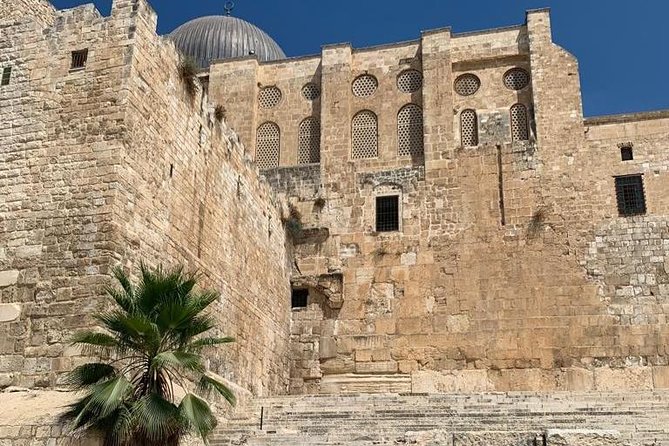
The route approaches Mount Zion through Zion Gate, where the guide explains the final battle for the Jewish Quarter in 1948, its capture by Jordan, and its liberation in 1967. The bullet marks around the gate are part of the visual record of that conflict, though the key value here is the explanation that connects the physical setting to the modern political story.
On Mount Zion, the itinerary brings together several important sites:
- The Room of the Last Supper
- The Tomb of King David
- Dormition Church
- A lookout toward the Temple Mount and the Hill of Evil Counsel
Plan about an hour for this section. It offers a change from narrow lanes and crowded sacred spaces, with room to pause and take in the views. The site names also reflect the way Jerusalem works: different traditions place their own memories and beliefs on the same hill.
The Room of the Last Supper and the Tomb of King David are especially useful stops for a group with mixed religious interests. You do not have to approach the city from only one faith tradition to find value here. A good guide can show where the traditions overlap and where they differ without turning the visit into a debate.
City of David and Hezekiah’s Tunnel
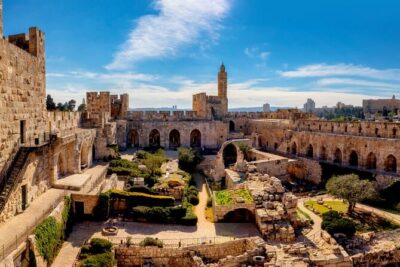
The City of David section is the most physically demanding and one of the most distinctive parts of the tour. The area is linked to Jerusalem’s earliest capital under King David, and the walk includes foundations, ruins of homes and administrative buildings, and the ancient water system connected to the Gichon Spring.
The proposed visit takes about two hours. Admission is not included, so add that cost when comparing the tour with other guided options.
The highlight is the tunnel walk. You use flashlights and walk through the darkened Hezekiah’s Tunnel, with water underfoot, before emerging near the Shiloam Pool. The tunnel is connected to Jerusalem’s water supply, and the Gichon Spring is also tied to the anointing of King Solomon in the tour’s historical account.
This section gives you something a museum cannot: a physical sense of how ancient Jerusalem dealt with water, stone, darkness, and limited space. It is also the point where you should be honest about your comfort level. If you dislike enclosed passages, have mobility limits, or prefer a slower day, ask Roni to adjust the plan. The tour can be adapted for wheelchair users, but the wet tunnel route itself may not suit every participant.
Bring footwear suitable for walking and expect to handle uneven ground. The supplied information does not specify what equipment is provided, so ask in advance about anything your group may need for the tunnel.
A few more Jerusalem half-days to weigh up
- From Tel Aviv: Jerusalem Old & New City Bus Tour
★ 4.2 · 824 reviews - Full Day City Tour of Jerusalem
★ 4.1 · 367 reviews - Old and New Jerusalem Day Trip from Tel Aviv
★ 4.5 · 296 reviews - Old and New Jerusalem Full-Day Tour
★ 4.0 · 273 reviews
The Western Wall and the Temple Mount
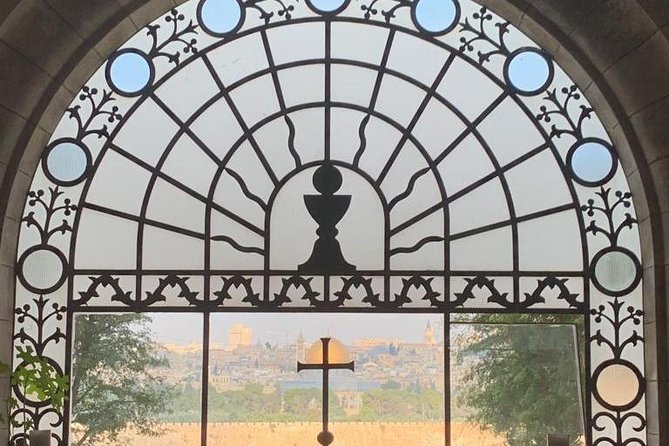
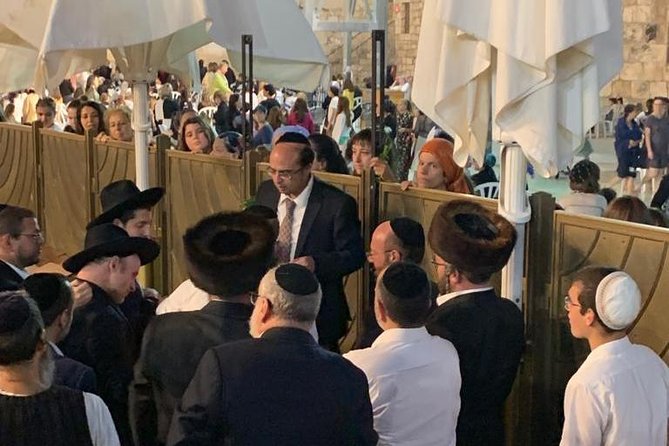
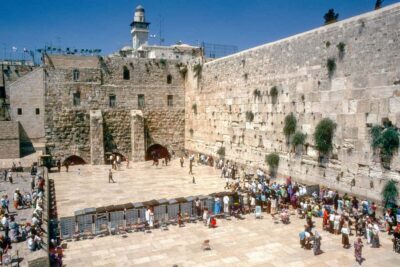
The Western Wall is a short stop in the planned route, about 15 minutes, but its importance is far greater than the time suggests. It is associated with the retaining walls of the Temple complex and is a major place of Jewish prayer and mourning.
The Wall sits beside the Temple Mount, where the Dome of the Rock and Al-Aqsa Mosque are located. That proximity is central to understanding Jerusalem. Three major religious traditions connect their stories to this small area, and the site remains both sacred and politically sensitive.
You can pray at the Wall and place a written message into its stones. Even if you are visiting mainly for historical reasons, the atmosphere here asks for a quieter approach. Your guide can explain the setting, but the stop also works best when you leave space for personal reflection.
Since the tour begins early, the morning start may help you reach this part of the route before the day becomes more demanding. Still, access rules and conditions at religious sites can change. Follow your guide’s instructions and allow the visit to be about more than getting a photograph.
The Muslim Quarter and Cotton Market
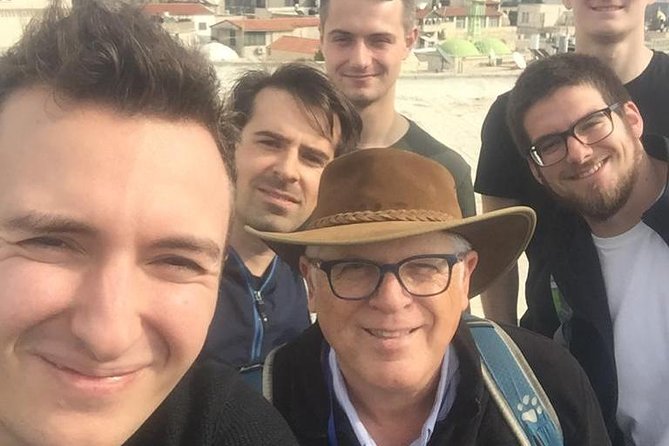
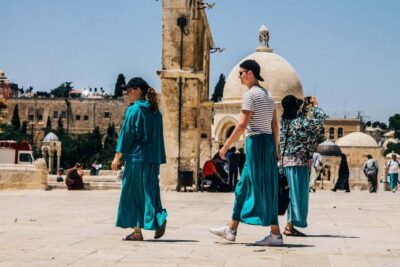
From the Western Wall, the tour moves into the Muslim Quarter, with about 30 minutes set aside for the bazaar and the 600-year-old Market of Cotton Makers. This brings you back into the everyday life of the Old City, with shops, movement, food, and working streets alongside major monuments.
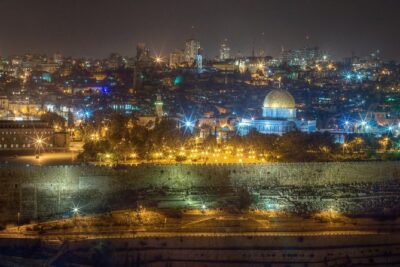
The route also gives you views toward the Dome of the Rock and an explanation of Islam’s rise in the land from 638 CE to the present. That chronological frame matters. You are not simply passing through a shopping lane. You are seeing how a living neighborhood occupies and uses a place shaped by many centuries of religious and political change.
I would treat this as a listening and orientation stop rather than a dedicated shopping excursion. The time is limited, and the tour’s main purpose is to explain the quarter and its place in Jerusalem. If markets are a major interest for you, mention that when arranging the private itinerary so the guide can give the quarter more attention.
Via Dolorosa and Lunch at Lina
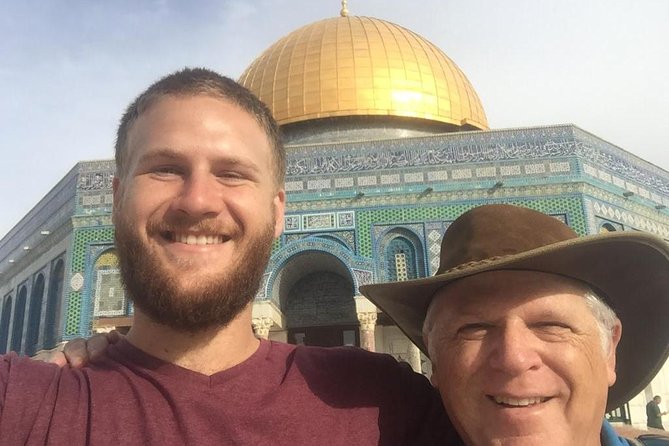
The Via Dolorosa follows the route associated with Jesus’ final walk before the crucifixion. The itinerary allows about an hour for walking in his footsteps and visiting sites along the way.
This part of Jerusalem can feel confusing without context. Stations, chapels, shops, turns, and competing claims are packed into a small area. Roni’s role is especially useful here because he can explain what each location represents and how the Christian traditions developed around the route.
Lunch is planned at Lina, described as a leading hummus restaurant in the Old City. Lunch is not included in the tour price, so plan to pay separately. The stop gives you a chance to rest before the final church visit, though the exact meal timing may depend on the group’s pace and the conditions at each site.
Church of the Holy Sepulchre
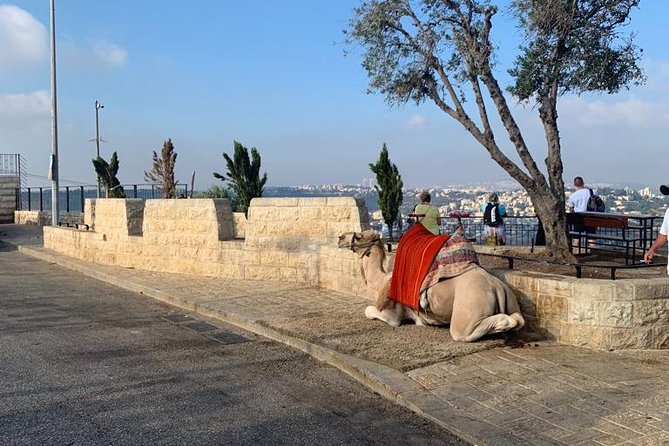
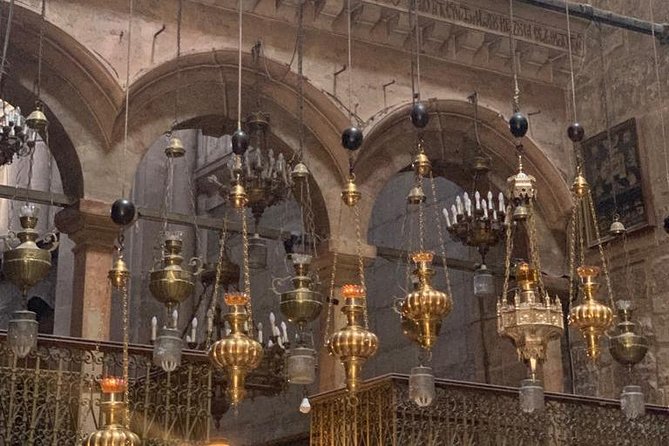
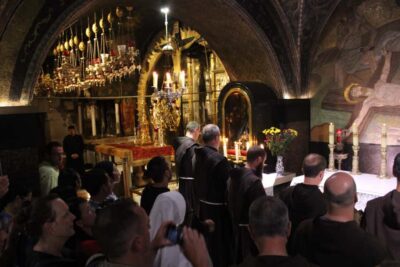
The Church of the Holy Sepulchre is the final major stop and receives about an hour. It is associated with the crucifixion, the anointing stone, and the tomb of Jesus.
For many people, this is the emotional center of the day. The church is not a single quiet chapel. It is a large, layered religious complex shared by several Christian traditions, and its spaces can feel crowded and visually dense. A guide helps you identify the important locations and understand why the church matters.
Give yourself time here. The itinerary is ambitious, and it would be easy to rush through the final stop after several hours of walking. If the Church of the Holy Sepulchre is your main reason for booking, tell Roni at the outset so the schedule can protect enough time for it.
What the $579.49 Group Price Really Means
The listed price is $579.49 per group of up to 15 people. That makes the arithmetic very different from a per-person tour. A group of 10 would pay about $58 per person before extra costs. A group of four would pay about $145 each, and a couple would bear the full group price between them.
That structure makes the tour most attractive for families, friends, church groups, and other larger parties who want a private guide. It is harder to justify for one or two people unless a tailored route and specialist guide are worth more to you than joining a shared walking tour.
The price includes the licensed guide. It does not include lunch or admission to City of David National Park. The route returns to the starting point at Jaffa Gate, and the activity is offered as a private experience for your group alone.
The tour can last about four to eight hours. That range matters. A half-day route is likely a better fit if you want the main Old City highlights without the tunnel section. A full day makes more sense if you want the historical background, City of David, markets, and Christian sites in one outing.
Who Will Get the Most from This Tour?
I would recommend this experience to you if you want Jerusalem explained rather than simply photographed. It suits first-time visitors who need a clear framework, as well as people returning to the city who want a different route or deeper historical context.
It is also a strong choice for groups with mixed interests. One person can focus on biblical sites, another on archaeology, another on modern Jerusalem, and the guide can balance the day instead of forcing everyone through a fixed script.
Families may appreciate the private format because the timing can be adjusted. The supplied feedback also includes families with children aged 10 and 14 who used the guide for Jerusalem and Tel Aviv, as well as a pastor and a serious Bible student who found the historical and religious detail rewarding.
You may prefer another option if you want a quiet, slow visit with lots of unplanned time, or if the wet tunnel is a major concern. The full route is packed. It asks you to walk, listen, shift between religious settings, and stay engaged for much of the day.
The experience has a published rating of 5 out of 5, with 100 percent recommending it based on 18 ratings. The strongest praise centers on Roni’s personal stories, clear English, patience, energy, and ability to tailor the route. Those qualities matter more than a long list of stops because Jerusalem’s meaning is rarely obvious at street level.
Practical Details Before You Book
The meeting point is Jaffa Gate Hostel at Jaffa Gate, and the start time is 8 a.m. The tour ends back at the meeting point. It is near public transportation, and most people can participate.
Wheelchair access can be accommodated through adjustments to the route. Ask about the specific plan before booking if anyone in your group uses a wheelchair, since the City of David tunnel section involves water, darkness, and physical movement.
Confirmation is sent within 48 hours, subject to availability. You can cancel for a full refund up to 24 hours before the start time. Changes or cancellations inside that 24-hour window are not accepted for a refund.
Should You Book the Jerusalem Old City Tour?
Book it if your group values a private guide, wants to combine several faith traditions in one day, and prefers personal explanation over a fixed group schedule. Roni Peled’s background and first-hand connection to Jerusalem add a human dimension to the city’s difficult modern story.
The best value comes with a group of several people, since the $579.49 rate covers up to 15. Before you commit, decide how much walking and tunnel time suits your group, and remember to budget for lunch and City of David admission.
For a focused half-day introduction, choose the main Old City quarters, Western Wall, Via Dolorosa, and Church of the Holy Sepulchre. For a fuller portrait of Jerusalem, keep the City of David and Mount Zion in the plan. That longer route gives you the most complete sense of how ancient water systems, sacred traditions, markets, modern conflict, and daily life all meet inside Jerusalem’s walls.
FAQ
How much does the tour cost?
The tour costs $579.49 per group of up to 15 people. The price is not charged per person.
How long does the experience last?
The tour lasts approximately four to eight hours, depending on whether you choose a half-day or full-day route.
What time does the tour begin?
The listed start time is 8 a.m.
Where does the tour begin?
The meeting point is Jaffa Gate Hostel at Jaffa Gate in Jerusalem.
Where does the tour end?
The activity ends back at the meeting point at Jaffa Gate.
Is this a private tour?
Yes. Only your group participates in the activity.
Is lunch included?
No. Lunch at Lina is not included in the tour price.
Is City of David admission included?
No. Admission to City of David National Park is not included.
Can the route be adapted for wheelchair users?
Yes. The tour can be adapted for participants with wheelchairs. Ask about the planned route in advance, particularly if you want to include the tunnel section.
What is the cancellation policy?
You can cancel up to 24 hours before the start time for a full refund. Cancellations or changes made less than 24 hours before the experience are not accepted for a refund.
Just added around Jerusalem
- Tel Aviv & Old City of Jaffa – Tiny group from Tel Aviv★ 4.5 · 9 reviews
- Tel Aviv; Jaffa Old City, Port & Shuk Hapishpishim Walking Tour★ 4.5 · 11 reviews
- Discover the Secrets of the Underground Jerusalem with a private tour★ 5.0 · 4 reviews
- Private Tour : Jerusalem Old City Day Trip from Tel Aviv★ 5.0 · 19 reviews
- Private Tour from Tel Aviv to Jerusalem★ 5.0 · 3 reviews
- Luxury Private Tour to Jerusalem from Tel Aviv★ 5.0 · 22 reviews
- Tel Aviv Airport (TLV) to Jerusalem Hotels – Private Transfer★ 4.0 · 19 reviews
- Palm Sunday in Jerusalem: Mass at Bethpage and Via Dolorosa Procession with Transport from Tel Aviv★ 5.0 · 3 reviews
Jerusalem Old City Tours, compared.
City of David and Underground Jerusalem Day Tour
Read our review →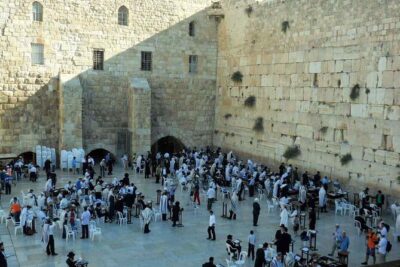
Browse the lists this tour appears in