
Reviewed · JERUSALEM OLD CITY TOURS
Jerusalem: Old City Highlights Tour
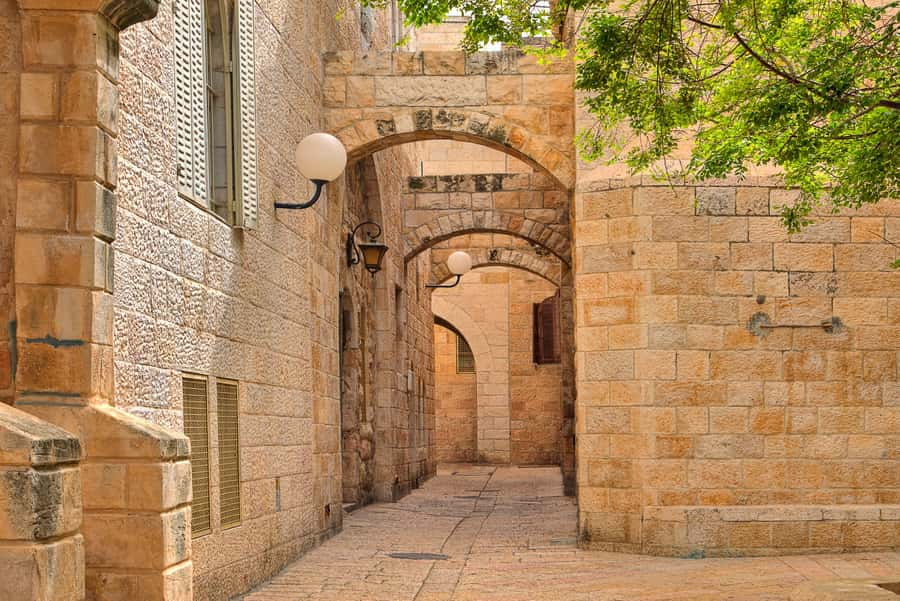
Jerusalem’s Old City packs several worlds into a small, walkable area. In three hours, this tour takes you through the Jewish, Christian, Muslim, and Armenian quarters, then brings you face to face with the Western Wall and the Church of the Holy Sepulchre. It is a useful first look at a city where faith, politics, and daily life share the same narrow streets.
I like the efficient route and the chance to compare all four quarters in one outing. I also like that a licensed English-speaking guide gives context at places that can otherwise feel confusing, especially along Via Dolorosa. The main drawback is simple: three hours is short, so this is an overview rather than a slow, detailed study of Jerusalem.
Key points at a glance
- Four quarters in one walk: See how the Jewish, Christian, Muslim, and Armenian sections of the Old City differ.
- The Church of the Holy Sepulchre: Visit the major Christian shrine, dating to the fourth century.
- Via Dolorosa: Walk through the Christian Quarter and see the stations of the cross, including the final four stations at the church.
- Western Wall: Pause at one of Judaism’s most sacred sites in the Jewish Quarter.
- A guide-led introduction: Shimon is one named guide praised for being personable and well informed.
- Good for limited time: The three-hour format gives you a useful first orientation without taking up an entire day.
Why Jerusalem’s Old City works best on foot
The Old City is not a place to understand from a passing vehicle. Its meaning is in the turns: one lane leads toward a Christian shrine, another opens onto a Jewish prayer area, and nearby streets belong to the Muslim or Armenian quarters.
This walking tour puts those changes at the center of the experience. You are not simply checking off monuments. You are moving through four sections of the same walled city and seeing how each has its own religious character and story.
The format is especially useful if you have limited time in Jerusalem. Three hours is long enough to reach the major landmarks, but short enough to fit around other plans. You should think of it as a strong introduction, not a complete visit to every corner of the Old City.
Because the tour is on foot, wear practical shoes and expect a steady amount of walking. The supplied details do not give a group size or a precise distance, so you should not assume a relaxed stroll or a private tour. The important point is that this is a guided walking experience, with no transport between stops.
More walks through the Old City:
- Jerusalem: Guided Walking Tour of the Old City
★ 4.7 · 386 reviews - Best seller! Jerusalem old city four quarters tour
★ 5.0 · 123 reviews - Private Tour Jerusalem Old City
★ 5.0 · 118 reviews
Meeting at the David Citadel Hotel
The tour begins at the David Citadel Hotel. Look for a guide carrying a Tourist Israel flag and wearing an orange name tag. That detail matters in a busy meeting area, since it gives you a clear way to identify the right person.
The meeting point is convenient for an Old City walking tour because the route begins from the western side of central Jerusalem and continues toward the historic core. Your guide handles the direction and interpretation, allowing you to focus on the streets and buildings around you.
The guide is a major part of the value here. Shimon, one of the named guides associated with the experience, received particularly warm praise for being personable and well informed. Another guest described the guide as professional. Those comments point to what you should want from this tour: clear explanations, a friendly manner, and enough historical context to make the sites meaningful.
Do not expect a lecture delivered from a fixed platform. The information comes while you walk, stop, look, and move on. That keeps the pace practical, though it also means the experience may feel brisk at popular sites.
Four quarters, four different points of view
The Old City is divided into the Jewish, Christian, Muslim, and Armenian quarters. A quick tour cannot explain every street or community in detail, but seeing all four gives you a useful mental map.
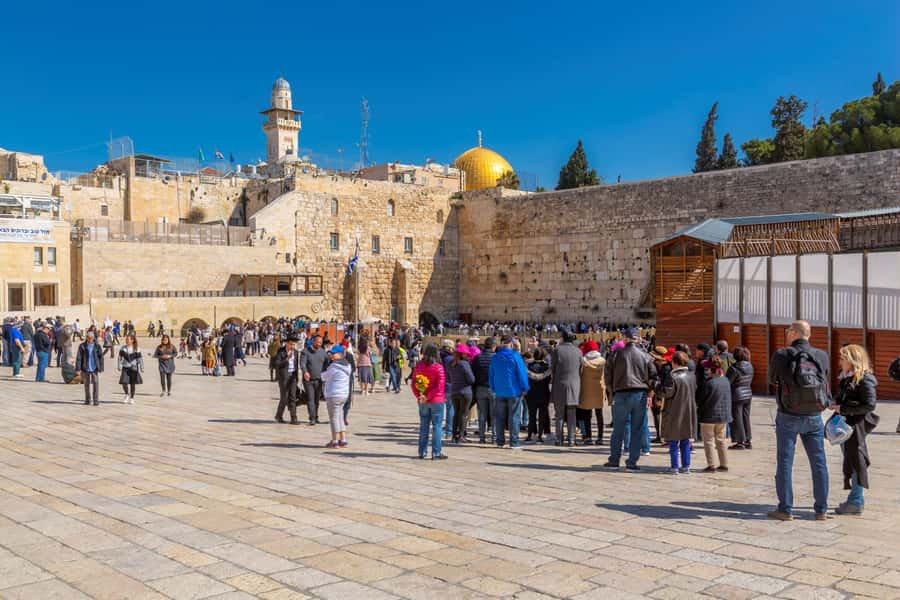
The Jewish Quarter is where you reach the Western Wall, one of the holiest places in Judaism. The wall is part of the retaining structure around the Temple Mount, and it remains an active place of prayer. Your guide can help you understand why this site matters, but you should also allow yourself a quiet moment to observe the setting.
The Christian Quarter contains the Church of the Holy Sepulchre and the route of Via Dolorosa. This area is central to Christian pilgrimage, and it can feel crowded or intense, particularly near the church. The tour gives you a guide to the religious landmarks rather than leaving you to decode the route on your own.
The Muslim Quarter is part of the Old City’s daily life and one of its four main sections. The supplied tour details do not promise entry into particular mosques or other specific buildings here, so expect to explore the quarter as part of the walking route and hear about its place within Jerusalem.
The Armenian Quarter offers another side of the Old City. Again, no specific church or institution is listed as a stop, but including the quarter matters because it prevents the tour from presenting Jerusalem through only one religious lens.
I like this structure because it puts the city’s shared space at the heart of the visit. You see that the Old City is not one single attraction. It is a compact area shaped by several traditions, each with its own sacred places and identity.
Following Via Dolorosa in the Christian Quarter
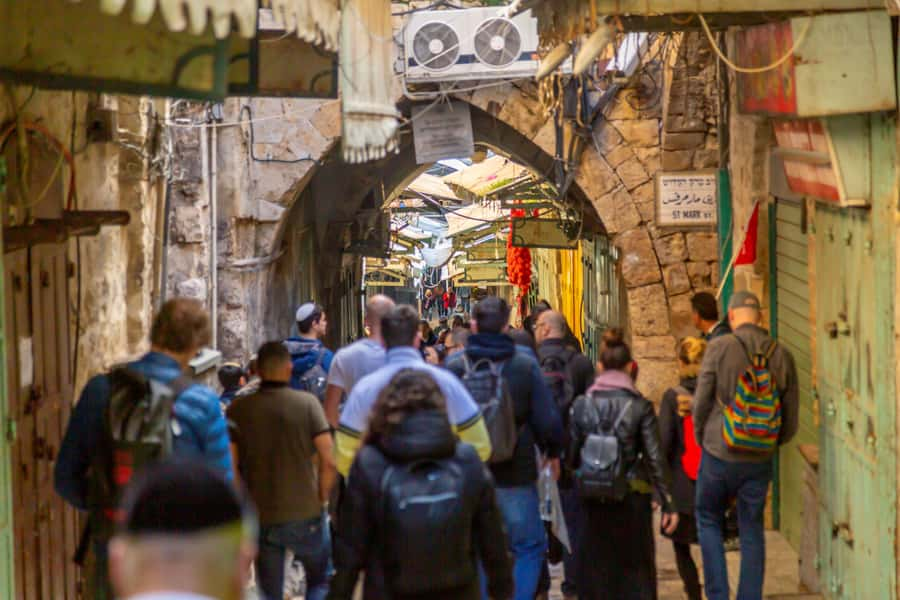
Via Dolorosa is the route associated with the stations of the cross. Walking it gives the Christian Quarter a clear narrative, since the path links religious tradition with the streets of the Old City.
The route includes the final four stations inside the Church of the Holy Sepulchre. That connection is important. You are not seeing a church in isolation, then separately hearing about Via Dolorosa. The tour links the route and the church as parts of the same Christian pilgrimage experience.
The streets are narrow, and the path is not presented as a grand ceremonial avenue. That is part of the point. The religious meaning is set within an active city, not behind museum glass. You might find the route difficult to follow without a guide, especially if you want to understand which stations are connected to which places.
The tradeoff is time. A three-hour tour needs to keep moving, and Via Dolorosa alone can invite much longer reflection. If you have a strong personal interest in Christian pilgrimage, you may want to return later for a slower visit.
A few more Jerusalem half-days to weigh up
- From Tel Aviv: Jerusalem Old & New City Bus Tour
★ 4.2 · 824 reviews - Full Day City Tour of Jerusalem
★ 4.1 · 367 reviews - Old and New Jerusalem Day Trip from Tel Aviv
★ 4.5 · 296 reviews - Old and New Jerusalem Full-Day Tour
★ 4.0 · 273 reviews
The Church of the Holy Sepulchre and its fourth-century roots
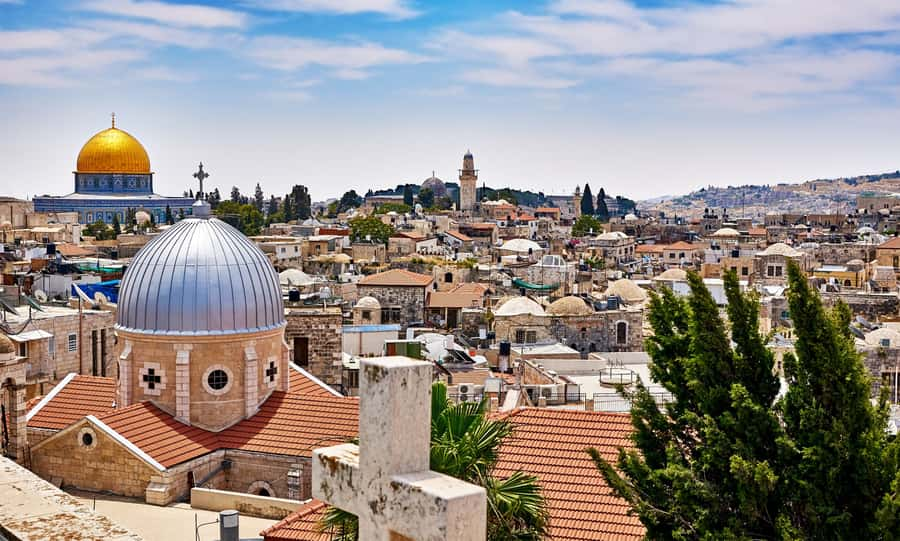
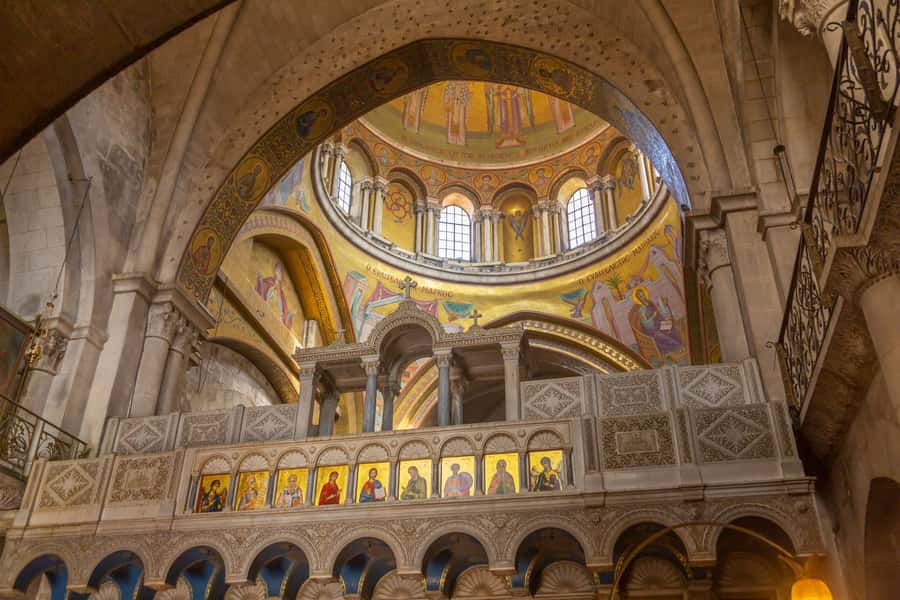
The Church of the Holy Sepulchre is the central Christian stop on the route. It dates back to the fourth century and contains the last four stations of Via Dolorosa.
This is the kind of place where historical facts only tell part of the story. The church matters because of its age, its association with the final events of Jesus’s life, and its continuing role as a place of worship and pilgrimage. A guide can help you understand that importance before you move through the building.
The tour promises an exploration of the church, but it does not specify which areas you will enter or how long you will remain inside. That is worth keeping in mind. The church is a major highlight, but the three-hour schedule also includes several quarters and the Western Wall.
I would treat the church visit as a focused introduction. Listen closely to the explanation, note the places you want to revisit, and do not expect to absorb every detail during one pass. The value is in learning how the church fits into the Christian Quarter and Via Dolorosa.
The Western Wall in the Jewish Quarter
The Western Wall is the tour’s key Jewish Quarter stop. It is one of the holiest sites for Jews and remains an active place of prayer.
This stop gives the tour a different tone from the Christian sites. Rather than following a pilgrimage route, you are seeing a place where religious practice continues in the present. Your guide can explain the wall’s significance, while your own visit may be as simple as observing quietly and taking in the setting.
The tour details do not provide specific instructions about access, prayer areas, or clothing requirements. For that reason, follow your guide’s directions on the day and approach the site respectfully. A walking tour can explain the background, but it cannot replace the need for sensitivity at an active holy place.
The Western Wall also helps balance the itinerary. The Church of the Holy Sepulchre anchors the Christian section, while the wall gives the Jewish Quarter its defining stop. Together, they show why Jerusalem has such importance for multiple faiths.
What three hours can and cannot cover
Three hours is a sensible length for a first visit. You get a clear route, a live guide, and the main religious landmarks without committing most of your day. At $39 per person, the price is reasonable if you value orientation and interpretation more than a long, leisurely exploration.
The price includes a hand-picked expert guide and the guided walking tour. It does not include meals, drinks, or personal travel insurance. Since the tour lasts only three hours, food is not a major issue, but you should plan your own refreshments before or after the walk.
The biggest limit is depth. You are covering four quarters, Via Dolorosa, the Church of the Holy Sepulchre, and the Western Wall in one outing. That means some stops will receive an introduction rather than a long visit.
I see this as good value for a first morning or afternoon in Jerusalem, especially if you are unsure how to arrange the Old City on your own. It is less suitable if you already know the area and want extended time inside individual churches or at specific religious sites.
The experience has a 4.7 rating from three recorded reviews, including a five-star rating that specifically praised Shimon’s personable approach and the wish for more time with him. That last point is useful: the guide may be a highlight, but the schedule is tight enough that you could want a longer follow-up visit.
Who will get the most from this walk
This tour suits you best if you:
- Have only a short stay in Jerusalem.
- Want a first look at all four Old City quarters.
- Prefer a guide to explain religious and historical sites as you walk.
- Want to see both the Western Wall and the Church of the Holy Sepulchre in one outing.
- Prefer a modestly priced activity rather than a full-day private tour.
- Are comfortable walking for three hours and keeping to a planned route.
It is also useful for first-time visitors who want to get their bearings before returning independently. After the tour, you will know which areas deserve more of your time.
You may want something else if you need a private experience, a slow photographic walk, or detailed access information for every religious site. The supplied details do not promise a private group, extended interior visits, or a specialized focus on architecture, archaeology, or food.
The tour is offered in English with a live guide. Cancellation is free up to 24 hours before the activity, and you can reserve now and pay later, which gives you some flexibility when planning a Jerusalem itinerary.
Should you book Jerusalem’s Old City Highlights?
Book it if you want a well-paced introduction to Jerusalem’s major Old City sights and have only three hours available. The combination of four quarters, Via Dolorosa, the Church of the Holy Sepulchre, and the Western Wall gives you a strong first picture of the city.
The best reason to choose it is the guide-led context. Shimon’s warm, professional style has been singled out, and a good guide can make the Old City far easier to understand than a map alone.
Skip it if you already have a detailed plan for the Old City or want to spend a long time at one site. For most first-time visitors with limited time, though, $39 is a fair price for a focused walking overview and a useful starting point for exploring Jerusalem on your own.
FAQ
How long is the Jerusalem Old City Highlights Tour?
The tour lasts three hours.
Where does the tour begin?
The meeting point is the David Citadel Hotel.
How do I identify the guide?
The guide will have a Tourist Israel flag and an orange name tag.
What language is the tour offered in?
The tour is offered in English with a live guide.
Which parts of the Old City does the tour cover?
The route covers the Jewish, Christian, Muslim, and Armenian quarters.
Does the tour visit the Church of the Holy Sepulchre?
Yes. The tour explores the Church of the Holy Sepulchre, which dates back to the fourth century and contains the final four stations of Via Dolorosa.
Will I see the Western Wall?
Yes. The Western Wall is included as a stop in the Jewish Quarter.
Are meals and drinks included?
No. Meals and drinks are not included.
Can I cancel the tour for a refund?
Yes. You can cancel up to 24 hours in advance for a full refund.
Just added around Jerusalem
- Tel Aviv & Old City of Jaffa – Tiny group from Tel Aviv★ 4.5 · 9 reviews
- Tel Aviv; Jaffa Old City, Port & Shuk Hapishpishim Walking Tour★ 4.5 · 11 reviews
- Discover the Secrets of the Underground Jerusalem with a private tour★ 5.0 · 4 reviews
- Private Tour : Jerusalem Old City Day Trip from Tel Aviv★ 5.0 · 19 reviews
- Private Tour from Tel Aviv to Jerusalem★ 5.0 · 3 reviews
- Luxury Private Tour to Jerusalem from Tel Aviv★ 5.0 · 22 reviews
- Tel Aviv Airport (TLV) to Jerusalem Hotels – Private Transfer★ 4.0 · 19 reviews
- Palm Sunday in Jerusalem: Mass at Bethpage and Via Dolorosa Procession with Transport from Tel Aviv★ 5.0 · 3 reviews
Jerusalem Old City Tours, compared.


City of David and Underground Jerusalem Day Tour
Read our review →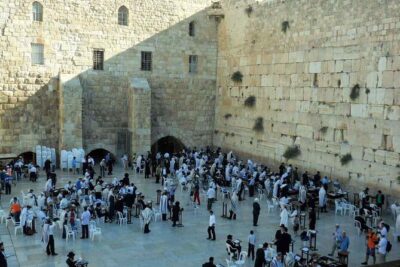
Browse the lists this tour appears in