
Reviewed · JERUSALEM OLD CITY TOURS
Jerusalem: Old City Highlights Tour
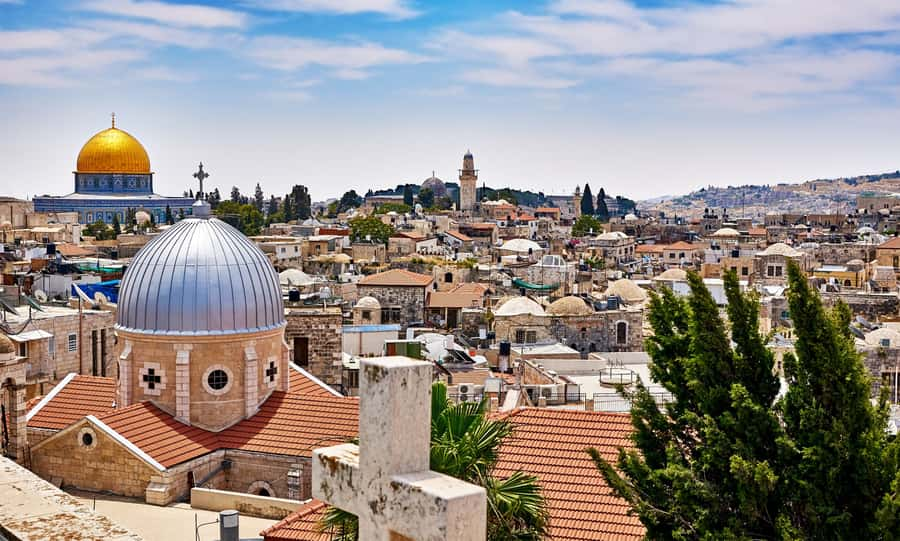
Jerusalem’s Old City is best approached with a plan, and this 10-hour guided tour gives you one. You begin with a broad view from Mount Scopus, then enter through Zion Gate for a walk through Armenian and Jewish quarters, the Byzantine Cardo, the Western Wall, Via Dolorosa, and the Church of the Holy Sepulchre.
I like the way the route brings together Jerusalem’s major religious sites and its everyday market streets. I also like the practical value: an air-conditioned coach, entry fees, guide, pickup, and drop-off are included. The main drawback is the pace. Ten hours on foot, over historic streets and crowded passages, can feel long, and the schedule changes on Mondays and Thursdays.
Key points to know before booking
- Mount Scopus begins the day with a city view, helping you understand Jerusalem’s position before entering the Old City.
- The route covers three major religious traditions, with stops connected to Jewish and Christian worship and the historic quarters of Jerusalem.
- The Western Wall, Via Dolorosa, and Church of the Holy Sepulchre form the central part of the Old City walk.
- Mount Zion adds the Room of the Last Supper and King David’s Tomb, though these stops change on Mondays and Thursdays.
- The $75 price includes transport and entry fees, making it useful for a first full day in Jerusalem.
- Modest clothing is essential, and the tour is not suitable for children under four or wheelchair users.
Starting above Jerusalem on Mount Scopus
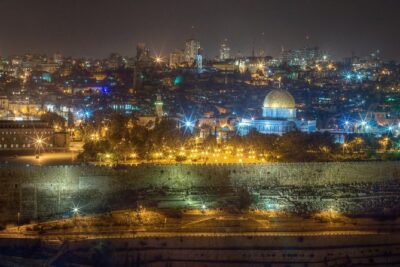
The day opens at Mount Scopus, where you get a panoramic view over Jerusalem. This is more than a pleasant photo stop. The Old City can feel like a maze once you are inside it, so seeing it from above gives you a useful sense of place before the walking begins.
You will be looking toward the city’s stone buildings, the Old City walls, and the surrounding valleys. The exact amount of time at the viewpoint is not specified, so treat it as an opening orientation rather than a long sightseeing stop.
From there, transport takes you toward the Old City. Pickup and drop-off are included, which removes some of the stress of arranging your own route to and from Jerusalem’s historic center. The coach is air-conditioned, a welcome detail during a full day that combines vehicle time with a lot of walking.
More walks through the Old City:
- Jerusalem: Guided Walking Tour of the Old City
★ 4.7 · 386 reviews - Best seller! Jerusalem old city four quarters tour
★ 5.0 · 123 reviews - Private Tour Jerusalem Old City
★ 5.0 · 118 reviews
Entering through Zion Gate and the Armenian Quarter
The Old City portion begins through historic Zion Gate. This entrance leads you into the Armenian Quarter, one of the city’s four traditional quarters. The route gives you a quick sense of how compact yet varied Jerusalem can be: a short walk can shift you from quiet lanes to sacred courtyards, market stalls, and major religious sites.
A guide matters here because the Old City is not simply a collection of monuments. It is a working district with narrow routes, changing access, and places that carry meaning for different faiths. With a live guide available in English, French, or Spanish, you can follow the story of each stop without spending your time trying to orient yourself on a map.
The tour does not list a specific guide by name, so you should not expect to choose a particular guide when booking. What is clear is that the day is led rather than self-guided, with the route and entry arrangements handled for you.
The Jewish Quarter and the Byzantine Cardo
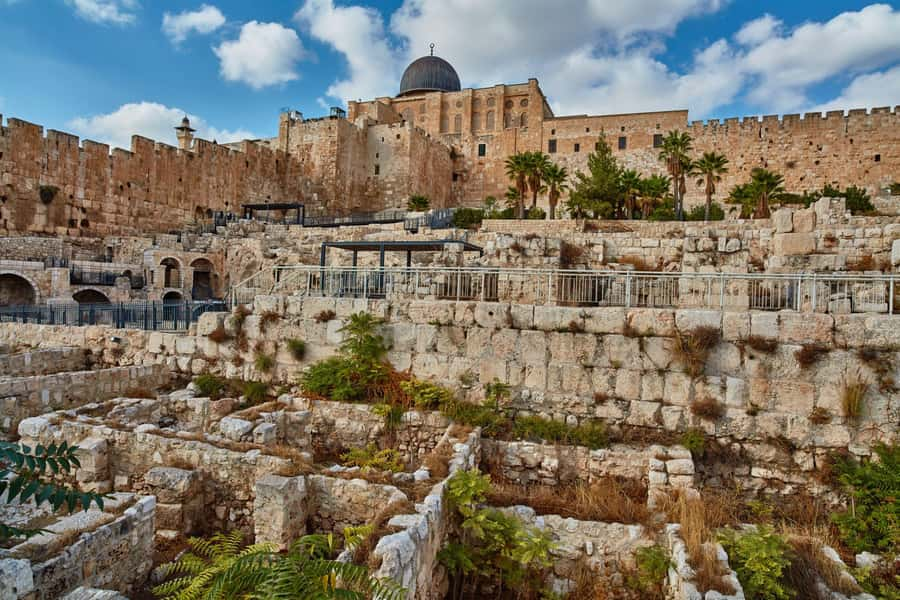
The walk continues into the Jewish Quarter, where you see remains of the Byzantine Cardo. A cardo was a main north-south street in a Roman or Byzantine city, and these remains offer a glimpse of Jerusalem beneath the modern lanes.
This stop is valuable because it gives the day some historical variety. You are not only moving from one holy site to the next. You are also seeing traces of an older urban plan, with the present-day quarter built around and above earlier layers.
The Cardo is not likely to be a long museum-style visit. It is part of the walking route, so your guide’s explanation will help you understand why the remains matter. Wear shoes that can handle extended walking, and remember that the tour’s long duration means comfort will affect your enjoyment as much as your interest in the sights.
The Western Wall and the meaning of the Old City
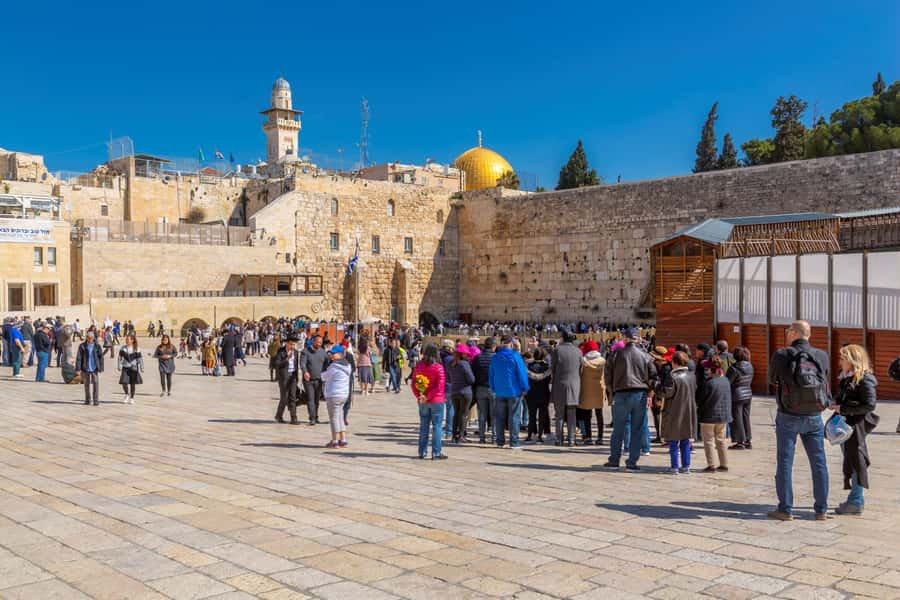
The Western Wall is one of the day’s central stops. It is a major Jewish holy site and a place of prayer, so your visit should be approached with care and respect. The tour includes a visit rather than just an exterior view, but the exact arrangements at the site are not detailed.
This is one of the places where clothing rules matter most. Shorts, short skirts, and sleeveless shirts are not allowed, and modest clothing is required at holy sites. Dress conservatively from the start instead of hoping to adjust your clothes later.
The Western Wall can be an emotional stop even if you are visiting mainly for its historical importance. Your guide can place it within the wider Old City route, while you have time to observe the setting for yourself. As with the other sacred sites, this is not a place to rush through for a photograph.
A few more Jerusalem half-days to weigh up
- From Tel Aviv: Jerusalem Old & New City Bus Tour
★ 4.2 · 824 reviews - Full Day City Tour of Jerusalem
★ 4.1 · 367 reviews - Old and New Jerusalem Day Trip from Tel Aviv
★ 4.5 · 296 reviews - Old and New Jerusalem Full-Day Tour
★ 4.0 · 273 reviews
Walking the Via Dolorosa
From the Jewish Quarter, the tour follows the Via Dolorosa, the traditional path associated with Jesus. This is one of the most recognizable walks in Jerusalem, but it is also one of the most demanding parts of the day.
The route passes through the Old City’s narrow streets and leads toward the Church of the Holy Sepulchre. You should expect a walking experience rather than a quiet procession. The route is part of a lived-in district, and the Old City bazaar is also included later in the walk.
The value of having a guide here is context. The Via Dolorosa is not marked in a way that makes every turn obvious, and the traditional route connects several religious points across busy lanes. You can focus on the surroundings instead of constantly checking directions.
The Church of the Holy Sepulchre
The Church of the Holy Sepulchre is the main Christian site on the tour. It is associated with the crucifixion and Christ’s tomb, and it contains centuries of religious treasures and traditions.
This is a major reason to choose the tour. The church can be difficult to understand on a first visit because several important locations are gathered inside one large, complex building. A guide can explain what you are seeing and keep the visit connected to the route along the Via Dolorosa.
Allow yourself a little patience here. Religious sites can have changing access, pauses, and quiet areas where you need to observe local customs. The supplied schedule does not promise a fixed amount of time inside, so the experience is best viewed as an important guided visit within a packed day, not a leisurely church tour.
The Church of the Holy Sepulchre also adds balance to the Western Wall. In one day, you see places that are central to Jewish and Christian worship, all within the Old City’s compact quarters.
The Old City bazaar and the feel of daily Jerusalem
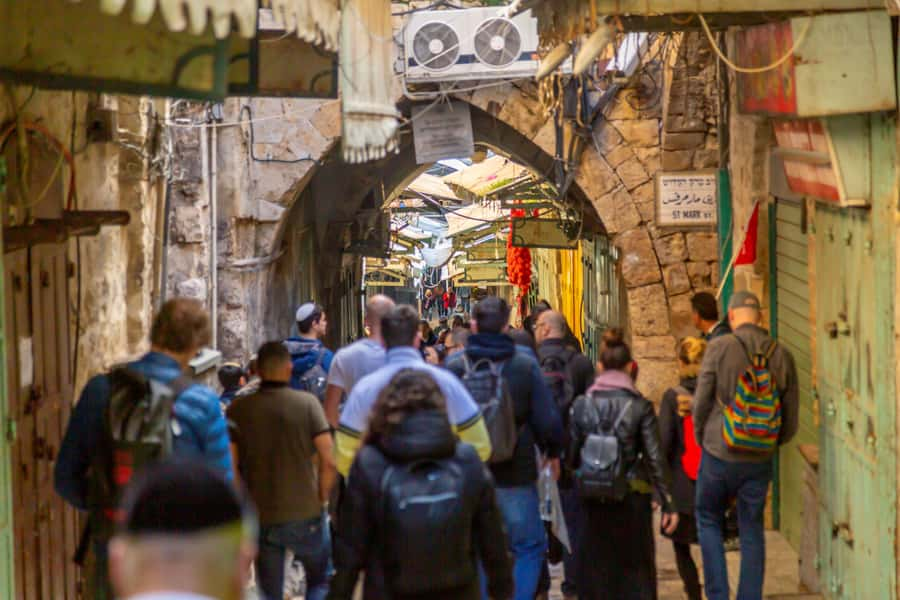
The route includes time in the colorful stalls of the Old City bazaar. This brings a different mood after the solemn religious sites. You see Jerusalem not only as a place of pilgrimage, but also as a market district where shopping, local trade, and daily movement continue around the historic buildings.
Food and drinks are not included, so budget separately if you want refreshments. The tour description does not specify a dedicated meal stop, which means you should plan to carry what you need or buy something during the day if the schedule allows.
This part of the walk can also be one of the more crowded sections. Stay close to the group and keep track of the meeting point if the guide allows any independent browsing. The tour is designed to cover a lot, so do not assume you will have a long, unstructured shopping period.
Gethsemane, the Church of All Nations, and the Kidron Valley
The tour then moves beyond the Old City to the Garden of Gethsemane and the Church of All Nations. These stops shift the day from the tight lanes of the Old City to a more open setting near the Kidron Valley.
The Garden of Gethsemane is connected to the final events in Jesus’ life, while the Church of All Nations is another important Christian site. The itinerary pairs the two, allowing you to see both the outdoor setting and the church connected to it.
You also get a view of the Kidron Valley and its ancient Jewish tombs. This stop is especially useful for understanding Jerusalem’s geography. The valley helps explain the relationship between the Old City, Mount Zion, and the surrounding hills.
There is an important schedule change here. On Mondays and Thursdays, except during Jewish holidays, the tour visits the Holocaust Museum instead of the Church of All Nations, King David’s Tomb, and the Room of the Last Supper on Mount Zion. Check the day of your booking carefully, since this is not a minor substitution. It changes a substantial part of the final route.
Mount Zion and three notable sites
On the regular Mount Zion route, you visit the Dormition Church, the Room of the Last Supper, and King David’s Tomb. These sites add another layer to the day and continue the tour’s focus on places connected with Christian and Jewish tradition.
The Room of the Last Supper is presented as the traditional location of the Last Supper. King David’s Tomb is another important religious site on Mount Zion. The tour places both within the same section of the day, so you can compare how different traditions relate to the same hill.
The Dormition Church gives the Mount Zion visit another Christian landmark. Taken together, these stops make Mount Zion more than a quick photo stop. They offer a final cluster of religious sites before the tour ends.
Again, Mondays and Thursdays bring a change. On those days, the Holocaust Museum replaces the Mount Zion sites as well as the Church of All Nations. Children under ten are not permitted to visit Yad Vashem because of the sensitive content, so families should consider the date and the age of every child before booking.
What $75 covers, and what it does not
At $75 per person, the tour offers fair value if you want a structured first day in Jerusalem. The price includes entry fees, a live guide, an air-conditioned coach, pickup, and drop-off. Paying separately for transport and several admissions could make an independent day less simple, even before you account for the time needed to plan the route.
The price does not include food or drinks. Since the tour lasts ten hours, this is worth planning for. You should also account for the physical demands of a long sightseeing day, especially in the Old City where the route involves extended walking.
The tour does not provide a named guide in advance, and the group size is not specified. If you prefer a private guide, a slow pace, or long periods at each site, this may not be the right format. If you want to cover the main sights efficiently with transport included, the value is stronger.
Free cancellation up to 24 hours before the start gives you some flexibility, and reserve-now-pay-later booking is available. These terms are useful when your wider Israel itinerary is still changing.
Clothing, age limits, and mobility
Modest clothing is not optional on this tour. Avoid shorts, short skirts, and sleeveless shirts, and choose clothing suitable for entry into holy sites. Dressing properly from the start is easier than trying to borrow or buy something during the day.
The tour is not suitable for wheelchair users, and children under four are not permitted. Children under ten cannot visit Yad Vashem on the Monday and Thursday version of the itinerary because of the museum’s sensitive subject matter.
The walking time also deserves attention. Even without a stated distance, the route includes the Old City quarters, the Cardo, Western Wall, Via Dolorosa, Church of the Holy Sepulchre, bazaar, and several sites outside the walls. If you tire easily, consider whether a 10-hour schedule matches your usual sightseeing pace.
Who should book this Jerusalem day tour?
I would choose this tour for a first visit to Jerusalem, especially if you want the main sights in one organized day. It suits you if you value transportation, a guide, included entry fees, and a route that connects the Old City with Mount Scopus, Gethsemane, the Kidron Valley, and Mount Zion.
It is also a good fit if you want religious and historical context without arranging several separate visits. Thomas from the United States gave the experience five stars after taking it on July 30, 2023, describing the Old City day as enjoyable from start to finish and praising the staff. That matches the tour’s strongest point: it gives you a clear way into a complicated city.
I would hesitate if you want a relaxed pace, wheelchair access, or a tour built around a long lunch and free time. I would also check the calendar before booking, since Mondays and Thursdays replace several Mount Zion and Gethsemane stops with the Holocaust Museum.
FAQ
How long does the Jerusalem Old City Highlights Tour last?
The tour lasts 10 hours.
What languages are available for the live guide?
The live guide is available in English, French, and Spanish.
What is included in the tour price?
The price includes entry fees, a guide, transport by air-conditioned coach, and pickup and drop-off.
Are food and drinks included?
No. Food and drinks are not included.
What happens on Mondays and Thursdays?
On Mondays and Thursdays, except during Jewish holidays, the tour visits the Holocaust Museum instead of the Church of All Nations, King David’s Tomb, and the Room of the Last Supper on Mount Zion.
Is modest clothing required?
Yes. Modest clothing is required at the holy sites. Shorts, short skirts, and sleeveless shirts are not allowed.
Should you book it?
Book this tour if you want one well-planned day covering Jerusalem’s principal sacred and historic sites, with transport and admissions handled for you. The $75 price is sensible for that convenience, and the route gives you a strong first look at the city.
Before booking, confirm the day of the week, prepare for substantial walking, and wear modest clothing. If you accept the full schedule and the Monday or Thursday substitution, this is a practical way to see a great deal of Jerusalem in a single day.
Just added around Jerusalem
- Tel Aviv & Old City of Jaffa – Tiny group from Tel Aviv★ 4.5 · 9 reviews
- Tel Aviv; Jaffa Old City, Port & Shuk Hapishpishim Walking Tour★ 4.5 · 11 reviews
- Discover the Secrets of the Underground Jerusalem with a private tour★ 5.0 · 4 reviews
- Private Tour from Tel Aviv to Jerusalem★ 5.0 · 3 reviews
- Private Tour : Jerusalem Old City Day Trip from Tel Aviv★ 5.0 · 19 reviews
- Luxury Private Tour to Jerusalem from Tel Aviv★ 5.0 · 22 reviews
- Tel Aviv Airport (TLV) to Jerusalem Hotels – Private Transfer★ 4.0 · 19 reviews
- Palm Sunday in Jerusalem: Mass at Bethpage and Via Dolorosa Procession with Transport from Tel Aviv★ 5.0 · 3 reviews
Jerusalem Old City Tours, compared.
City of David and Underground Jerusalem Day Tour
Read our review →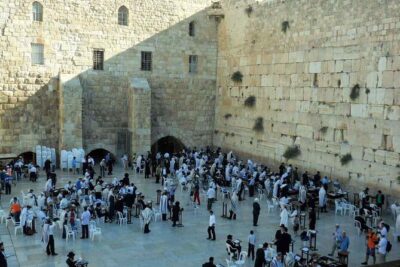
Browse the lists this tour appears in