

Reviewed · JEWISH HERITAGE TOURS
Kabbalah Heritage Walk
Safed is the right place to ask big questions about Kabbalah. In the 16th century, this hilltop city became the center of Jewish mystical teaching, and this walk connects its old streets and synagogues with the rabbis who shaped that tradition. I like the focus on Safed’s actual sacred sites, rather than a classroom talk disconnected from place. I also like that Rabbi Shmuel Kopel leads the walk as a Talmudic scholar, so you can ask questions as they arise.
The 90-minute format keeps the subject manageable, and a maximum of 15 people should give you more access to the guide than a large bus tour. The main consideration is timing: the walk generally runs once a day, at 1:30 p.m. Sunday through Thursday and 11 a.m. Friday. Also, the booking information lists Tiberias as the location but gives a Safed meeting point, so confirm the details before you set out.
Key points to know before you book
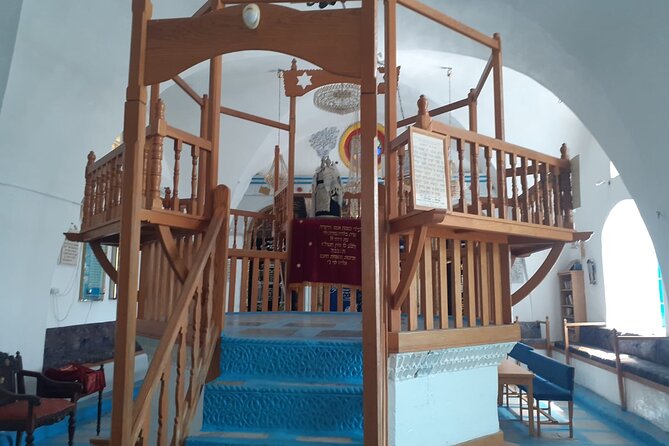
- Safed is the subject and the setting: You learn about Kabbalah while walking through the city that became its 16th-century center.
- Rabbi Shmuel Kopel leads the walk: Expect a guide with Talmudic training and a strong connection to the teachings discussed.
- The tour visits historic synagogues: These sites connect the city’s buildings with the rabbis who prayed and taught there.
- Questions are part of the experience: The small group, capped at 15 people, leaves room for discussion.
- The tour takes about 90 minutes: It is a focused introduction, not a full-day study program.
- Timing needs planning: The regular departure is 1:30 p.m. Sunday through Thursday and 11 a.m. Friday.
Why Safed is the best place to study Kabbalah
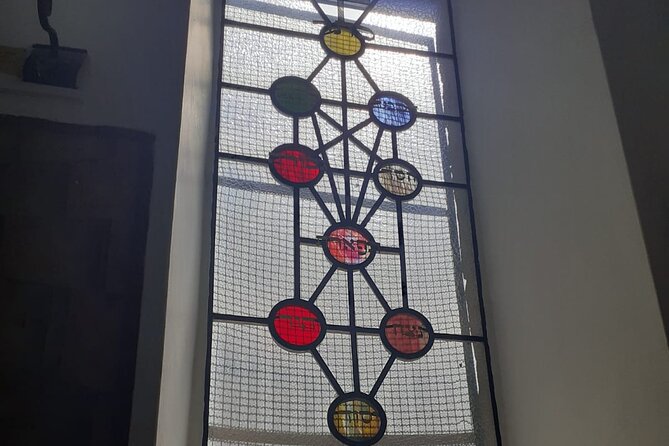
Kabbalah can feel remote if you meet it only through books or abstract explanations. In Safed, the subject has a physical address. Streets, synagogues, graves, and old religious quarters all help place the teachings in a real setting.
The city became known as the capital of Kabbalistic teaching in the 16th century. Several important figures lived, taught, prayed, or worked here, including Rabbi Moshe Cordovero, Rabbi Shlomo Alkabetz, and the Holy Ari, Isaac Luria. Their names are central to this walk because the guide does not treat Kabbalah as a vague collection of mysteries. You learn who taught what, where those teachings took root, and how they affected Jewish practice.
That setting is the main reason I would choose this experience over a general city stroll. You are not simply looking at old stone buildings and hearing that they are important. The walk explains why a particular place matters and connects it to the ideas associated with the rabbi who used it.
Safed also has a wider religious story. Rabbi Yosef Karo, author of the Shulchan Aruch, lived here. That work became the most authoritative code of Jewish religious law, so the city was important not only for mystical thought but also for the practical rules followed by Jewish communities around the world.
This mix gives the walk useful range. You hear about Kabbalah, but you also see how mystical teaching and Jewish law developed in the same city. That makes the experience suitable for visitors who want context, not only legends.
More Jewish heritage walks in Galilee:
- Tour The Mystical City Of Safed
★ 5.0 · 11 reviews - Jerusalem: Meet the Orthodox Jews Tour
★ 4.9 · 103 reviews - Jerusalem Yad Vashem Holocaust History Museum Tour
★ 5.0 · 98 reviews
Walking through the old city with Rabbi Shmuel Kopel
Rabbi Shmuel Kopel is the named provider and guide for the experience. The walk is led by someone who studied and drew inspiration from the teachings being discussed, rather than by a guide offering only a quick historical outline.
That matters because Kabbalah has its own vocabulary and layers of interpretation. You can ask what a particular sage taught, how that teaching was understood, and how it affected Jewish life. The format is built for conversation, so you do not have to save every question for the end.
The small-group limit of 15 people is another practical advantage. It is not a private tour, but it is small enough that the guide can respond to individual interests. If one person wants to ask about Isaac Luria and another wants to understand the connection to Jewish law, the group has a better chance of making room for both questions.
I would still approach the experience with realistic expectations. This is an introduction lasting about an hour and a half. It cannot cover the full history of Kabbalah, explain every major text, or provide a complete study course. Its strength is the connection between place, person, and teaching.
The historic synagogues and sacred sites
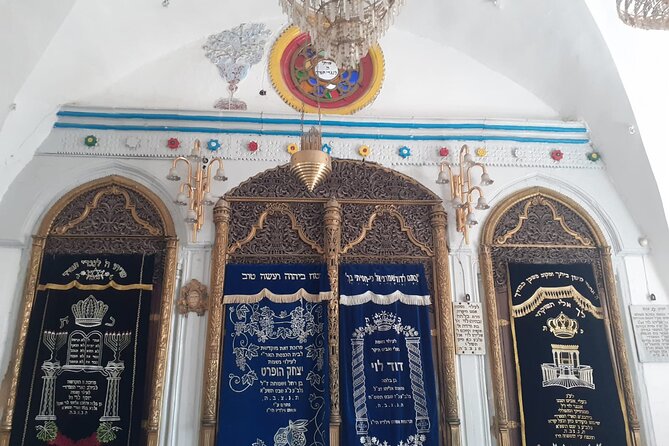
The exact order of stops can vary, but the walk is designed around places of Kabbalistic significance in Safed. You visit historic synagogues and sites connected with important rabbis. At each stop, the guide explains the relevant sage and the ideas tied to that location.
A synagogue visit here is more than an architectural pause. You learn which rabbis prayed there and why the building matters within the city’s religious story. The setting gives the discussion a sense of scale. These were not distant figures from a textbook. They taught, prayed, and shaped religious life in the same streets you are walking.
The sites connected with Moshe Cordovero introduce one part of Safed’s Kabbalistic tradition. Rabbi Cordovero, often known as the Ramak, was one of the major teachers associated with the city. The walk places his work within Safed’s broader circle of scholars.
Rabbi Shlomo Alkabetz is another important name. He is closely linked with Jewish liturgical tradition, and his place in the city helps show how Kabbalistic ideas entered religious practice and prayer. You are not simply collecting names. You are seeing how teaching could move from study into the rhythm of communal worship.
Isaac Luria, known as the Holy Ari, is perhaps the best-known figure in Safed’s mystical story. His teachings had a lasting effect on Kabbalistic thought and Jewish customs. A site connected with him gives the guide a natural point for explaining why Safed became so influential.
Rabbi Yosef Karo adds an important counterweight. His Shulchan Aruch is associated with Jewish law rather than only mystical speculation. Including him helps you understand that Safed was a center of several major streams of Jewish scholarship at the same time.
The walk’s value comes from these connections. You see the city as a working religious center, not as a collection of picturesque lanes with famous names attached afterward.
What the guide can add to a complicated subject
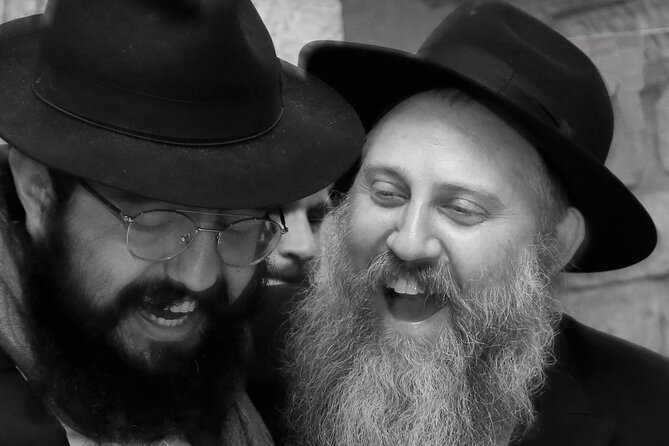
Kabbalah has a reputation for secrecy, and for many centuries relatively little information about it was available to the public. That history can make the subject sound more mysterious than it needs to be.
A guided walk gives you a starting point. Rather than trying to sort through every interpretation, you can ask direct questions about the teachings relevant to each site. The guide can explain what a particular sage taught and how those ideas had practical effects on Judaism.
I would especially value the chance to ask about the difference between Kabbalah as a historical religious movement and modern popular ideas about mysticism. The supplied information does not promise a particular lecture topic, but the format clearly encourages questions, and the guide’s Talmudic background should help keep the discussion tied to Jewish sources and tradition.
The most useful question to bring is not simply What is Kabbalah? That is too broad for 90 minutes. Ask how a specific rabbi influenced prayer, law, custom, or Jewish thought. Those questions fit the walk’s site-by-site structure and make better use of your time.
The guide also helps with the city’s status as one of Judaism’s four sacred cities. This point was highlighted in the experience, and it gives Safed a place within a wider religious geography. You learn why the city matters alongside Jerusalem, Hebron, and Tiberias, rather than seeing it as an isolated center of mysticism.
More ancient sites near Galilee:
- Nazareth: Biblical History & Culture Private Tour
★ 5.0 · 3 reviews - Jerusalem Christian Heritage Private Tour
★ 5.0 · 9 reviews - Full-Day Private Luxury and Cultural Tour in Tel Aviv
★ 5.0 · 5 reviews - Jerusalem World Heritage Private Tour
★ 5.0 · 5 reviews
What the 90-minute format feels like
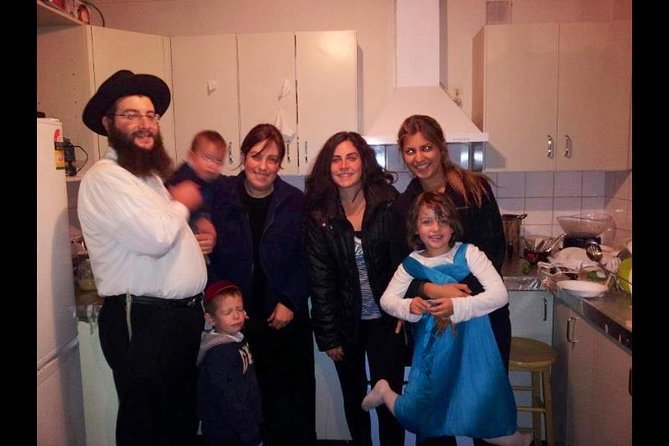
An hour and a half is a good length for this subject. You have enough time to visit several significant places and hear the main stories without committing half a day to a specialist lecture.
I like the balance between walking and explanation. A completely indoor talk could become dense, while a standard sightseeing walk might skim over the religious meaning. Here, the movement between sites gives each section a clear focus.
The pace should suit most people who can participate in a normal walking tour, but the experience does not describe a special route or detailed accessibility arrangements. Safed is a historic hill city, so you should be prepared for an urban walk rather than a seated presentation. The information confirms that most people can take part and that service animals are allowed.
The walk begins at Kikar HaMeginim in Safed and ends back at the same meeting point. That makes planning easier because you are not left at an unfamiliar part of town. It also means you can arrange your next activity from the same central starting area.
The tour is offered once per day on its regular schedule. Sunday through Thursday, it starts at 1:30 p.m. On Friday, it starts at 11 a.m. Other times may be arranged in advance if available, but you should not assume that a private departure can be added at short notice.
Price, group size, and overall value
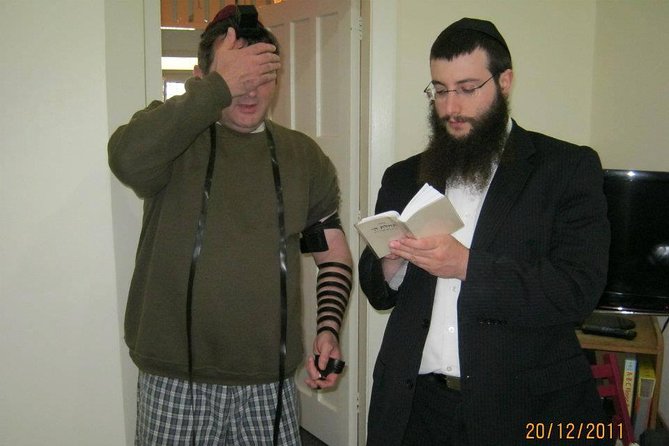
At $45 per person, this is priced like a focused specialist walk rather than a basic orientation tour. The value depends on how much you want from the subject.
If you are mainly looking for a quick look at Safed’s lanes and synagogues, you may find the price harder to justify. You can explore some parts of the city on your own. But independent sightseeing will not easily give you the same connection between a building, a rabbi, and a teaching.
I think the price is more reasonable if you already have an interest in Jewish history, religious studies, or Kabbalah. You are paying for the guide’s subject knowledge, the chance to ask questions, and a route built around sites that might otherwise be easy to pass without understanding.
The maximum group size of 15 improves that value. You are not paying for a large-scale commentary heard from the back of a crowd. The group is still shared, but the format should allow more direct attention.
Group discounts are available, though no discount amount is provided. If you are visiting with family or friends, check the current price for your party before booking. The mobile ticket is convenient, particularly if you are organizing several stops around Safed and do not want to manage printed paperwork.
Who will get the most from this walk

I would recommend this experience to you if you want religious context tied to actual places. It suits first-time visitors to Safed who want a clear introduction, as well as people who already know a little about Kabbalah and want to ask more focused questions.
It is also a good choice for families with an older child or teenager who can engage with religious history. The short duration helps keep the subject contained, and the question-and-answer format may work better than a long museum lecture.
Students of Jewish history and visitors interested in the development of Jewish law should find the inclusion of Rabbi Yosef Karo useful. The walk is not limited to mystical stories. It shows how Safed contributed to both spiritual teaching and legal practice.
I would be more cautious about booking it if you want a general food, art, or architecture tour. Those subjects may appear in passing, but the purpose here is Kabbalah and the rabbis associated with it. You should also consider the scheduled departure if your day already includes other fixed activities.
The experience is less suited to someone who wants a detailed academic course. Ninety minutes can give you a framework and several strong examples, but not a full account of Kabbalistic texts or debates.
Timing and booking details worth checking
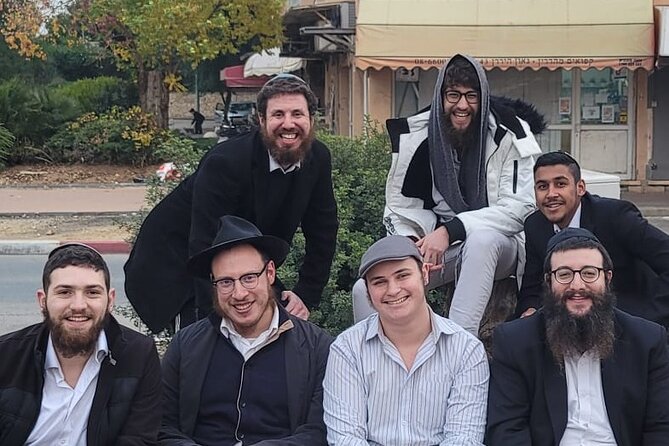
The regular meeting point is Kikar HaMeginim in Safed, and the walk returns there. The supplied location is labeled Tiberias, while the start and end point are clearly in Safed. I would confirm the address and transport plan before booking, especially if you are staying in Tiberias or another town near the Sea of Galilee.
The activity is near public transportation, which helps if you are building a day without a car. No transport from Tiberias is included in the information provided, so plan that part separately.
You receive confirmation at the time of booking. The activity accepts service animals, and most people can participate. If you have a specific mobility concern, ask before reserving because the route details are not described in enough detail to promise a particular surface or step-free path.
Free cancellation is available if you cancel at least 24 hours before the local start time. Cancellations made inside that window are not refunded, and changes are not accepted within 24 hours. That policy is fair for a small scheduled tour, but it makes it wise to settle your Safed plans before the deadline.
Should you book the Kabbalah Heritage Walk?
Book it if you want to understand why Safed matters, not simply photograph its old synagogues. The strongest part is the link between the city’s religious sites and figures such as Moshe Cordovero, the Alkabetz, Isaac Luria, and Yosef Karo.
Rabbi Shmuel Kopel’s role gives the walk a focused, discussion-based feel, while the group limit keeps it from becoming impersonal. At $45, I see good value if Kabbalah or Jewish religious history is a real interest for you.
Skip it if you want a broad sightseeing tour or a longer, more detailed academic program. Also verify the Safed meeting point because the location information references Tiberias. For the right audience, this is a compact way to make sense of Safed’s sacred streets and the ideas that made the city famous.
FAQ
Where does the Kabbalah Heritage Walk start?
The walk starts at Kikar HaMeginim in Safed, Israel.
Where does the walk end?
The activity ends back at the meeting point in Safed.
How long does the tour last?
The walk lasts approximately 1 hour and 30 minutes.
What time does the tour operate?
It operates once daily at 1:30 p.m. Sunday through Thursday and at 11 a.m. on Friday.
How many people can join the tour?
The maximum group size is 15 people.
Who leads the experience?
The experience provider is Rabbi Shmuel Kopel, a Talmudic scholar.
What does the tour visit?
The walk visits sites and historic synagogues connected with Kabbalah and important Jewish scholars in Safed, including Rabbi Moshe Cordovero, the Alkabetz, Isaac Luria, and Rabbi Yosef Karo.
Can I cancel for a full refund?
Yes. You can receive a full refund if you cancel at least 24 hours before the experience starts. Cancellations or changes made less than 24 hours before the start time are not accepted for a refund.
More Walking Tours in Galilee
- Jerusalem: Guided Walking Tour of the Old City
★ 4.7 · 386 reviews - Walking Tour of Akko (Half-day)
★ 5.0 · 84 reviews - All Inclusive Walking Tour Old City Jerusalem
★ 5.0 · 83 reviews - Tel Aviv: Jaffa Half-Day Walking Tour
★ 4.5 · 70 reviews
Just added around Galilee
- Sea of Galilee – Off the Beaten Track★ 5.0 · 3 reviews
- A Day of Spiritual Discovery in the Upper Galilee★ 5.0 · 7 reviews
- Tour The Mystical City Of Safed★ 5.0 · 11 reviews
- Galilean Cooking Workshop 2-4 particpants★ 5.0 · 27 reviews
- Druze Culinary Tour of the Western Galilee★ 5.0 · 6 reviews
- The Golan heights★ 5.0 · 4 reviews
- Sea of Galilee, Capernaum and Nazareth Day Trip from Tel Aviv★ 4.0 · 6 reviews
- Private tour: Around the Sea of Galilee.★ 5.0 · 7 reviews
Jewish Heritage Tours, compared.
Jerusalem Yad Vashem Holocaust History Museum Tour
Read our review →
Jerusalem Half Day Tour: Holy Sepulchre and Western Wall
Read our review →
Jerusalem Half-Day Tour from Tel Aviv: Holy Sepulchre and Western Wall
Read our review →
Skip the Line:1.5Hour AudioTour – Yad Vashem Holocaust Remembrance Center Ticket
Read our review →
Jerusalem Jewish Orthodox Neighborhood Walking Tour
Read our review →
Browse the lists this tour appears in