

Reviewed · JEWISH HERITAGE TOURS
Jerusalem Jewish Orthodox Neighborhood Walking Tour
Jerusalem’s Haredi neighborhoods can feel like a separate city within the city, and this walking tour gives you a useful introduction from someone connected to the community. You’ll see religious signs, daily routines, a working synagogue, community services, a bakery, and sites most sightseeing routes skip.
I like the local perspective and the chance to ask direct questions about Haredi life. I also like the food stop and the planned look at old religious objects in a neighborhood library. The main caution is that the published details do not fully agree: the tour is described as four hours in places, but the headline duration is about two and a half hours, and some promised visits may not take place.
Key points at a glance
- Me’a She’arim from the inside: Walk through one of Jerusalem’s best-known Haredi districts with a guide from the local Orthodox community.
- Motti may lead your departure: Past guests singled out Motti for clear explanations and thoughtful answers, though guides can vary.
- Food is part of the plan: Expect Jewish pastries such as rugelach and challah, but food and drinks are not included in the $45 price.
- A real look at community life: The route may include a synagogue, community center, soup kitchen, bakery, and local library.
- Dress matters: Men and women must wear modest clothing, and you should treat the neighborhood as a living community rather than a tourist exhibit.
- Confirm the schedule: The advertised length ranges from roughly two and a half to four hours, so check the current details before booking.
Why Me’a She’arim makes a worthwhile walking tour
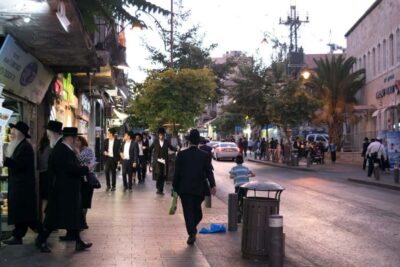
Me’a She’arim is not a monument-filled quarter where you simply check off a few old buildings. It is a functioning Haredi neighborhood, and the value of the tour comes from seeing how religion shapes ordinary spaces: street notices, synagogue entrances, bakeries, study rooms, and community services.
You are not just looking at architecture. You are learning why certain clothing styles, public signs, prayer customs, and neighborhood rules matter. A good guide can explain these details without turning the walk into a lecture or reducing the residents to curiosities.
This is especially useful if you have seen Haredi men in Jerusalem but never understood the divisions among Orthodox communities, the role of religious study, or the way local institutions support families. The tour is designed to answer those questions in plain language.
The best reports from the experience praise guides who offer a fair, balanced view of this part of Israeli society. Motti is named specifically in one strong account, with praise for his explanations and willingness to answer questions. That sort of conversation is the heart of the experience.
More Walking Tours in Jerusalem
- Jerusalem: Guided Walking Tour of the Old City
★ 4.7 · 386 reviews - All Inclusive Walking Tour Old City Jerusalem
★ 5.0 · 83 reviews - Jerusalem Walking Tour: In the Footsteps of Jesus
★ 4.5 · 67 reviews
Starting at Davidka Square and Abraham Jerusalem
The advertised meeting point is Abraham Jerusalem, at Ha-Nevi’im Street 67, with a 4:30 pm start. The tour ends back at the same meeting point. The location is near public transportation, which helps if you are coming from another part of central Jerusalem.
The route itself begins with a short stop at Davidka Square. Allow about 15 minutes here. The square takes its name from the Davidka, a homemade mortar used by Jewish forces during the 1948 Arab-Israeli War.
Davidka Square is also a practical orientation point. It sits near the Mahane Yehuda Market, the Jaffa Road pedestrian mall, and a Jerusalem light rail station. You will not spend the whole afternoon here, but the stop gives the guide a chance to place the Haredi quarter within modern Jerusalem.
I like this beginning because it links the neighborhood to the city around it. Jerusalem is not divided into neat museum zones. Modern transit, markets, historic memories, and tightly observant communities all meet within a short walk.
Do not expect a major historic site visit at Davidka Square. It is an introduction and meeting area, not the main attraction. The real substance begins once you enter the Haredi streets.
Walking through Haredi streets with local context
The longer portion of the route is in Me’a She’arim, where you can expect to walk for about an hour and 15 minutes according to the published schedule. Your guide points out religious symbols, customs, and important locations along the way.
This is where the tour earns its price. A self-guided walk through the quarter would show you signs and clothing, but it would leave you guessing about their meaning. A local guide can explain the social and religious clues that are easy to miss.
You may hear the term Haredi, which refers to ultra-Orthodox Jewish communities. The supplied description also explains the phrase as people who fear God. The neighborhood includes a range of traditions, and a careful guide should help you understand that Haredi society is not one single block with identical customs.
I would use the walking time to ask specific questions. Ask how the neighborhood’s institutions serve local residents, how religious study fits into daily life, and why particular signs or dress codes appear in public spaces. The strongest response about this tour praised the guide’s ability to give important facts at a steady pace, stopping often rather than rushing through the streets.
You should also keep your behavior low-key. This is a residential community. Modest dress is required for men and women, and respectful photography is a sensible rule even though the supplied details do not set out a formal camera policy. Dress conservatively before you arrive, not after someone has to remind you.
Synagogue, community center, and soup kitchen
The planned experience includes a working synagogue, a community center, and a soup kitchen. These stops matter because they show how the neighborhood functions beyond prayer services and religious clothing.
A synagogue visit can help you understand the role of worship in local life, but expectations need to be realistic. One account says the synagogue was viewed only through a window rather than entered. That means access may depend on the day, the group, the service schedule, or local permission.
The same caution applies to the community center and soup kitchen. They are useful places to see the neighborhood’s support network, but they are not presented as formal museums with guaranteed public access to every room.
I would regard these stops as opportunities rather than promises of a fixed backstage tour. If you need to see the inside of a synagogue or speak with staff at a community service, ask the guide early in the walk what is possible that day.
More Jewish heritage walks in Jerusalem:
- Jerusalem: Meet the Orthodox Jews Tour
★ 4.9 · 103 reviews - Jerusalem Yad Vashem Holocaust History Museum Tour
★ 5.0 · 98 reviews - Jerusalem Half Day Tour: Holy Sepulchre and Western Wall
★ 4.5 · 80 reviews - Jerusalem Half-Day Tour from Tel Aviv: Holy Sepulchre and Western Wall
★ 4.0 · 61 reviews
The bakery stop, rugelach, and challah
Food provides one of the easiest ways to connect with local culture, and the tour includes a visit to a distinctive neighborhood bakery. The planned samples include rugelach and challah, two familiar Jewish foods with strong links to home cooking and religious observance.
Rugelach are small, filled pastries, while challah is braided bread traditionally associated with the Sabbath and Jewish holidays. Sampling them in the quarter gives the food some context. You are not just buying a snack in a generic cafe. You are seeing the sort of bakery that serves the people who live there.
There is an important cost detail: food and drinks are not included in the $45 tour price. One account also says food bought at a snack stop had to be paid for separately. Bring a little extra money if you want to eat beyond any offered tasting, and do not assume every bakery purchase is covered.
The food stop may be one of the most enjoyable parts of the walk, but it is also one of the areas where the schedule seems inconsistent. One complaint says the promised pastries were not provided. I would confirm at the start whether a tasting is included that day, especially if this is a major reason you are booking.
Meeting a Haredi family at home
The planned program includes a visit to a Haredi family’s home. In theory, this is the most personal part of the experience. A conversation in a home could give you a better sense of family life, hospitality, religious practice, and the rhythm of a normal day than a street walk alone.
But this is also the clearest point of uncertainty. One unhappy account says the family visit did not happen. That does not prove it is never offered, but it does mean you should not treat it as guaranteed.
The same advice applies to any promised personal encounter in a religious neighborhood. Respect the family’s privacy, listen more than you photograph, and ask questions in a considerate way. If the visit is available, it could be highly valuable. If it is not, the tour should still provide context through the neighborhood walk and guide’s explanations.
I would ask before booking if the family visit is operating on your date. If the answer is vague, book this for the wider cultural introduction rather than for a guaranteed home visit.
The local library and ancient religious artifacts
Another planned stop is a neighborhood library containing ancient Jewish religious artifacts. This gives the tour a different angle. The streets show present-day community life, while the library connects that life to older texts, objects, and traditions.
The description does not specify which artifacts are displayed, how old they are, or how much time you spend inside. You should therefore expect a brief local collection rather than a major museum with a formal exhibition program.
Still, small collections can be useful when a guide explains why an object matters. A religious artifact may make more sense when you understand the customs and study practices you have just seen outside.
As with the synagogue and family visit, access may vary. Ask the guide what is open on the day of your tour. The advertised route includes several community institutions, but the actual walk may be adjusted.
What $45 buys you, and what it does not
At $45 per person, this is reasonably priced if the guide provides the local access and cultural explanation described. You are paying for a small-group guided walk, not for a meal or a series of major admissions. The maximum group size is 20, which is manageable but not especially intimate.
The value is strongest for someone who wants interpretation. If you already know Haredi customs well, the walk may feel basic. If you are unfamiliar with the community, the guide’s explanations can make ordinary streets far more understandable.
The price does not cover food and drinks. It also does not guarantee every advertised inside visit, based on the mixed accounts about the synagogue, family home, and pastries. That makes the tour a better buy as a guided neighborhood encounter than as a strict checklist of five guaranteed attractions.
Some departures have been praised for a thoughtful, fair approach to a sensitive subject. That matters here. Haredi life is often presented through quick stereotypes, while this tour aims to explain the community from a local viewpoint.
Timing, dress, and practical planning
The start time is 4:30 pm, and the activity returns to the meeting point. The headline duration is approximately two and a half hours, while other details describe a four-hour tour. One account says the actual experience lasted about three hours.
That is a large enough difference to affect your evening plans. Leave room after the scheduled finish, and confirm the current duration before booking a dinner reservation or another timed activity.
Wear modest clothing from the start. The requirement applies to both men and women. You do not need to wait until you reach Me’a She’arim to adjust your outfit.
The tour is near public transportation, service animals are allowed, and most people can participate. The group may include up to 20 people, so arrive ready for a regular city walk rather than a private guided visit.
The activity requires good weather and a minimum number of participants. If poor weather cancels it, you are offered another date or a full refund. The same applies if the minimum group size is not met. Otherwise, cancellation is free up to 24 hours before the start time, with no refund for later cancellations or changes.
Who should book this Jerusalem walk?
I would choose this tour if you want to understand a living religious community and are willing to approach it with patience. It suits first-time visitors who have questions about Haredi life, Jewish customs, and the institutions that support the neighborhood.
It is also a good fit if you prefer a guide-led cultural walk over another archaeological site. The strongest part is the conversation: ask questions, listen carefully, and pay attention to the small details the guide points out.
I would hesitate if you need a tightly controlled itinerary. The duration is unclear, some stops may be viewed from outside, and the family visit and food tasting may not always happen. The $45 price is fair for the guide and neighborhood access, but less compelling if several of those special stops are missing.
Should you book the Haredi neighborhood tour?
Book it if your main goal is a respectful introduction to Jerusalem’s Haredi community, especially if you value a guide who can explain customs in a balanced way. Motti’s reported guiding style sounds particularly strong, with clear answers and a steady flow of useful facts.
Before paying, confirm three things: the expected duration, whether the family visit and bakery tasting are operating, and which indoor sites can actually be entered. If those details are settled, this can be one of the more revealing cultural walks in Jerusalem.
If you want guaranteed food, a guaranteed synagogue interior, and a precise four-hour schedule, choose another activity or treat this one as flexible. Its strength is local interpretation, not a perfectly fixed program.
FAQ
Where does the tour start?
The tour starts at Abraham Jerusalem, Ha-Nevi’im Street 67, Jerusalem, postal code 9470211.
What time does the tour begin?
The stated start time is 4:30 pm.
Where does the tour end?
The activity ends back at the meeting point.
How long does the tour last?
The headline duration is approximately two hours and 30 minutes, but other details describe a four-hour experience. One account says the actual tour lasted about three hours, so confirm the current timing before booking.
What should I wear?
Modest dress is required for both men and women.
Is food included in the price?
No. Food and drinks are not included. The tour may include Jewish pastries such as rugelach and challah, but any additional food or drinks must be paid for separately.
How large can the group be?
The activity can have a maximum of 20 participants.
Can I cancel for a refund?
You can cancel at least 24 hours before the start time for a full refund. Later cancellations and changes are not accepted for a refund. If bad weather or an insufficient number of participants cancels the tour, you are offered another date or a full refund.
Just added around Jerusalem
- Tel Aviv & Old City of Jaffa – Tiny group from Tel Aviv★ 4.5 · 9 reviews
- Tel Aviv; Jaffa Old City, Port & Shuk Hapishpishim Walking Tour★ 4.5 · 11 reviews
- Discover the Secrets of the Underground Jerusalem with a private tour★ 5.0 · 4 reviews
- Private Tour : Jerusalem Old City Day Trip from Tel Aviv★ 5.0 · 19 reviews
- Private Tour from Tel Aviv to Jerusalem★ 5.0 · 3 reviews
- Luxury Private Tour to Jerusalem from Tel Aviv★ 5.0 · 22 reviews
- Tel Aviv Airport (TLV) to Jerusalem Hotels – Private Transfer★ 4.0 · 19 reviews
- Palm Sunday in Jerusalem: Mass at Bethpage and Via Dolorosa Procession with Transport from Tel Aviv★ 5.0 · 3 reviews
Jewish Heritage Tours, compared.

Jerusalem Yad Vashem Holocaust History Museum Tour
Read our review →
Jerusalem Half Day Tour: Holy Sepulchre and Western Wall
Read our review →
Jerusalem Half-Day Tour from Tel Aviv: Holy Sepulchre and Western Wall
Read our review →
Skip the Line:1.5Hour AudioTour – Yad Vashem Holocaust Remembrance Center Ticket
Read our review →
Ashdod Shore Excursion: Private Jerusalem Tour Including Western Wall
Read our review →Browse the lists this tour appears in