Reviewed · CITY TOURS
From Jerusalem Small group tour Old&New City ENTRY FEES INCL
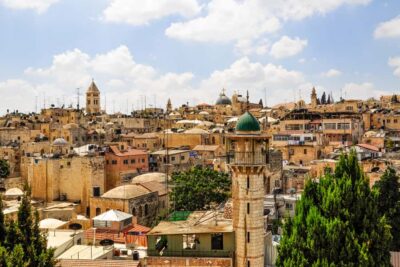
Jerusalem packs centuries of faith and conflict into a small, walkable Old City. This tour gives you the big picture in one long day, beginning with Ein Karem and the Mount of Olives before moving through Mount Zion and the Old City’s Armenian, Jewish, and Christian quarters. I especially like the panoramic Mount of Olives stop and the way the route links major sites instead of treating them as isolated photo stops.
I also like that entrance fees and hotel pickup are included, which keeps the $97 price easy to understand. Guides such as Ofir, Sharon, Said, and Uda Levy have been praised for clear explanations and good group control. The tradeoff is time: you can see nearly all the main sights, but the schedule leaves little room for shopping, long prayers, or a detailed visit inside the Church of the Holy Sepulchre.
Key points at a glance
- Mount of Olives views: Begin with a broad view across Jerusalem before entering the crowded Old City.
- Three historic quarters: Walk through the Armenian, Jewish, and Christian quarters, with a short passage through the Muslim Quarter.
- Mount Zion sites: Visit King David’s Tomb, the Room of the Last Supper, and Dormition Abbey.
- Major Christian and Jewish landmarks: Follow the Via Dolorosa to the Church of the Holy Sepulchre and visit the Kotel.
- Good one-day coverage: The route suits a first visit or a short stay, but the pace is brisk.
- Practical value: Transport, guiding, hotel pickup from central Jerusalem hotels, and site entrance fees are included.
Why this Jerusalem tour works for a one-day visit
Jerusalem is not a city you absorb by ticking off monuments. A narrow lane can lead from a Jewish prayer site to a Christian shrine, while a Roman street runs beneath modern shops. The value of this tour is that a guide helps connect those places while you move through them on foot and by vehicle.
The full experience lasts about 450 minutes, or seven and a half hours. That is a serious day, but it is a sensible way to cover distant viewpoints, Mount Zion, Ein Karem, and the Old City without arranging several separate trips.
You pay $97 per person. Since transportation, guiding, pickup, and entrance fees are part of the price, I find the cost reasonable for visitors who want a structured introduction. Meals are not included, so plan to pay separately for lunch. One guide took the group to a restaurant with a city view, and another group enjoyed a typical Israeli meal during the break, but the restaurant stop should not be treated as a guaranteed part of the advertised package.
A few more Jerusalem half-days to weigh up
- From Tel Aviv: Jerusalem Old & New City Bus Tour
★ 4.2 · 824 reviews - Jerusalem: Guided Walking Tour of the Old City
★ 4.7 · 386 reviews - Full Day City Tour of Jerusalem
★ 4.1 · 367 reviews
Ein Karem begins the day on a quieter note
The first stop is Ein Karem, a picturesque neighborhood outside the Old City. The visit is short, so think of it as an introduction rather than a full tour of the area.
That short pause matters because Jerusalem can feel intense from the start. Ein Karem offers a change of pace before the ancient walls, prayer crowds, and tight lanes of the Old City. You may find this stop especially useful if you want to see a more residential and rural side of the city.
Do not expect much free time here. The day has many scheduled stops, and the tour needs to keep moving to reach Mount Zion and the Old City.
The Mount of Olives gives you the essential view
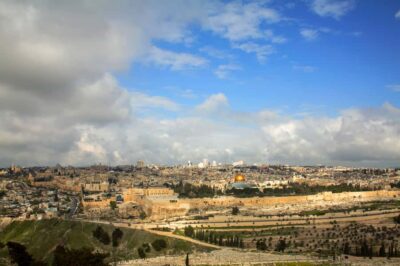
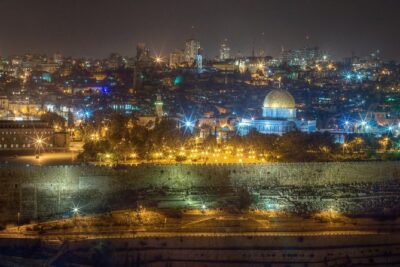
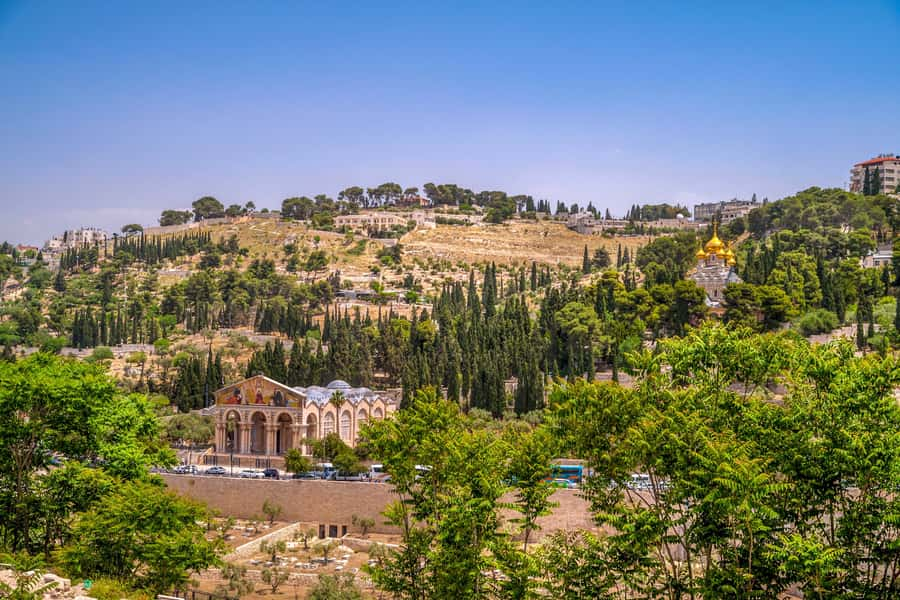
The Mount of Olives is one of the strongest parts of the itinerary. From here, you look toward Jerusalem’s Old City, with the walls, domes, and hills arranged below you.
I like this stop because it gives you orientation before you start walking. Once you enter the Old City, the streets can feel like a maze. From the Mount of Olives, you see the city as a whole, then gradually visit the places you first viewed from above.
The stop is mainly about the panorama rather than a long visit to every site on the mountain. Bring a camera, but also listen to the guide’s explanation. The view becomes much more meaningful when you understand how the Old City, Mount Zion, and the surrounding hills relate to one another.
Mount Zion connects Jewish and Christian traditions
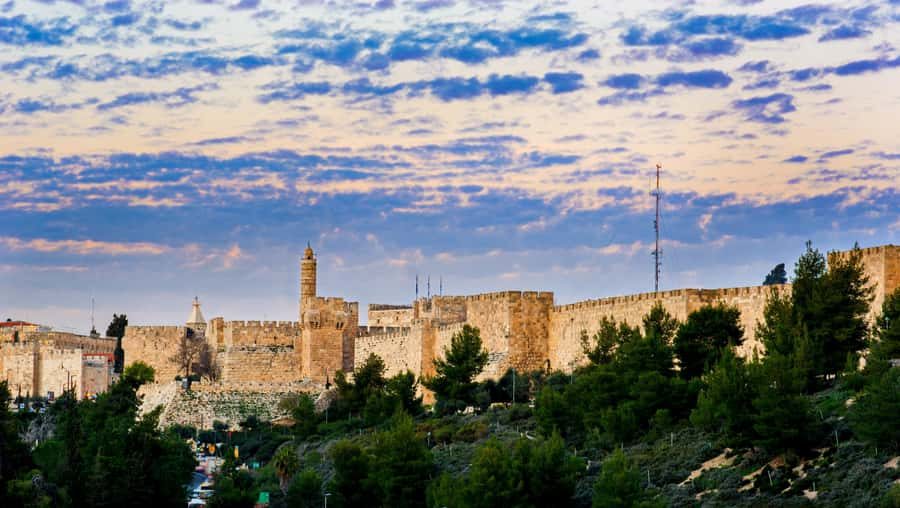
The tour continues to Mount Zion, where you visit King David’s Tomb, the Room of the Last Supper, and Dormition Abbey. These sites are close enough to fit into one walking section, but each carries a different religious tradition.
King David’s Tomb is an important Jewish pilgrimage site. The Room of the Last Supper is associated with the final meal of Jesus and is also significant in Christian tradition. Dormition Abbey adds another major Christian stop, with its association with the death or falling asleep of Mary.
This part of the day works best when you let the guide provide context. The sites are not large, and the visit can feel quick if you look only at the buildings. The guide’s job is especially useful here, since the same location can matter in more than one religious tradition.
Same part of the country, a completely different day out:
- Old and New Jerusalem Day Trip from Tel Aviv
★ 4.5 · 296 reviews - Old and New Jerusalem Full-Day Tour
★ 4.0 · 273 reviews - 2-Day Petra Tour from Jerusalem
★ 4.5 · 212 reviews - Jerusalem Half-Day Sightseeing Tour
★ 3.9 · 177 reviews
Enter the Old City through the Armenian and Jewish quarters
The Old City walk begins through the Armenian and Jewish quarters. This is where the tour’s format becomes clear: you will see many important places, but you will not have unlimited time at any one of them.
The Armenian Quarter tends to feel quieter than some of the Old City’s main routes. The Jewish Quarter includes the Cardo, an excavated and restored Roman road. Its surviving columns and street plan show that Jerusalem has been rebuilt and reshaped many times.
The Cardo is a good stop for understanding the city beneath the city. You are not just looking at a medieval lane. You are seeing traces of Roman Jerusalem placed alongside later Jewish, Christian, and Muslim layers.
The route also passes through the Muslim Quarter, though the schedule focuses mainly on Jewish and Christian sites. If your main goal is a detailed look at all four quarters, this tour will feel too brief. If you want a first orientation, it gives you a useful introduction.
The Kotel is a powerful but tightly scheduled stop
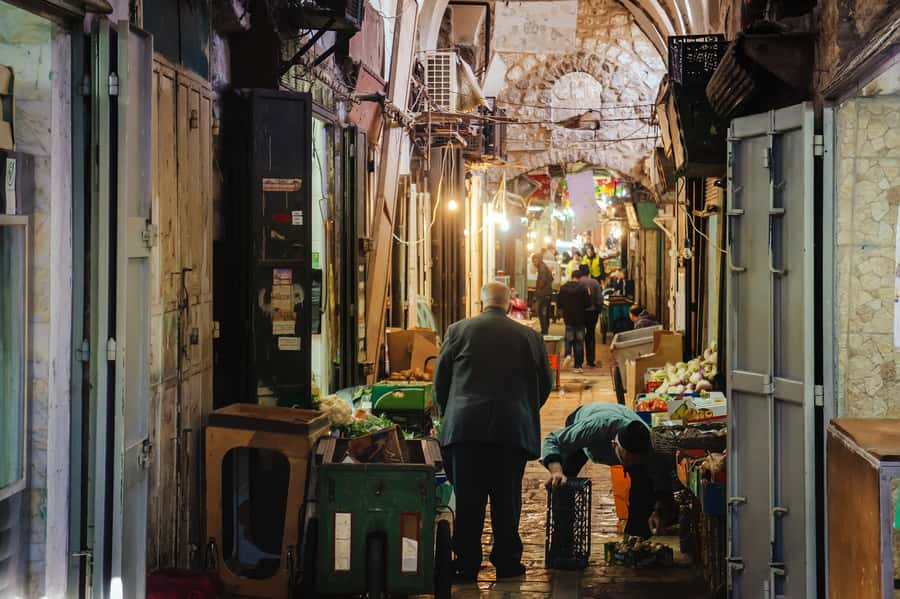
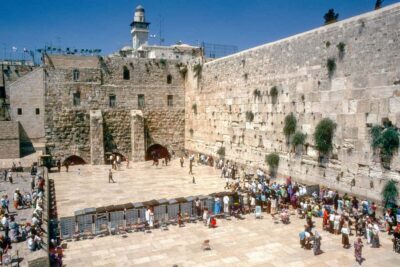
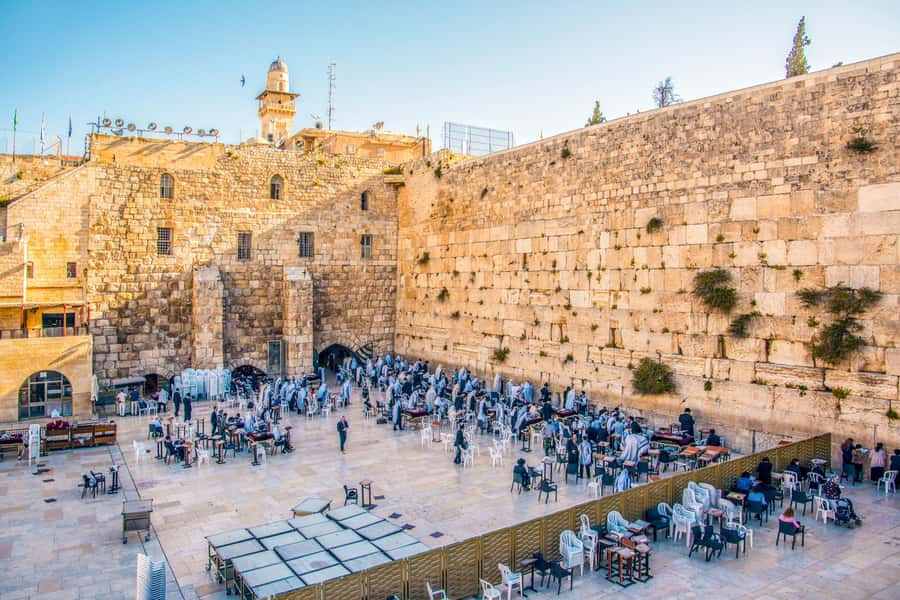
At the Western Wall, also called the Kotel, you reach one of Jerusalem’s most important places of Jewish prayer. The wall is a major pilgrimage site, and the open plaza gives you more room than many of the Old City’s narrow streets.
Your guide can explain the site’s religious and historic importance, but you should also allow space for the personal side of the visit. Some people pray, some observe quietly, and others simply take in the scene. The tour schedule means you may not have a long private period here, so keep your expectations practical.
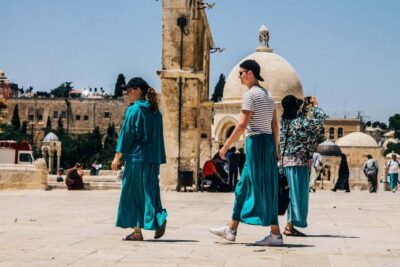
Modest clothing is required at holy sites. Avoid shorts and sleeveless shirts, and be prepared to cover your head where required. Dressing appropriately from the start is easier than trying to solve the problem at each stop.
Via Dolorosa leads into the Christian Quarter
From the Jewish Quarter, you continue into the Christian Quarter and walk along the Via Dolorosa. This route is associated with the final path of Jesus before the crucifixion, and its stations are woven into the streets and religious buildings of the Old City.
The walk is part sightseeing route and part working city street. You may encounter shops, local traffic, worshippers, tour groups, and people moving through the quarter for ordinary daily reasons. That mix is part of what makes the experience feel like a real city rather than an open-air museum.
A guide is valuable here because the route is not always obvious. Without explanation, it can be hard to know which doorway, station, or lane matters. At the same time, the number of stops and the crowds can make the commentary feel heavy. One person found the amount of information difficult to take in, so do not be afraid to focus on the details that matter most to you.
The Church of the Holy Sepulchre requires realistic expectations
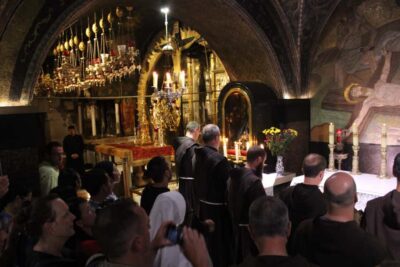
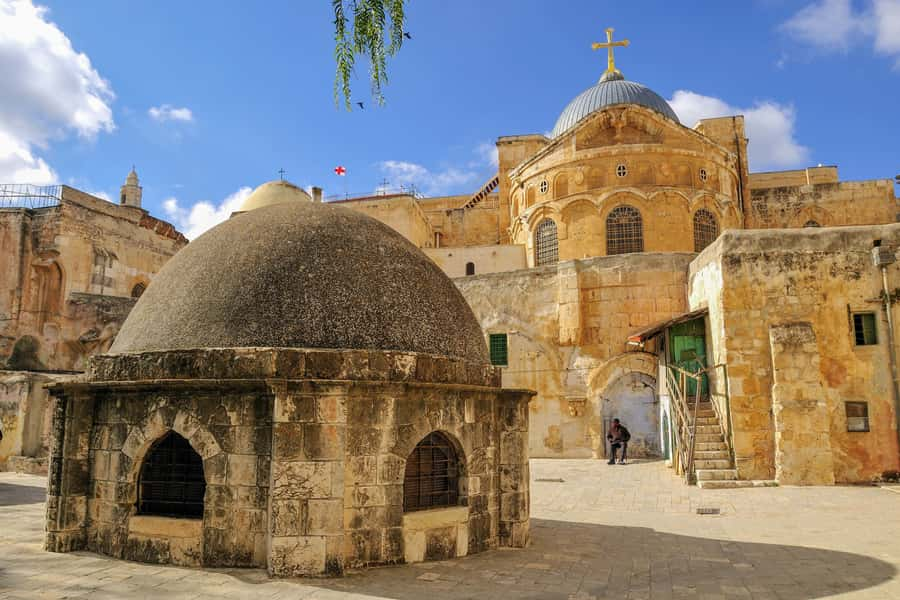
The Church of the Holy Sepulchre is the main Christian site on the tour. It is associated with the crucifixion, burial, and resurrection of Jesus and is shared by several Christian communities.
This is the stop where timing matters most. The church can be crowded, and the tour may not provide enough time to get fully inside or see every area in detail. Treat the visit as an important introduction rather than a complete pilgrimage visit.
If entering the church and spending quiet time inside is your top priority, you may want to return independently on another day. The group schedule is designed to cover the main sites, not to wait through long lines or allow extended personal devotion.
The pace is efficient, not leisurely
The tour covers a lot: Ein Karem, the Mount of Olives, Mount Zion, three Old City quarters, the Cardo, the Kotel, Via Dolorosa, and the Church of the Holy Sepulchre. That is why the schedule feels full.
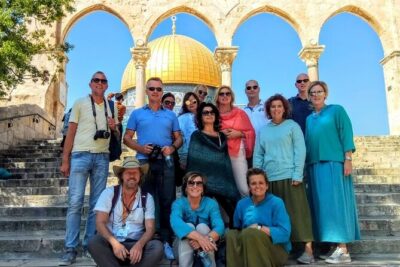
Several details make the pace easier. Pickup and transportation reduce the need to arrange connections between distant parts of Jerusalem. A small group also allows the vehicle to reach parking areas that larger buses may not use. One group had 13 people in a comfortable luxury van, though the exact group size can vary.
You will still walk on uneven Old City streets and spend much of the day on your feet. Wear practical shoes and carry water. The tour is not a shopping outing. Because the guide needs to keep the group on schedule, you may have little or no time to browse the shops.
Guides shape the quality of the day
The strongest part of this experience is the guiding. Ofir was described as personable and well informed, Sharon received praise for clear explanations, Said was noted for making the religious differences easier to understand, and Uda Levy was praised for handling questions while keeping the group moving.
That range of guide names suggests that the exact feel of the day can vary. Still, the route depends on a guide who can explain Jewish and Christian sites without turning the experience into a pile of dates and names.
The advertised language is English, while the tour information also notes that tours may be conducted in two languages. If language is important to you, confirm the arrangement before booking.
What is included, and what you still need to plan
The tour includes hotel pickup from centrally located Jerusalem hotels, transportation, a live guide, and entrance fees to the listed sites. If your hotel is outside the central pickup area, you will receive the address of the nearest meeting point instead.
Meals are not included. A lunch break may be arranged, but you should budget separately and ask the guide about the timing. Since the day is long, eat a good breakfast and carry water.
The tour may be canceled up to two days before departure if the minimum number of participants is not reached. You can cancel up to 24 hours in advance for a full refund, and the reserve-now, pay-later option lets you hold a place without paying immediately.
Who should book this experience
I would choose this tour if you have only one day in Jerusalem, are staying in the city, and want a guided first look at the major Jewish and Christian sites. It also suits you if you prefer having transport and entrance fees arranged in advance.
It is less suitable if you want long visits inside churches, extended prayer time, serious shopping, or a slow photographic walk through every quarter. Visitors staying several days may prefer to use this as an orientation day, then return independently to the sites that deserve more time.
Should you book it?
Book this tour if your goal is to understand Jerusalem’s main landmarks in one demanding but efficient day. The views from the Mount of Olives, the Cardo, the Kotel, and the Church of the Holy Sepulchre give you a strong first framework for the city.
Skip it if you already know Jerusalem well or want a deeply focused visit to one religious tradition. At $97, the package offers solid value for a first-time visitor, especially because transport, guiding, pickup, and entrance fees are included. Just arrive dressed for holy sites, ready to walk, and prepared for some stops to be brief.
FAQ
How long does the tour last?
The tour lasts 450 minutes, or about seven and a half hours.
What sites are visited?
The route includes Ein Karem, the Mount of Olives, Mount Zion, King David’s Tomb, the Room of the Last Supper, Dormition Abbey, the Armenian and Jewish quarters, the Cardo, the Kotel, the Christian Quarter, Via Dolorosa, and the Church of the Holy Sepulchre.
Is hotel pickup included?
Yes. Pickup is included from centrally located Jerusalem hotels. If your hotel is outside the central area, the supplier will provide the address of the closest meeting point.
Are entrance fees included?
Yes. Entrance fees to the sites included in the tour are part of the price.
Is lunch included?
No. Meals are not included.
What should I wear?
Wear modest clothing for holy sites. Shorts and sleeveless shirts are not allowed, and head coverings are required where applicable.
Can I cancel the booking?
Yes. You can cancel up to 24 hours before the tour for a full refund. The tour may also be canceled up to two days in advance if the minimum group size is not reached.
Just added around Jerusalem
- Tel Aviv & Old City of Jaffa – Tiny group from Tel Aviv★ 4.5 · 9 reviews
- Tel Aviv; Jaffa Old City, Port & Shuk Hapishpishim Walking Tour★ 4.5 · 11 reviews
- Discover the Secrets of the Underground Jerusalem with a private tour★ 5.0 · 4 reviews
- Private Tour : Jerusalem Old City Day Trip from Tel Aviv★ 5.0 · 19 reviews
- Private Tour from Tel Aviv to Jerusalem★ 5.0 · 3 reviews
- Luxury Private Tour to Jerusalem from Tel Aviv★ 5.0 · 22 reviews
- Tel Aviv Airport (TLV) to Jerusalem Hotels – Private Transfer★ 4.0 · 19 reviews
- Palm Sunday in Jerusalem: Mass at Bethpage and Via Dolorosa Procession with Transport from Tel Aviv★ 5.0 · 3 reviews