
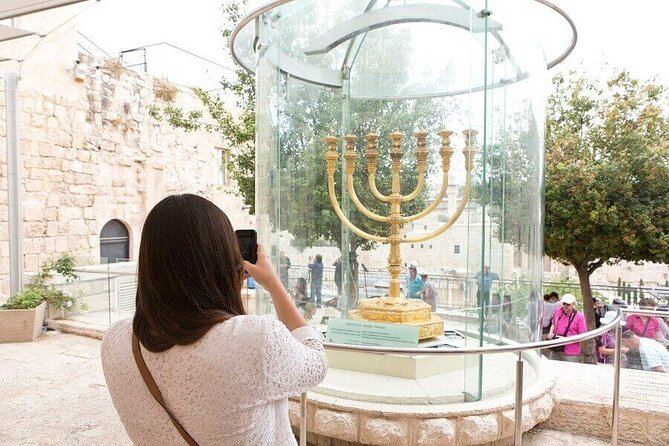
Reviewed · JERUSALEM OLD CITY TOURS
City of David and Underground Jerusalem Day Trip from Tel Aviv
Jerusalem’s oldest story comes alive underground at the City of David, where excavations and ancient water systems reveal the first foundations of the city. Before that, you’ll cross the Old City through Zion Gate, visit Mount Zion, walk the Jewish Quarter, and pause at the Western Wall. It is a packed day, but it gives you a useful first look at several parts of Jerusalem.
I like the sweeping opening view over the Old City, and I like the way the tour links biblical places with visible archaeology rather than treating Jerusalem as a string of photo stops. Guides including Daniel, Charlie, Yoel, and Itamar have been praised for clear explanations and enthusiasm. The trade-off is simple: this is a lot of ground in about 10 hours, with steep streets, long walks, waiting during transfers, and an extra charge for City of David entry.
Key points to know before booking
- The City of David is the day’s main archaeological focus: Expect excavations, Warren’s Shaft, and underground remains, with admission costing about $10 extra.
- The tour covers several Old City quarters: You’ll pass through the Armenian and Jewish quarters, see the Cardo, visit the Sephardic synagogues, and reach the Western Wall.
- The opening viewpoint needs clarification: The schedule identifies Mount Scopus National Botanical Garden, while the tour description also refers to Mount of Olives views.
- Plan for serious walking: About five miles was recorded by one participant, much of it on hills and uneven Old City streets.
- The tunnels may be narrow and wet: Hezekiah’s Tunnel can involve water up to knee level, so ask the guide what underground route is planned.
- The price covers transport and guiding, not everything: At $99, the tour includes hotel pickup, drop-off, and an air-conditioned coach, but not food, drinks, or entrance fees.
From Tel Aviv to Jerusalem before the crowds build
Pickup begins around 7:15 a.m. from a central Tel Aviv hotel. You ride in an air-conditioned vehicle toward Jerusalem, with the guide providing the broad political and religious background that helps make sense of the city ahead.
This transfer is useful because Jerusalem can feel confusing on arrival. Jewish, Christian, and Muslim traditions all center on the city, and its political past is just as complicated as its religious importance. A good guide can give you a basic map in your head before you start walking.
The group can reach as many as 40 people, although some departures are much smaller. A small group makes the narrow streets and underground areas easier, while a full coach can mean more time gathering people at each stop. One practical warning is that some departures have involved transfers and waits before and after the tour, rather than a perfectly direct ride from Tel Aviv.
More walks through the Old City:
- From Tel Aviv: Jerusalem Old City & Dead Sea Guided Day Tour
★ 4.4 · 389 reviews - Jerusalem: Guided Walking Tour of the Old City
★ 4.7 · 386 reviews - Best seller! Jerusalem old city four quarters tour
★ 5.0 · 123 reviews
The first view over Jerusalem
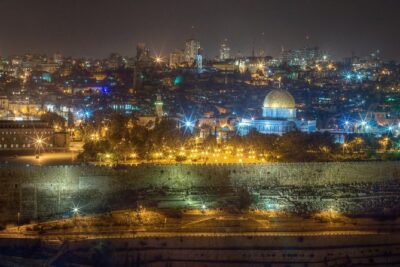
The opening stop is listed as Mount Scopus National Botanical Garden, with about 30 minutes to look toward the Old City. The main value here is orientation. From above, you can pick out the Old City walls, the Temple Mount area, the Kidron Valley, and the slopes covered with ancient and modern burial grounds.
The tour description also identifies this viewpoint with the Mount of Olives, so I would confirm the exact location when booking. Either way, the purpose is the same: you get a broad view before entering the dense lanes below.
Do not expect a long exploration of the Mount of Olives itself. Some departures have offered only a quick roadside or coach-window view, so this is best understood as a short panorama stop, not a full visit to the hilltop churches and cemeteries.
From there, the vehicle passes through the Kidron Valley and by the Garden of Gethsemane. Christian tradition holds that Jesus prayed here before his arrest and crucifixion. The stop is brief, but the valley connects the Mount of Olives to the Old City and gives the route a strong sense of place.
Mount Zion, King David, and the Hall of the Last Supper
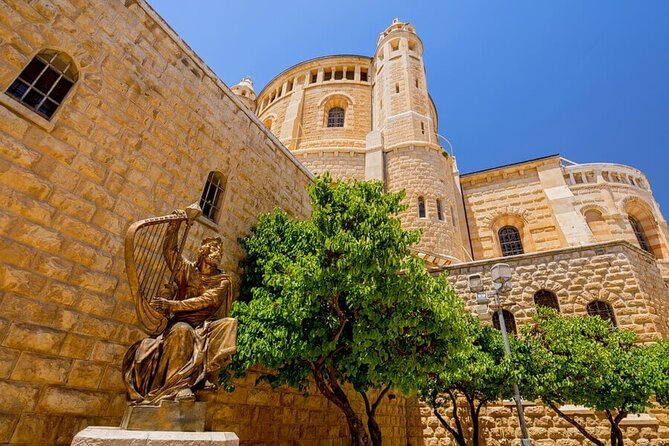
The route continues to Mount Zion, where you visit the Tomb of King David. The site is revered, but the historical identification is not certain. That distinction matters, especially if you care about the difference between religious tradition and archaeological proof.
Inside, you see the sarcophagus associated with David. The space is modest and active, so do not expect a large museum or a long self-guided visit. The value comes from the site’s religious importance and from hearing how the tradition developed.
Nearby is the Hall of the Last Supper, also called the Cenacle. Christian tradition places the Last Supper here, though the present building dates from a much later period. The room is spare, with architectural details from different eras, and the guide’s explanation is more useful than the room itself.
These stops also show why Jerusalem can resist simple labels. A place may be sacred because of tradition, important because of later construction, and historically uncertain at the same time. A strong guide explains those layers without brushing aside the beliefs connected to them.
Entering through Zion Gate and walking the Old City
You enter the Old City through Zion Gate, a wall opening marked by scars from twentieth-century fighting. The stop itself is short, around 10 minutes, but it sets up the walking portion of the day.
The Old City visit lasts about an hour, followed by time in the Armenian Quarter and Jewish Quarter. This is not a full tour of every part of the Old City. You will not get equal time in the Christian and Muslim quarters, and the schedule focuses heavily on Mount Zion, the Jewish Quarter, and the City of David.
That focus works if you want biblical and Jewish history. It is less satisfying if your main goal is the Church of the Holy Sepulchre, the Via Dolorosa, or a broad survey of all four quarters. Ask before departure exactly which sites are included if those Christian landmarks are your priority.
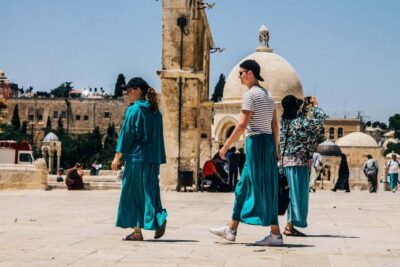
The Armenian Quarter receives about 20 minutes. Its lanes are quieter than some other parts of the Old City, and the walk helps you see that Jerusalem is not only a collection of famous shrines. It is also a living patchwork of communities with different traditions and daily rhythms.
A few more Tel Aviv half-days to weigh up
- Best of Tel Aviv and Jaffa Walking Tour – 1 Day
★ 4.5 · 53 reviews - Petra 1-Day Tour from Tel Aviv with FREE Authentic Lunch
★ 4.5 · 11 reviews - From Tel Aviv: Jerusalem and Bethlehem Guided Day Trip
★ 4.3 · 1,316 reviews - Masada and the Dead Sea Day Trip from Tel Aviv
★ 4.5 · 1,014 reviews
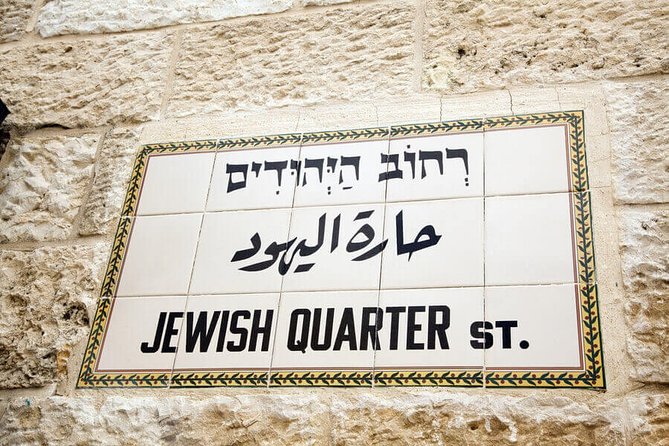
The Jewish Quarter, Cardo, and Western Wall
The Jewish Quarter gets about an hour. You visit the Four Sephardic Synagogues, built and restored around the religious life of Jerusalem’s Sephardic Jewish community. Entry may not be possible on every departure. If the synagogues are closed or unavailable, the replacement visit is the Hurva Synagogue.
You then see the Herodian Mansions, archaeological remains of wealthy homes from the Second Temple period. Marble walls, mosaics, and terraced construction give you a glimpse of how Jerusalem’s elite lived more than 2,000 years ago. These ruins are valuable because they move the story beyond kings and prophets and into the homes, tastes, and social divisions of ordinary city life at the top end.
The Byzantine Cardo takes about 20 minutes. This once served as a major street, and its surviving columns and paving show how the city changed under Roman and Byzantine rule. It is a good reminder that Jerusalem was repeatedly rebuilt, renamed, damaged, and repurposed.
The Western Wall receives about 20 minutes. That is enough for a meaningful first visit, but not enough for a slow, reflective one if the area is crowded. Men and women use separate prayer sections, and modest clothing is required. A little personal time here is one of the better features of the schedule, since the guide’s voice can fade into the background while you take in the setting.
The City of David and its underground remains
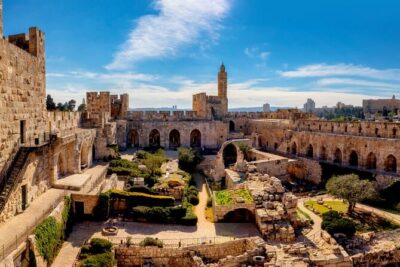
The final major stop is the City of David National Park, south of the present Old City walls. This is the settlement traditionally associated with King David’s capture of Jerusalem more than 3,000 years ago. Archaeology here helps explain how the city began and why its water supply mattered so much.
You spend about 90 minutes among excavations and underground remains. Warren’s Shaft is part of the visit, along with sections of the ancient water system. The strongest part of the experience is seeing how the city’s survival depended on reaching and protecting water below the ridge.
The archaeological area is not polished into a simple story. Some sections may be under construction, and the ruins can feel less visually dramatic than the Western Wall or the Old City skyline. I think the City of David is rewarding when you enjoy archaeology and patient explanation. If you prefer grand buildings and dramatic interiors, it may feel anticlimactic after the morning’s sacred sites.
The underground route deserves special attention. Some passages are narrow, and one option involving Hezekiah’s Tunnel can put water up to knee level. Another passage may require a flashlight, so bring one if you have it. If enclosed spaces make you uncomfortable, tell the guide before entering and ask which route is planned.
Admission to the City of David is not included in the tour price and is listed at about $10 per person. That extra cost is easy to miss when comparing prices. Add it to your budget, along with lunch and drinks.
How the $99 price holds up
At $99 per person, the tour offers reasonable value for a first Jerusalem visit if you are staying in Tel Aviv and want transport handled for you. Hotel pickup and drop-off remove the need to plan an intercity bus or arrange parking, and an air-conditioned coach matters on hot days.
You also get a guide for a long, complicated day. The best guides on this route have included Daniel, Charlie, Yoel, and Itamar. Daniel was noted for watching the group’s comfort in hot weather and keeping people hydrated. Charlie was praised for his passion, while Yoel was appreciated for balancing explanation with some personal time. Itamar was especially effective at making the history engaging, though the underground spaces remain physically demanding regardless of who leads.
The value weakens if you expect every major Jerusalem landmark. The schedule does not give you a full tour of the Christian Quarter, and the Mount of Olives portion may be little more than a view. Some people also find the City of David less compelling than a museum or Holocaust memorial.
Food is not included. Be cautious if the guide recommends a specific restaurant or tries to steer the group toward one place. The supplied tour information does not promise a particular lunch stop, so carry water and be prepared for a quick meal chosen during the day.
Walking, clothing, weather, and group comfort
Wear comfortable shoes with good grip. You may walk roughly five miles, and much of the route includes hills, stone paving, steps, and narrow passages. This is not a good choice if you need a mostly seated sightseeing day.
Bring water, sun protection, and clothing that covers your shoulders and knees. Both men and women need modest clothing for places of worship and selected museums, and shorts can result in refused entry. Light layers help because the coach may be cool while the streets are hot.
The tour is not suitable for children under four. Most people can participate, but the amount of walking and the underground sections may be tiring for young children or anyone with limited mobility. The maximum group size is 40, so stay alert at meeting points and listen carefully for regrouping instructions.
The minimum departure size is two people. Pickup is offered, and the experience runs with a mobile ticket. Free cancellation is available until 24 hours before the start time. Changes or cancellations inside that window are not accepted.
Who should book this Jerusalem day trip?
I would choose this tour if you want a structured first visit that combines sacred places, Old City neighborhoods, and archaeology in one day. It is especially useful from Tel Aviv, where the included transport saves planning time and lets you return to your hotel after a long day.
You should also like history told through layers: biblical tradition, Roman streets, Byzantine remains, Ottoman-era religious sites, and modern political scars. The City of David portion rewards curiosity more than quick sightseeing.
I would choose another plan if you want a relaxed pace, a full Christian pilgrimage route, or extended time at one museum. The schedule is tight, the walking is real, and some departures may include transport waits. Confirm the opening viewpoint, the exact underground route, and which admission fees are due before paying.
For the right person, the tour earns its price through convenience and range. You see Jerusalem from above, enter its fortified core, visit places tied to David and Jesus, and finish where the city’s earliest remains are still being uncovered. Just arrive dressed for worship, prepared for hills, and ready for a very full day.
FAQ
What time does the tour start?
Pickup begins at approximately 7:15 a.m. from a central Tel Aviv hotel.
How long does the experience last?
The day trip lasts about 10 hours, including transportation between Tel Aviv and Jerusalem.
Is hotel pickup and drop-off included?
Yes. Hotel pickup and drop-off are included, along with transport in an air-conditioned vehicle.
Is food included in the price?
No. Food and drinks are not included, so you should budget separately for them.
Are entrance fees included?
No. Entrance fees are separate and are estimated at about $10 per person. City of David admission and the Sephardic Synagogues may require additional payment.
What should I wear?
Wear modest clothing that covers your shoulders and knees. This applies to both men and women entering places of worship and selected museums. Shorts may lead to refused entry.
Is the underground section suitable for everyone?
The underground passages can be narrow, and Hezekiah’s Tunnel may involve water up to knee level. The tour also includes substantial walking, so comfortable shoes are recommended.
Just added around Tel Aviv
- Private wine tour of Northern Israel★ 5.0 · 4 reviews
- Package VIP Skip Line Services in BGN Airport with Transfer to Tel aviv Hotels★ 5.0 · 3 reviews
- VIP Tel Aviv airport Terminal 3 Fast Track Skip Line From plane★ 4.5 · 9 reviews
- Israel Holy Land Christian Tour Package 7 days – Private Tour Package★ 5.0 · 31 reviews
- Tel Aviv and Jaffa Most Exciting Private Tour★ 4.5 · 13 reviews
- Food & Drink Private Guided Tour in Tel Aviv★ 5.0 · 3 reviews
- Urban Walking & Food Tour in Tel Aviv★ 5.0 · 7 reviews
- Tel Aviv & Jaffa Urban Bike Expedition★ 5.0 · 33 reviews
Jerusalem Old City Tours, compared.
City of David and Underground Jerusalem Day Tour
Read our review →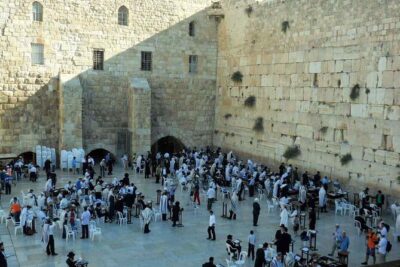
Browse the lists this tour appears in