
Reviewed · JEWISH HERITAGE TOURS
kosher Israel wine tour
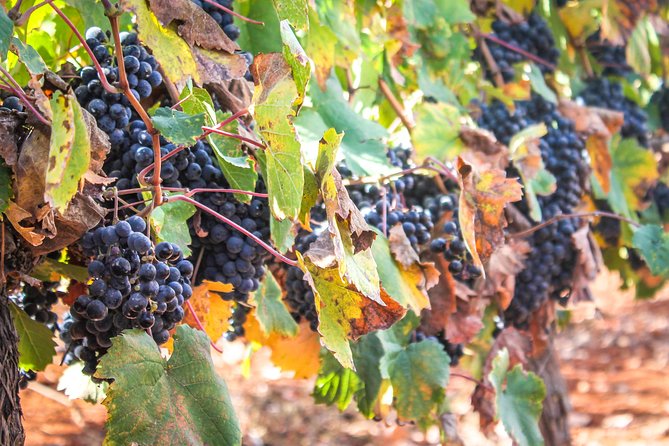
Wine is the thread tying this private day together. You begin at Ancient Shiloh, where the Tabernacle stood for 369 years, then move into the modern Judean wine country at Psagot and Gvaot wineries. The result is part Bible lesson, part scenic drive, and part tasting day.
I like the small private group, which gives you room to ask questions and keep the pace personal. I also like the unusual link between Psagot’s modern bottles and an ancient wine cave found nearby, complete with a coin from the Great Revolt. The main consideration is time: the day can last up to 10 hours, and admission or tasting fees are not included at every stop.
Key points to know
- Ancient Shiloh puts the wine day in a biblical setting: See the place where the Tabernacle stood and where Hannah prayed.
- Psagot Winery has a remarkable archaeological story: A cave once used for wine production was found beneath the area after months of excavation.
- Gvaot Winery includes a dedicated tasting stop: Allow extra room in your budget because the tasting fee is not included.
- The private format suits families and small groups: Only your own party, up to seven people, takes part.
- The guide adds language help as well as history: The guide is fluent in three languages and can translate discussions about viticulture and winemaking techniques.
- The price works best for a full group: At $762.83 for up to seven people, the per-person cost changes sharply depending on how many join.
Why this Jerusalem wine day feels different
Many wine outings are built around vineyards, bottles, and a drive through the countryside. This one begins much farther back, at the religious center of ancient Israel. That opening stop gives the tasting a stronger sense of place, especially if biblical history matters to you.
Wine has a long place in Jewish tradition and in the story of the Land of Israel. The tour connects that tradition to Judah’s blessing, the biblical image of every person sitting under a vine and fig tree, and the ancient reputation of Canaanese wine. You are not simply moving from one tasting room to another. You are looking at how wine fits into Jewish history, local archaeology, and present-day Israeli life.
I like that balance. Ancient Shiloh gives the day meaning, while the wineries give it a practical, enjoyable finish. You can listen to stories about prayer and the Tabernacle, then talk about grapes, caves, cooling, and production methods.
The day is private, with space for as many as seven people. That matters here. Wine tasting works better when you can ask direct questions, pause over a bottle, or spend a little longer on a subject without waiting for a large bus group. The guide is also fluent in three languages and can translate technical conversations about viticulture and winemaking, which is useful if your group has different language needs.
There is one important tradeoff. The advertised duration is approximately seven to 10 hours, while the listed visits add up to only about two hours and 45 minutes. The remaining time is used for driving, transitions, and the shape of the day. You should treat this as a full-day outing rather than a quick tasting trip.
More Jewish heritage walks in Jerusalem:
- Jerusalem: Meet the Orthodox Jews Tour
★ 4.9 · 103 reviews - Jerusalem Yad Vashem Holocaust History Museum Tour
★ 5.0 · 98 reviews - Jerusalem Half Day Tour: Holy Sepulchre and Western Wall
★ 4.5 · 80 reviews
Ancient Shiloh and the 369-year Tabernacle
The first stop is Tel Shiloh, also known as Ancient Shiloh. The Tabernacle stood here for 369 years, making Shiloh the capital of the Jewish people during that period. Joshua divided the tribal inheritance here, and Hannah prayed here in one of the Bible’s most familiar scenes of personal devotion.
The site gives the tour a strong opening because it is not just a viewpoint or a short photo stop. You are walking into a place connected to worship, national organization, and prayer. The visitor center and archaeological remains help bring the period closer, giving you more to work with than a bare hilltop and a sign.
The Hannah connection is especially important for visitors interested in Jewish tradition. The tour presents Shiloh as the place where Hannah prayed and where her prayer was answered, making it a meaningful stop for anyone who wants to connect biblical text with a physical location.
Plan on about 90 minutes here. That is enough time for the site and visitor center, but it also means the stop has real weight in the schedule. If you are mainly interested in tasting wine, this may feel like a long prelude. If you enjoy history, faith, and archaeology, it is one of the reasons to choose this particular outing.
Admission to Ancient Shiloh is not included. Check the current cost when you book, and keep that extra expense in mind when comparing the total price with other wine tours. The tour description also does not specify exactly which exhibits or archaeological areas are open on your date, so the visitor center is best understood as an important part of the visit rather than a guaranteed list of particular displays.
Psagot Winery and the cave beneath the bottles
After Shiloh, the tour continues to Psagot Winery near the Michmash crossing. The location carries its own biblical association, since this is identified as the area of the battle between Yonatan ben Shaul and the Philistines.
The winery’s story is one of the most memorable parts of the day. It began with Jacob Berg, who started making wine in the parking area of his home. Looking for an inexpensive place to cool the wine, he searched for ancient caves nearby. A small opening led to a cave packed with dirt. After months of digging, he found a space that had been used as a winery about 2,000 years ago.
Inside, he found a coin from the time of the Great Revolt against the Romans. The coin showed an amphora, the ancient vessel used for wine. That discovery became a powerful symbol for the winery, linking the modern operation to the long history of wine production in the region.
You will have about 30 minutes at Psagot. That is a fairly short visit, so do not expect a long cellar tour or a leisurely meal unless your guide confirms otherwise. The stop is best viewed as a focused introduction to the winery, its setting, and its archaeological connection.
Admission here is listed as free, but the information does not state how many wines are poured or whether a full tasting is included. Ask before ordering anything beyond the planned visit. The winery has won international awards and has become one of Israel’s leading boutique wineries, but the short scheduled time means you should keep your expectations realistic.
I like Psagot because its story is easy to remember. The image of a modern winemaker searching for a cool place and uncovering an ancient wine cellar gives the stop more character than a standard production talk. You are seeing how archaeology can shape a modern brand without replacing the actual business of making wine.
Gvaot Winery and the dedicated tasting
Gvaot Winery is the final listed stop, with 45 minutes set aside for wine tasting. This is where the day shifts most clearly from history to flavor. You have already heard about ancient wine vessels and old production methods. Now you can focus on the modern bottles themselves.
The supplied details do not list the individual wines, food pairings, or the precise format of the tasting. That means you should not book this expecting a particular grape, menu, or cellar activity. What you can count on is a tasting stop lasting about 45 minutes, with the fee not included in the tour price.
That extra charge matters. The headline price covers the private outing, but tasting admission at Gvaot and admission at Ancient Shiloh are separate considerations. I would ask for the current tasting cost before confirming so you can calculate the real total for your group.
The 45-minute schedule is long enough for a proper introduction to the wines, but it is not an afternoon spent lingering over every bottle. If you want a relaxed tasting, use the private format to ask the guide how much flexibility is possible. The guide’s ability to translate winemaking and viticulture terms can help here, especially if technical language would otherwise get in the way.
More Jerusalem wineries worth an afternoon:
- Israel private tours,wine tours,off-road, tailor made,culinary,the best
★ 5.0 · 6 reviews - GoKEDEM Golan Heights ATV Action & Wine-Tasting Tour From Tel Aviv
★ 5.0 · 8 reviews - Private wine tour of Northern Israel
★ 5.0 · 4 reviews - Private Israeli Wines Tour of the Central Israel
★ 5.0 · 3 reviews
What the private format adds
The tour is limited to your group, with a maximum of seven people. For a family, a group of friends, or a small Jewish community group, this can be a better fit than joining a large departure with strangers.
The private structure also gives the guide room to connect the stops. Shiloh is not treated as an isolated ruin, and Psagot is not merely a place to buy wine. The guide can explain the links between the biblical locations, the ancient wine tradition, the archaeological discoveries, and the current wineries.
One particularly useful feature is language support. The guide is fluent in three languages and can serve as a translator during conversations about winemaking techniques and viticulture. That is more practical than a guide who simply recites a prepared speech. Wine discussions can become technical quickly, so clear translation can make the tasting more useful.
The private setting does not guarantee an entirely custom itinerary. The three stops and approximate timing are set out in advance, and the total day still depends on driving and site schedules. But you have a better chance of asking questions and adjusting the rhythm than you would in a large group.
Pickup is offered, with the meeting point listed at ICC, Shazar in Jerusalem. The activity ends back at that meeting point. The details do not identify a hotel-by-hotel pickup area, so confirm the exact pickup arrangement when you book rather than assuming the vehicle will collect you anywhere in Jerusalem.
Understanding the $762.83 group price
The price is $762.83 per group of up to seven people. That is not a per-person rate. For seven people, the base cost works out to about $109 per person before separate admissions and tasting charges. For four people, it is about $191 per person. For two people, it is about $381 per person.
That makes group size the key value question. A full group gets a reasonable private-tour rate for a long day with transportation, a guide, three stops, and return to Jerusalem. A couple pays much more per person, though the private format may still justify the cost if you want a dedicated guide and do not want to join other people.
Remember that the listed price does not include admission to Ancient Shiloh or the Gvaot wine tasting. Psagot admission is listed as free. The final cost therefore depends on how many people are in your group and the current fees at the paid stops.
I would compare this tour by asking what you want from the day. If you want only two winery visits, a shorter outing may offer better value. If you want the biblical setting, private transportation, a guide, and a direct link between ancient and modern wine culture, the price becomes easier to defend.
Timing, comfort, and practical planning
The tour lasts approximately seven to 10 hours. That is a wide range, so ask about the expected return time before you schedule evening plans in Jerusalem. The drive between sites forms a meaningful part of the outing, and the final timing may depend on road conditions, the pace at Shiloh, and winery schedules.
Wear comfortable shoes for Ancient Shiloh. The exact walking surface is not specified, but an archaeological site is rarely the place for delicate footwear. Bring water and allow room in your day for the 90-minute first stop, the 30-minute Psagot visit, and the 45-minute Gvaot tasting.
The tour is listed as suitable for most people, and service animals are allowed. It is also near public transportation. Since pickup is offered and the activity returns to the Jerusalem meeting point, confirm which arrangement applies to your booking.
Confirmation is sent within 48 hours, subject to availability. Free cancellation is available when you cancel at least 24 hours before the start time. Changes or cancellations made inside that window are not accepted for a refund, so do not wait until the last day if your plans are uncertain.
Who should book this kosher wine tour
I would choose this outing if you want more than a standard winery circuit. It suits people who enjoy biblical history, Jewish tradition, archaeology, and wine in equal measure. The connection to Hannah, the Tabernacle, and ancient wine production gives the day substance.
It is also a strong choice for a small private group. Seven people can share the base cost and make the economics work better. The guide’s three-language ability is useful for mixed-language groups or anyone who wants detailed explanations of winemaking terms.
You may want a different plan if your priority is a long, slow tasting with several wineries and a meal. Only two wineries are listed, and the Psagot stop is short. The day is built around context and storytelling as much as drinking wine.
Keep in mind that kosher wine preferences can vary. The experience is presented as a kosher Israel wine tour, but the available details do not specify the certification standards or the exact wines served. If your group follows a particular kosher certification, ask the provider before booking.
Should you book it?
Book this tour if you want to connect the Bible, Jewish culture, archaeology, and modern Israeli wine in one private day from Jerusalem. Ancient Shiloh and the Psagot cave story are the distinctive reasons to go, while the Gvaot tasting provides the pleasant finish.
I would be more cautious if you are watching your budget with only two people, or if you want a pure winery tour without a substantial historical stop. For a full group of up to seven, the price is easier to justify, especially when you value a private guide and language support. Add the separate admission and tasting fees, confirm the pickup details, and you will know the true cost before you commit.
FAQ
Where does the tour start and end?
The listed meeting point is ICC, Shazar in Jerusalem. The activity ends back at the meeting point.
How long does the kosher Israel wine tour last?
The tour lasts approximately seven to 10 hours.
How many people can join the private tour?
The private tour is for your group only and can include up to seven people.
Is pickup available?
Yes, pickup is offered. Confirm the exact pickup arrangement when booking.
Are admission and tasting fees included?
Admission to Ancient Shiloh is not included, and the Gvaot Winery wine tasting fee is not included. Psagot Winery admission is listed as free.
Can I cancel for a full refund?
Yes, if you cancel at least 24 hours before the experience start time. Cancellations or changes made less than 24 hours before the start time are not refunded or accepted.
Just added around Jerusalem
- Tel Aviv & Old City of Jaffa – Tiny group from Tel Aviv★ 4.5 · 9 reviews
- Tel Aviv; Jaffa Old City, Port & Shuk Hapishpishim Walking Tour★ 4.5 · 11 reviews
- Discover the Secrets of the Underground Jerusalem with a private tour★ 5.0 · 4 reviews
- Private Tour : Jerusalem Old City Day Trip from Tel Aviv★ 5.0 · 19 reviews
- Private Tour from Tel Aviv to Jerusalem★ 5.0 · 3 reviews
- Luxury Private Tour to Jerusalem from Tel Aviv★ 5.0 · 22 reviews
- Tel Aviv Airport (TLV) to Jerusalem Hotels – Private Transfer★ 4.0 · 19 reviews
- Palm Sunday in Jerusalem: Mass at Bethpage and Via Dolorosa Procession with Transport from Tel Aviv★ 5.0 · 3 reviews
Jewish Heritage Tours, compared.

Jerusalem Yad Vashem Holocaust History Museum Tour
Read our review →
Jerusalem Half Day Tour: Holy Sepulchre and Western Wall
Read our review →
Jerusalem Half-Day Tour from Tel Aviv: Holy Sepulchre and Western Wall
Read our review →
Skip the Line:1.5Hour AudioTour – Yad Vashem Holocaust Remembrance Center Ticket
Read our review →
Jerusalem Jewish Orthodox Neighborhood Walking Tour
Read our review →
Browse the lists this tour appears in