
Reviewed · FULL-DAY
Hebron & Ramallah Full-Day Guided Tour from Jerusalem
Ramallah and Hebron offer a view of the West Bank that you cannot get from Jerusalem alone. This eight-hour tour takes you through checkpoints, divided neighborhoods, Palestinian cities, Israeli settlements, and restricted roads, then brings you to Arafat’s Tomb and the Cave of the Patriarchs.
I like the way the route joins politics with ordinary city life, especially the walk through Ramallah and the time in Hebron’s market. I also like the small group limit of 15, plus the chance to hear a guide such as Mohammed explain the setting with care and even arrange conversations with local students.
The main drawback is the long, serious day. Road delays at checkpoints can affect the schedule, lunch is not included, and the subject matter includes home demolitions, travel restrictions, and a divided holy site. Dress modestly, carry your passport, and come ready to listen.
Key points to know before you book
- Two Palestinian cities in one day: See Ramallah and Hebron, each with a different mood and role in Palestinian life.
- Arafat’s Tomb: Allow around two hours in Ramallah, including the tomb and a walk through the city.
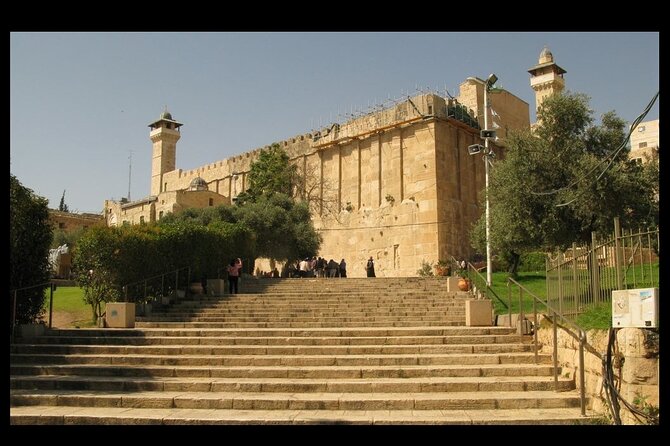
- A divided holy site: Visit the Ibrahimi Mosque, also called the Cave of the Patriarchs, in Hebron.
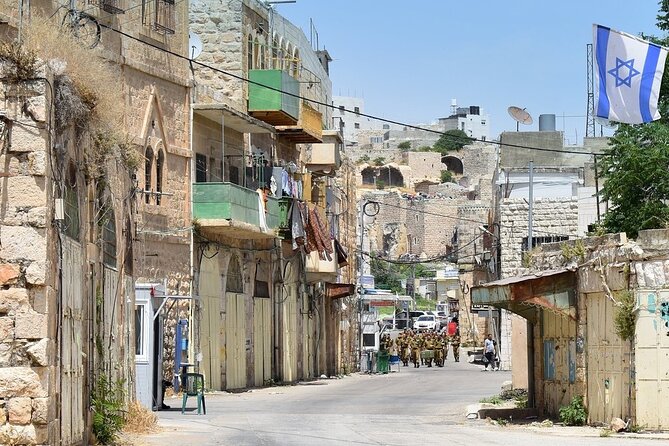
- A politically charged route: Pass through checkpoints, the Separation Wall, Israeli settlements, Palestinian villages, and roads with different access rules.
- Small-group format: The tour accepts no more than 15 people, which gives the guide room to explain and answer questions.
- Bring the right clothes and documents: A current passport is required, and Hebron calls for trousers or long, loose clothing with covered shoulders.
Why this day is different from a standard Jerusalem outing
Jerusalem sightseeing often centers on the Old City, major religious sites, and familiar tourist routes. This trip takes you beyond that frame and shows how access, borders, roads, and political control shape daily life around the city.
After pickup at the YMCA Three Arches Hotel on King David Street at 8:30 in the morning, you travel north through Pisgat Ze’ev toward Ramallah. The route enters through a checkpoint and reaches Kufr Akab, a neighborhood divided from Jerusalem by the Separation Wall.
That opening matters. You are not simply crossing from one attraction to another. The road itself becomes part of the lesson. You see how close these communities are geographically, yet how different the rules of movement can be.
The subject is not light entertainment, and the guide’s role matters a great deal. Mohammed is described as informative and sincere, with a habit of finding ways to connect you with local voices. On one outing, he arranged for students in Ramallah to speak with the group. That kind of contact can make the day feel less like a lecture and more like a conversation.
More Full-Day Tours in Bethlehem & Jericho
- Jerusalem and Bethlehem Full-Day Tour from Jerusalem
★ 4.3 · 65 reviews - Private Full Day Tour to Bethlehem and Jerusalem From Tel Aviv
★ 5.0 · 10 reviews - Full-Day Holy City of Jerusalem and Bethlehem Private Guided Tour
★ 5.0 · 9 reviews
Ramallah and Arafat’s Tomb
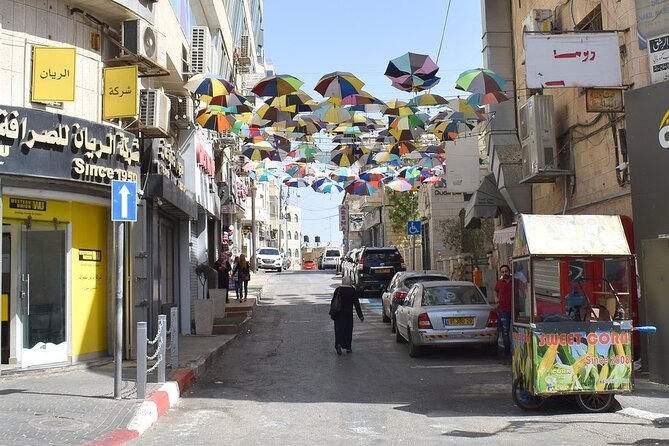
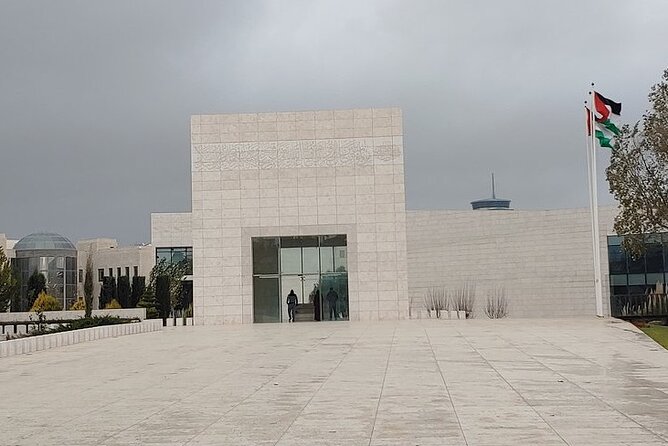
Ramallah is the first major stop, with about two hours set aside for Arafat’s Tomb and a walk through the city. The city functions as the de facto Palestinian capital in the West Bank, so this is more than a quick monument visit.
Arafat’s Tomb is a formal and politically important site. The admission fee is 10 NIS, paid separately, so keep a little local currency available. The tour price does not cover it.
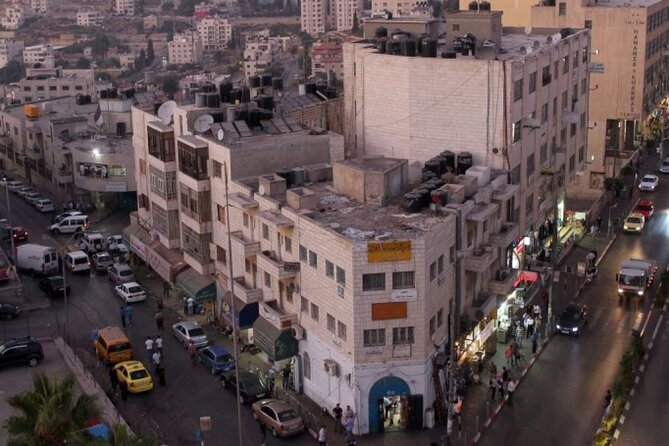
After the tomb, you walk through busy streets and get a feel for Ramallah as a working city. The value here is the contrast between the symbolic site and the everyday setting around it. You are not confined to a memorial complex. You also see shops, traffic, and urban life continuing around a place tied closely to Palestinian politics.
The guide can help explain what you are seeing, but do not expect Ramallah to be presented as a neutral subject. The route focuses on Palestinian life and on the restrictions created by the Separation Barrier, checkpoints, Israeli-only roads, and limits on travel into Jerusalem. You should listen carefully and keep in mind that this is one guided perspective within a highly contested setting.
The two-hour stop is useful because it leaves room for context rather than reducing the city to a photo stop. Still, the pace may feel brisk if you want extended shopping or independent wandering. The group remains on a full-day schedule, with the desert and Hebron still ahead.
Across the Judean Desert and past Ma’ale Adumim
After Ramallah, the vehicle heads south through the Judean Desert. You pass Ma’ale Adumim, an Israeli settlement, and Bethany, associated with the Tomb of Lazarus.
This part of the trip is primarily seen from the vehicle, but it is not empty travel time. The road links several subjects that the guide can explain: settlement growth, Palestinian access, and the different roads available to Israelis, Palestinians, and tourists.
For part of the drive, the group uses a highway shared by Israelis and Palestinians. Later, the route continues through Wadi al-Na’ar on roads restricted to Palestinians and tourists. These changes in road access help you understand that movement in the West Bank is shaped not only by distance but also by legal and political categories.
The desert views also offer a pause between the two city visits. You may appreciate the open terrain after the crowded streets of Ramallah, though the exact amount of time spent outside the vehicle is not specified. This is a guided road journey, not a desert walk or nature outing.
Bethany adds another religious layer to the day. You pass the site connected with Lazarus, but the tour description does not list a dedicated visit inside the tomb. If that site is a personal priority, treat it as a point along the route rather than the main stop.
Hebron, the Ibrahimi Mosque, and the Cave of the Patriarchs
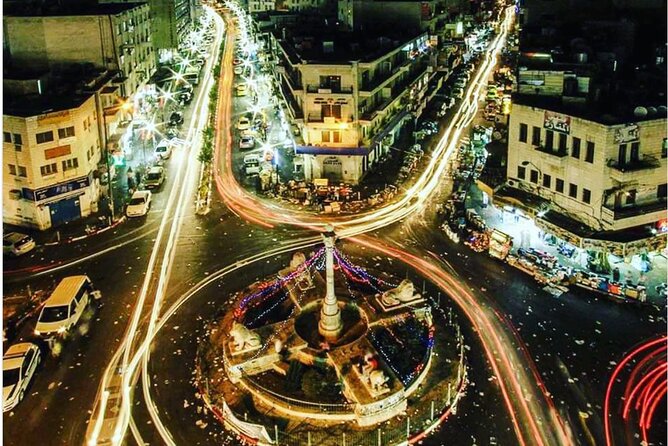
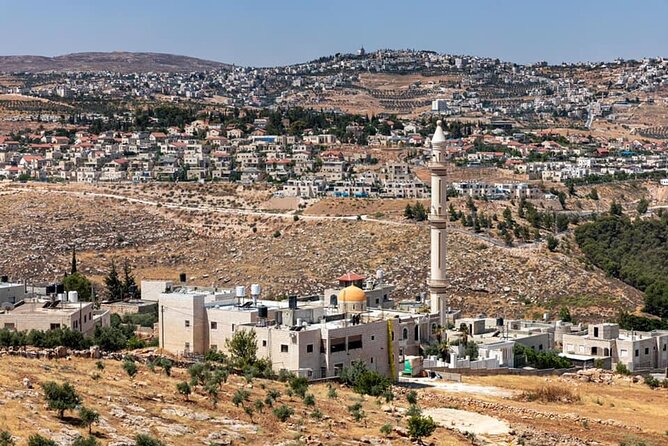
The final major portion takes you into the southern West Bank and Hebron. Along the way, the guide discusses Israeli settlements, Palestinian farms and villages, home demolitions, and travel restrictions affecting Palestinians in the area.
This is the most demanding part of the day. Hebron is both a religious center and a city divided by intense political and security arrangements. The tour brings you to the Ibrahimi Mosque, also known as the Cave of the Patriarchs, one of the most important religious sites in the region.
The site is significant to both Muslims and Jews, and the tour presents it within the wider reality of Hebron. Expect security procedures and a religious setting rather than a relaxed sightseeing stop. The supplied details do not promise a particular amount of interior access or a specific religious service, so keep your expectations focused on the guided visit.
Modest clothing is especially important here. The stated rule is strict: trousers are best for men and women, shirts should reach the neck and cover the shoulders, and exposed skin should generally be limited to the face, lower arms, and hands. In hot weather, choose light, loose clothing rather than shorts or sleeveless tops.
The clothing advice is not a minor packing note. It helps you show respect in a socially conservative city and avoids creating an awkward problem at a religious site. It also makes the day easier for you, since appropriate clothes remove one concern before you arrive.
More full days out of Jerusalem:
- Full Day City Tour of Jerusalem
★ 4.1 · 367 reviews - Old and New Jerusalem Full-Day Tour
★ 4.0 · 273 reviews - Jerusalem Private Full Day Tour
★ 5.0 · 110 reviews - Jerusalem Full Day Tour INCLUDING ENTRANCE FEES
★ 4.0 · 73 reviews
Walking through Hebron’s market
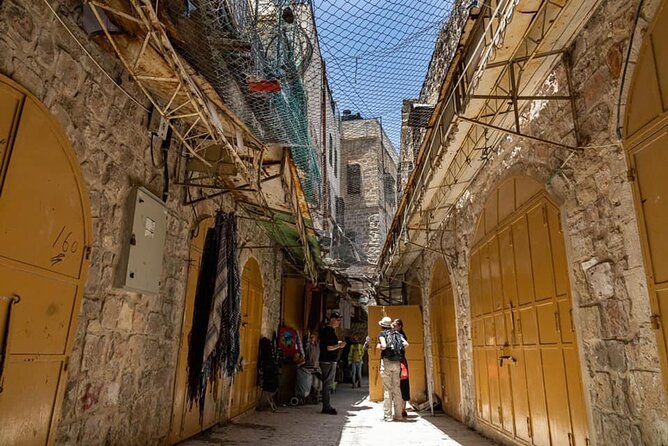
The Hebron market gives the tour a needed everyday dimension. After hearing about restrictions, demolitions, settlements, and access rules, you walk through a functioning market and have time to shop.
That contrast is important. Hebron is not only a political case study or a holy site. It is also a place where people work, sell goods, move through narrow streets, and carry on with daily routines under difficult conditions.
The market walk is a good chance to slow down and observe. You may find the atmosphere intense, crowded, or emotionally heavy, depending on the day and the guide’s route. Shopping time is included, but this is not described as a long free period, so plan to browse rather than expect an extended retail stop.
Keep your group and guide in sight. The day includes several border and security-sensitive areas, and the best experience comes from following instructions rather than wandering off to investigate on your own.
What the $230 price covers
At $230 per person, this is not a cheap day trip. The price includes an air-conditioned vehicle, a guide, and transportation for roughly eight hours, but not lunch or the 10 NIS admission fee for Arafat’s Tomb.
I see the value mainly in the access and structure. Getting from Jerusalem to Ramallah and Hebron involves checkpoints, changing road rules, and a politically complex route. Having a guide interpret those transitions is more useful than simply hiring transport and arriving without context.
The small-group cap of 15 also helps justify the cost. A group this size is large enough to keep the price from rising further, yet small enough for questions and personal explanations. It also makes a conversation with local students more practical if the guide can arrange one.
Still, you should compare the price with your own priorities. If you mainly want religious monuments and market shopping, the cost may feel high. If you want a guided explanation of Palestinian cities, access restrictions, settlements, and the history around Hebron, the package offers more than basic transportation.
Lunch is not included, so bring money or food according to your preference. No meal stop is specified, and the schedule is full. An air-conditioned vehicle is a welcome feature, especially during the longer drives and in hot weather.
How demanding is the day?
The tour requires a moderate level of physical fitness. You will walk through city streets, visit religious sites, and spend time in a market, while also sitting in the vehicle for long stretches.
The day begins at 8:30 in the morning and lasts about eight hours, ending back at the YMCA Three Arches Hotel. Checkpoints and road conditions can affect timing, so do not schedule an important appointment immediately afterward.
The emotional demands may be as real as the physical ones. Discussions of separation, home demolitions, travel restrictions, and contested religious sites can be difficult. I would choose this outing when I have the attention to listen, ask respectful questions, and accept that the day may not provide simple answers.
The group size helps, but your experience will still depend on the guide, the route that day, and conditions at checkpoints. A guide such as Mohammed can make a major difference by explaining events plainly and creating a respectful connection with people in Ramallah.
Practical details that matter
You must bring a current, valid passport on the day of the tour. Keep it accessible, since the route includes checkpoints and movement between areas with different controls.
The meeting point is the YMCA Three Arches Hotel, King David Street 26, Jerusalem. The tour returns to the same place. A mobile ticket is provided, and confirmation is issued when you book.
Service animals are allowed, and the meeting point is near public transportation. The activity is limited to a maximum of 15 people. The tour requires a minimum number of participants, so a cancellation for that reason can result in an alternative date or a full refund.
Free cancellation is available if you cancel at least 24 hours before the local start time. Changes or cancellations made inside that window are not accepted for a refund.
Who should book this West Bank day trip?
I would recommend it to you if you want to understand how Palestinian cities relate to Jerusalem and how roads, barriers, checkpoints, and settlements affect daily movement. It suits people who prefer guided context to independent sightseeing and who are comfortable with serious political discussion.
It is also a good fit if you want two very different city experiences in one day. Ramallah offers an urban and political center with Arafat’s Tomb, while Hebron combines a major religious site, a market, and a much more visibly divided urban setting.
I would be cautious about booking it if you want a relaxed day with long meals, scenic stops, or plenty of free time. The itinerary is packed, the topic is weighty, and access conditions can change the rhythm of the day.
Should you book it?
Book this tour if you want a direct, guided look at Ramallah and Hebron from Jerusalem, and if you value honest explanation more than easy sightseeing. The strongest reasons are the carefully connected route, the small group, the visit to the Cave of the Patriarchs, and the chance to hear Palestinian perspectives in Ramallah.
Skip it if your main goal is a light excursion or a simple list of monuments. For the right reader, this is a meaningful and unusually revealing day. Bring your passport, dress conservatively, budget for lunch and the 10 NIS tomb fee, and allow extra time around the eight-hour schedule.
FAQ
Where does the tour start and finish?
The tour starts and ends at the YMCA Three Arches Hotel at King David Street 26 in Jerusalem.
What time does the tour begin?
The scheduled start time is 8:30 am.
How long does the experience last?
The tour lasts approximately eight hours.
What cities does the tour visit?
The tour visits Ramallah and Hebron in the West Bank.
Is lunch included?
No. Lunch is not included in the tour price.
Is there an additional admission fee?
Yes. Admission to Arafat’s Tomb costs 10 NIS and is not included.
Do I need to bring a passport?
Yes. A current, valid passport is required on the day of the tour.
What should I wear in Hebron?
Wear trousers or other modest clothing. Shirts should be closed to the neck and cover the shoulders. Light, loose clothing is recommended in hot weather.
How many people can join the tour?
The tour has a maximum group size of 15 people.
Just added around Jerusalem
- Tel Aviv & Old City of Jaffa – Tiny group from Tel Aviv★ 4.5 · 9 reviews
- Tel Aviv; Jaffa Old City, Port & Shuk Hapishpishim Walking Tour★ 4.5 · 11 reviews
- Discover the Secrets of the Underground Jerusalem with a private tour★ 5.0 · 4 reviews
- Private Tour : Jerusalem Old City Day Trip from Tel Aviv★ 5.0 · 19 reviews
- Private Tour from Tel Aviv to Jerusalem★ 5.0 · 3 reviews
- Luxury Private Tour to Jerusalem from Tel Aviv★ 5.0 · 22 reviews
- Tel Aviv Airport (TLV) to Jerusalem Hotels – Private Transfer★ 4.0 · 19 reviews
- Palm Sunday in Jerusalem: Mass at Bethpage and Via Dolorosa Procession with Transport from Tel Aviv★ 5.0 · 3 reviews
Full-Day, compared.
Masada & Dead Sea Full Day Tour with Pick Up
Read our review →
Jerusalem Full-Day Tour from Tel Aviv INCLUDING ENTRANCE FEES
Read our review →
Browse the lists this tour appears in