
Reviewed · PRIVATE TOURS IN THE DEAD SEA
Jerusalem & Dead Sea Private Tour – Visit Holy Jerusalem & Dead Sea Relaxation
Jerusalem and the Dead Sea make an ambitious pair: one is a dense, sacred city best explored on foot, and the other is a wide-open salt lake where you can simply float. This private tour joins both in one long day, with hotel pickup, an air-conditioned vehicle, and a guide who can adjust the pace for your group.
I like the high viewpoint from the Mount of Olives and the chance to walk through several quarters of the Old City instead of seeing Jerusalem only from a car. I also like the change of mood at the Dead Sea, where two hours of floating and mud treatment give your feet a break after the stone lanes.
The tradeoff is time. Jerusalem alone can fill a day, and this schedule covers a lot of ground before reaching the water. At $220 per person, the value depends heavily on your group size and how much you value a private vehicle and guide. Confirm the final price, inclusions, and pickup point before booking, since the supplied details differ on entrance fees and total duration.
Key points to know before booking
- A two-part day: Begin with Jerusalem’s holy sites and finish with about two hours at a Dead Sea resort.
- Private touring: Only your group participates, giving you more room to ask questions and manage the pace.
- Strong guide element: Guides associated with the experience include Enrique, Benjamin, and Saul, with an emphasis on history, theology, punctuality, and friendly explanations.
- Serious walking in Jerusalem: Expect Old City lanes, religious sites, steps, and uneven stone underfoot.
- Hotel transfers included: Pickup and drop-off are offered, with an air-conditioned vehicle for the long drive.
- Pack for both settings: Bring comfortable shoes, sun protection, a hat, modest clothing, and a towel.
Why combine Jerusalem and the Dead Sea?
This tour works because the two halves feel so different. Jerusalem asks you to pay attention. You move through narrow lanes, listen for layers of Jewish, Christian, and Roman history, and enter places that carry great meaning for several faiths. The Dead Sea asks almost the opposite of you: slow down, sit back, and let the unusually salty water hold you up.
The route is especially useful if you have only one open day from Tel Aviv or Herzliya. You do not need to arrange separate transport to Jerusalem and then find your way to the Dead Sea. A private guide can also explain the religious traditions behind the sites, rather than leaving you to guess what you are seeing.
The catch is that this is not a relaxed sightseeing day from start to finish. The schedule is listed at roughly eight to eleven hours in one place and about twelve hours in another, so treat it as a full-day outing. Traffic, crowds, and the time your group spends at each holy site can affect the return time.
More Private Tours in the Dead Sea
- Private Tour: Best of Jerusalem and the Dead Sea from Tel Aviv
★ 4.5 · 53 reviews - Private Tour: Masada and Dead Sea Day Trip from Tel Aviv
★ 4.5 · 29 reviews - Private Tour: Masada and Dead Sea Day Trip from Jerusalem
★ 4.5 · 23 reviews
The Mount of Olives gives you the right opening view
Your first major stop is the Mount of Olives, where Jerusalem opens below you. The view helps you understand the city’s shape before you enter it: the Old City and Temple Mount area sit to the west, while the Judean Desert extends eastward.
This is more than a photo stop. The mount is important in Jewish and Christian tradition, and the guide can place its religious meaning alongside the physical geography. You get a useful first lesson in why Jerusalem has drawn pilgrims and rulers for centuries.
The scheduled visit is about 30 minutes. That is enough for orientation and photographs, but not for a long walk through the area. Wear your hat and use sunscreen, since this part of the day is exposed.
Gethsemane adds a quieter moment
At the foot of the Mount of Olives, the Garden of Gethsemane offers a calmer pause. Christian tradition identifies this area with the night Jesus prayed before his arrest. Several small olive groves sit on church property close to one another, each connected with the traditional location.
The stop lasts about 30 minutes. I like its place in the schedule because it gives you a quiet setting before the denser Old City portion. Keep expectations sensible, though. This is a sacred garden area, not a large wilderness walk, and the exact historic location is tied to tradition.
Modest clothing matters here and at the other religious sites. The tour information also calls for head covering at holy places, so carry something suitable rather than relying on a last-minute purchase.
Mount Zion brings several traditions into one stop
On Mount Zion, you visit the traditional Tomb of King David and the Room of the Last Supper, also called the Cenacle. One hour is scheduled here, making it one of the longer Jerusalem stops before the Old City walk.
The Tomb of King David is an important Jewish prayer site, though the exact burial location is not certain. That distinction matters. A good guide should explain the difference between a place honored by tradition and a location confirmed by modern research.
Above it, the Room of the Last Supper is associated with the final meal of Jesus and is one of Jerusalem’s major Christian sites. Mount Zion also carries wider biblical meaning, and the stop gives your guide a chance to explain how one hill can hold different layers of Jewish and Christian significance.
This is where a strong guide makes a real difference. Enrique is praised in the supplied material for explaining ancient and current Israeli history with humor and care. Saul, also listed as Shaul, is described as especially good at connecting Judeo-Christian subjects with clear, engaging explanations. Your assigned guide may differ, but the company’s guide-led approach is central to the experience.
A few more Tel Aviv half-days to weigh up
- From Tel Aviv: Masada & Dead Sea Full Day Tour with Pick Up
★ 4.5 · 1,496 reviews - Masada and the Dead Sea Day Trip from Tel Aviv
★ 4.5 · 1,014 reviews - Tel Aviv: Jerusalem, Bethlehem & Dead Sea
★ 4.0 · 881 reviews - From Jerusalem: Masada & Dead Sea Full Day Tour with Pick Up
★ 4.5 · 815 reviews
The Via Dolorosa is a walk, not a drive-by
The tour then enters the Christian Quarter and follows the Via Dolorosa toward the Church of the Holy Sepulchre. Allow about two hours for this section, including the walk and the church visit.
The Via Dolorosa is a narrow processional route through the Old City. Christian tradition associates it with the path Jesus took toward crucifixion. You will move through active lanes rather than a quiet museum, so the experience includes ordinary city life as well as prayer and ritual.
This is one of the most meaningful parts of the day for Christian visitors, but it can also be physically demanding. Stone paving is uneven, lanes can be tight, and the group will likely stop often to hear explanations. Good walking shoes are essential. This is not the place for smooth-soled sandals or uncomfortable dress shoes.
The Church of the Holy Sepulchre is the key destination. It is traditionally connected with the crucifixion, burial, and resurrection of Jesus, and it is shared by several Christian communities. The interior can feel crowded and visually complex, with chapels, shrines, and different worship traditions close together.
Give the site the attention it deserves, but do not expect a quiet, private visit. The schedule allows about one hour at the church, and the guide will help you understand the major areas within that limit.
The Cardo reveals Jerusalem’s Roman and Byzantine layers
After the Christian Quarter, you continue through the Armenian and Jewish quarters to the Cardo. This restored Roman road gives the day a welcome historical shift. Instead of focusing only on biblical events, you see how Jerusalem functioned as a Roman and Byzantine city.
The excavated southern section was built during the reign of Emperor Justinian in the sixth century. It helped connect major churches, including the Church of the Holy Sepulchre and the Nea Church. The preserved columns and street plan make the old city easier to picture beneath today’s lanes and shops.
The stop lasts about 30 minutes. That is enough to see the main remains and hear the basic story. If you love archaeology, you may wish for more time, but the tight schedule has to keep the Dead Sea portion on track.
The Western Wall calls for respect and patience
The final major Jerusalem stop is the Western Wall, also called the Kotel. It is part of the retaining wall around the Temple Mount, and its holiness comes from its closeness to the ancient Jewish Temple site.
The visible prayer area is only one section of a much longer wall. The Temple Mount itself has entry restrictions, making the Western Wall the holiest place where Jews are permitted to pray. Your guide should explain that the Foundation Stone, considered the most sacred point in Judaism, lies behind the wall area.
Plan to follow local religious etiquette. Modest clothing and a head covering are required as noted in the tour details. Dress respectfully from the start of the day, since you will visit several sacred places and may not have time to change.
The scheduled visit is about 30 minutes. That is enough to observe the prayer area and absorb the atmosphere, though you should not treat it as a quick photo stop. The Western Wall is an active place of worship, not simply an old monument.
The drive to the Dead Sea changes the day’s rhythm
After Jerusalem, the vehicle heads through the Judean hills toward the Dead Sea. The route shifts from compact city streets to open desert country and the Jordan Rift Valley. You are heading to the lowest place on earth, where the water’s salt concentration creates the famous floating effect.
The drive is useful recovery time after several hours on foot. This is also where the private format helps. Your guide can continue the discussion in the vehicle, or you can simply rest and prepare for the water.
The tour takes you to a Dead Sea resort for roughly two hours. The specific resort is not identified, so facilities, changing arrangements, food options, and towel availability should be confirmed before departure.
Floating and Dead Sea mud are the simple pleasures
The Dead Sea portion is the least complicated part of the day. Enter the water, lean back, and let the salt-rich surface support you. You do not need to be a strong swimmer to enjoy the floating sensation, but you should follow the resort’s safety instructions and avoid getting the water in your eyes.
The optional mud bath adds another classic Dead Sea ritual. You cover your skin with mineral-rich mud, let it sit as directed, and rinse off. The tour describes the mud as therapeutic, but I would treat that as a traditional spa experience rather than a medical treatment.
Bring a towel, sunglasses, sunscreen, and a hat. The sun can be strong, and the bright water makes eye protection useful. Avoid shaving immediately before the visit if you are sensitive to salt or mineral products, though this practical point is not specified by the operator and should be treated as general personal preparation, not a promised tour feature.
Two hours is a fair amount of time for floating and mud, especially after Jerusalem. It is not enough for a full resort day, a long spa program, and a leisurely meal. Food and drinks are not included, and personal expenses are extra, so plan for that.
The private vehicle and guide affect the value
The tour includes a government-licensed professional guide, hotel pickup and drop-off, and an air-conditioned vehicle. These features matter because the route covers Jerusalem, the Dead Sea, and the return journey in one day.
A private tour also means only your group participates. You can ask more questions than you usually can on a large coach, and the guide may be able to adjust the order or pace. Several guides connected with the company are praised for punctuality, humor, clear history lessons, and careful time management. Benjamin is also described as a reliable driver, while Enrique is noted for making difficult history and theology easier to follow.
That said, the guide name is not guaranteed in the supplied details. Ask who will lead your departure and what language the tour will be conducted in. The guide can make the difference between a rushed checklist and a day that actually makes sense.
Is $220 per person fair?
At $220 per person, the price is not bargain-level sightseeing. It becomes more reasonable if you are traveling as a small private group and would otherwise need to arrange transport, a licensed guide, and a Dead Sea visit separately.
You are paying for convenience, the private format, hotel transfers, the air-conditioned vehicle, and a guide who can connect the sites. That is useful in Jerusalem, where the Old City is easier to understand with someone who knows the religious and historical context.
There is an important detail to verify. The highlights say all entrance fees are included, but the included and not included sections conflict, with one stating that entrance fees are not included. Ask for a written list of what the $220 covers before paying. The same applies to the duration, which is variously described as eight to eleven hours and about twelve hours.
Who will get the most from this tour?
I would choose this outing if you have only one day for Jerusalem and the Dead Sea, want private transport, and prefer a guide-led introduction to sacred sites. It is also a good fit for families or mixed-age groups that need a vehicle between locations and want the freedom to ask questions.
It suits visitors particularly well if Jerusalem’s Christian sites are a priority. The Via Dolorosa and Church of the Holy Sepulchre receive substantial attention, while the Western Wall, Mount Zion, Cardo, and Mount of Olives add Jewish and Roman context.
I would not choose it if you want a slow, detailed Jerusalem visit. You will cover many important places, but you will not have hours to linger at every church, archaeological site, or quarter. In that case, split Jerusalem and the Dead Sea across two days.
Should you book it?
Book this tour if your time is tight and you want the logistics handled from Tel Aviv or Herzliya. The private vehicle, guide, hotel pickup, and combination of sacred sites with Dead Sea floating create a useful one-day introduction.
Before booking, confirm the guide, exact departure location, total time, resort facilities, and whether entrance fees are included. If those details suit your plans, this is a strong choice for seeing the main Jerusalem highlights and ending the day with a memorable float in the Dead Sea. If you have more time, separate days would give Jerusalem the attention it deserves.
FAQ
Where does the Jerusalem and Dead Sea tour begin?
The tour is based in Tel Aviv and offers hotel pickup and drop-off. The description also identifies Herzliya as the starting area, so confirm your exact pickup address when booking.
How long does the tour last?
The experience is described as lasting approximately eight to eleven hours, while another description calls it a 12-hour day. Confirm the expected return time before departure.
Is this a private tour?
Yes. Only your group participates in the private activity.
What sites are visited in Jerusalem?
The route includes the Mount of Olives, Garden of Gethsemane, Mount Zion, Via Dolorosa, Church of the Holy Sepulchre, Cardo, and Western Wall.
How long is the Dead Sea stop?
About two hours are scheduled in the Dead Sea region, including time at a shore resort to float and use the mineral-rich mud.
Is Dead Sea mud included?
The mud experience is described as optional. Confirm whether any resort charge applies, since the supplied information gives conflicting details about entrance fees.
Are food and drinks included?
No. Food and drinks are listed as excluded, along with personal expenses.
What should I bring?
Bring comfortable walking shoes, a hat, towel, sunglasses, and sunscreen. Modest clothing and a head covering are required for visits to holy sites in Jerusalem.
Can I cancel for a full refund?
You can cancel up to 24 hours before the experience start time for a full refund. Changes or cancellations made less than 24 hours before the start time are not accepted for a refund.
Just added around Tel Aviv
- Private wine tour of Northern Israel★ 5.0 · 4 reviews
- Package VIP Skip Line Services in BGN Airport with Transfer to Tel aviv Hotels★ 5.0 · 3 reviews
- Israel Holy Land Christian Tour Package 7 days – Private Tour Package★ 5.0 · 31 reviews
- VIP Tel Aviv airport Terminal 3 Fast Track Skip Line From plane★ 4.5 · 9 reviews
- Tel Aviv and Jaffa Most Exciting Private Tour★ 4.5 · 13 reviews
- Food & Drink Private Guided Tour in Tel Aviv★ 5.0 · 3 reviews
- Urban Walking & Food Tour in Tel Aviv★ 5.0 · 7 reviews
- Tel Aviv & Jaffa Urban Bike Expedition★ 5.0 · 33 reviews
Private Tours in the Dead Sea, compared.
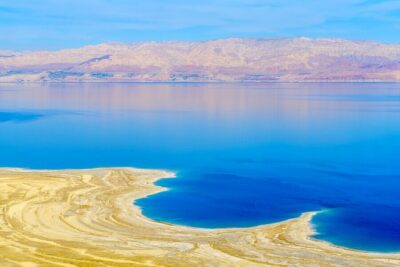
Private Tour: Best of Jerusalem and the Dead Sea from Tel Aviv
Read our review →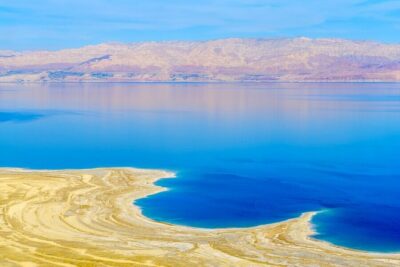
Private Tour: Masada and Dead Sea Day Trip from Tel Aviv
Read our review →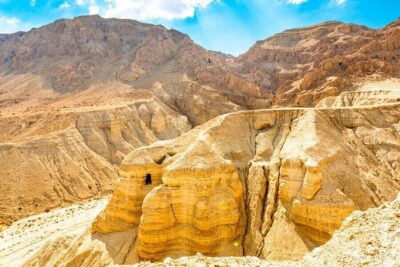
Private Tour: Masada and Dead Sea Day Trip from Jerusalem
Read our review →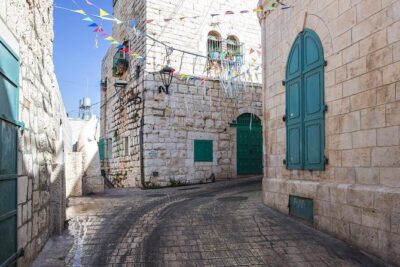
Bethlehem, Dead Sea, Jericho and Jordan River Private Tour From Jerusalem/TLV
Read our review →
Private Tour: The Best of Jerusalem and the Dead Sea
Read our review →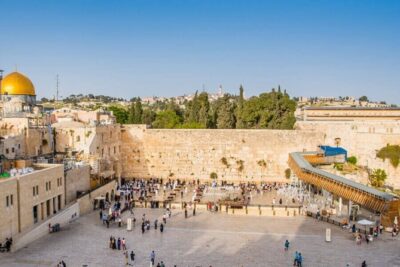
Ashdod Shore Excursion: Private Jerusalem and Dead Sea Day Trip
Read our review →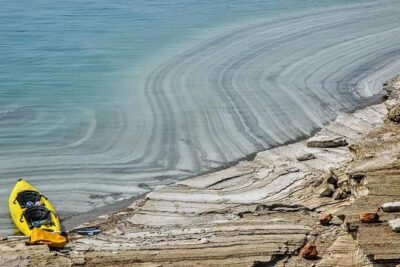
Browse the lists this tour appears in