

Reviewed · CAESAREA & ACRE TOURS
Caesarea, Haifa, Acre and Rosh Hanikra Tour from Jerusalem
The best thing about this tour is its reach. In one demanding day, you move from Herod’s Roman port at Caesarea to Haifa’s carefully ordered Bahá’i Gardens, the Crusader city of Acre, and the wave-cut grottoes at Rosh Hanikra near the Lebanese border. It is a big slice of northern Israel from one air-conditioned coach seat.
I like the strong mix of history and scenery, and I like that the main entry fees are covered in the $69 price. Guides such as Daniel have been praised for explaining archaeology, religion, and politics with real command of the subject. The catch is the schedule: from Jerusalem, the early start and transfers can turn a 12-hour tour into a 15-hour day.
Key points to know before booking
- Caesarea in one hour: See Herod’s old gateways, moat, walls, rooms, amphitheater, and part of the hippodrome.
- A quick Haifa viewpoint: The Bahá’i Gardens stop lasts about 20 minutes, enough for the famous terraced view but not a full garden visit.
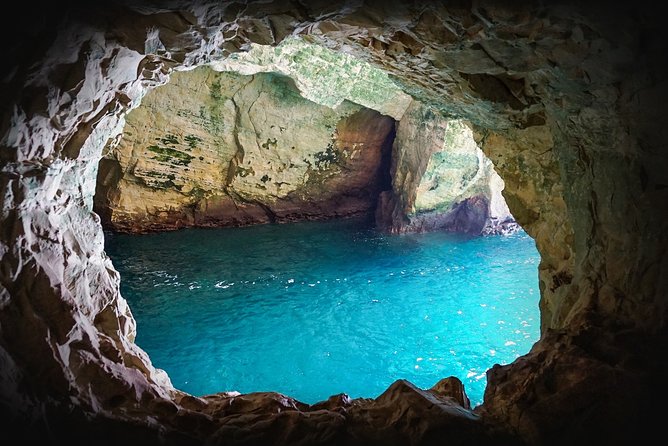
- Rosh Hanikra’s cable car: Ride down to limestone grottoes shaped by years of pounding waves.
- Acre’s layered past: Visit the Old City and Crusader remains, then see the citadel, prison, and British Mandate gallows.
- Jerusalem logistics matter: Jerusalem pickups join the wider route from Tel Aviv, and the return may involve a shuttle, van, or changeover.
- Good value, hard pace: At $69 with transport, a guide, and entry fees, the cost is appealing, but comfort and time management are less certain.
What this north-coast day actually covers
This is not a slow, café-filled tour. It is a long northbound sweep, built for people who want to see several major places rather than spend a full day at one site. You leave around 5:40 a.m., travel from Jerusalem toward Tel Aviv, then continue up the Mediterranean coast.
The route links very different periods. Caesarea brings you into Roman imperial history. Haifa offers a short look at the Bahá’i faith and its formal gardens. Acre adds Crusader, Ottoman, and British Mandate stories. Rosh Hanikra provides the day’s most dramatic natural setting, with a cable car dropping you toward sea-cut caves.
That variety is the tour’s main strength. You are not seeing four versions of the same ruin. You are moving through ancient engineering, living religious culture, medieval power, modern political history, and coastal geology.
It is also the tour’s main weakness. Each stop gets a tight time slot. You should expect an overview, not a leisurely study of every site. If you like a brisk day with many stops, this format can work well. If you prefer long meals, quiet walks, or time for museum displays, it may feel rushed.
More Caesarea, Acre and Rosh Hanikra days:
- From Tel Aviv: Caesarea, Haifa and Akko Day Trip
★ 4.4 · 744 reviews - Caesarea, Rosh Hanikra and Acre Day Trip from Tel Aviv
★ 4.5 · 406 reviews - Caesarea, Haifa & Akko Day Trip from Jerusalem
★ 4.3 · 96 reviews
Caesarea: Roman wealth beside the Mediterranean

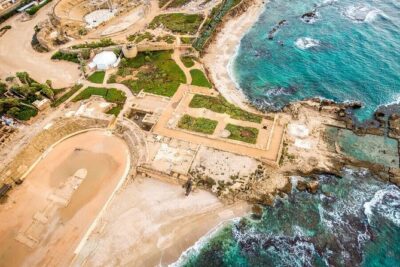
Caesarea was built under Herod and named for Caesar, and the remains make its old status clear. Even with only about an hour, you can get a useful sense of the city’s scale and ambition.
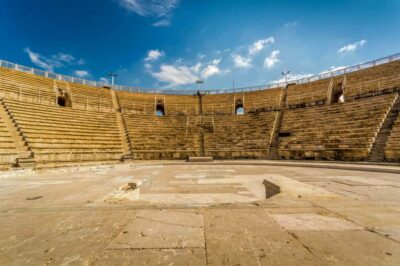
The excavated area includes gateways, a moat, sturdy walls, and preserved rooms. The Roman amphitheater is the natural focal point. It remains in use for performances by Israeli and international artists, which gives the ruin a link to present-day life rather than leaving it as a silent archaeological shell.
Next to the amphitheater, you can see part of the former hippodrome. That detail helps you picture Caesarea as a city built for spectacle, trade, administration, and elite comfort, not just a military outpost.
The one-hour stop is enough to see the major remains and hear the broad story. It is not enough for a slow archaeological study. I would stay close to the guide here, since a few minutes spent wandering in the wrong direction can cost you part of the explanation.
The site also sets the tone for the day. You get substantial ancient remains, but you receive them in a compact visit. For many people, that is a fair trade when the full route includes so much ground.
Haifa’s Bahá’i Gardens in a 20-minute pause
The stop in Haifa is short, but the view is memorable. The Bahá’i Shrine and gardens run down the mountain in 19 terraces, with flowers and carefully arranged plantings leading toward the city below.
You should think of this as a viewpoint stop, not a full garden tour. Twenty minutes gives you time to take in the symmetry, photograph the terraces, and hear the basic explanation of the Bahá’i site. It does not allow a relaxed walk through the entire complex.
That brief pause works because the gardens are visually different from the Roman and Crusader sites. After stone walls and excavated rooms, you get a clean, formal design that uses the hillside itself. The stop also gives you a quick look across Haifa and its position on the Mediterranean coast.
Keep your expectations exact. If the Bahá’i Gardens are your main reason for booking, this excursion is too short for a deep visit. If you want a well-placed introduction while heading north, the stop earns its place.
Rosh Hanikra and the cable car to the grottoes
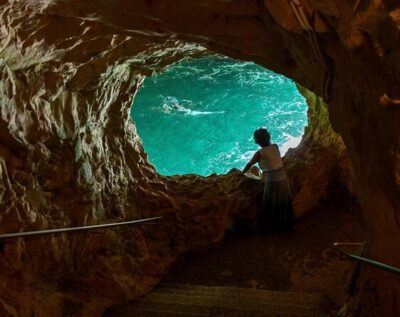
Rosh Hanikra is the day’s most unusual stop. It is Israel’s northernmost point on the Mediterranean coast, close to the Lebanese border. The cable car carries you down toward a network of limestone grottoes formed by constant wave action against the rocks.
The ride itself is part of the appeal. From above, the coast gives you a sense of how sharply the land meets the sea. At the bottom, the grottoes bring you into a darker, more enclosed setting, with water and rock shaping the atmosphere.
The schedule allows about an hour at Rosh Hanikra, followed by about 40 minutes connected with the grottoes and border area. The supplied timing is not perfectly clear about how these segments are separated, so follow the guide’s instructions closely and return to the meeting point on time.
This is also one of the few stops where the setting does much of the talking. You do not need a long lecture to understand the force of the waves. Still, the guide can add useful context about the border and the coast, turning a scenic stop into something more than a quick photo break.
The cable car and grotto visit are included in the tour’s entrance arrangements. That matters because a separate fee at each major stop could quickly reduce the value of a low-cost day tour.
A few more Jerusalem half-days to weigh up
- Walking Tour of Akko (Half-day)
★ 5.0 · 84 reviews - Caesarea, Acre & Rosh Hanikra Day Trip from Jerusalem
★ 4.0 · 78 reviews - Unforgettable Tour to Caesarea, Haifa, Acre and Rosh HaNikra from Tel Aviv
★ 4.0 · 56 reviews - Tel Aviv/Jerusalem: Caesarea, Haifa & Akko Day Tour
★ 4.5 · 53 reviews
Acre: Crusaders, prisons, and the British Mandate
Acre gives the tour its strongest concentration of layered political history. The Old City grew through different ruling periods, and the stop includes both the city itself and the citadel area.
The Crusader remains are the main draw. You can see traces of the fortified medieval center and imagine Acre as a major port and stronghold. The guide’s explanations are especially useful here because the surviving stonework can otherwise look like a series of disconnected walls.
The citadel also carries later stories. It includes a prison used under Turkish rule and gallows associated with the British Mandate. Those gallows were used to execute Jews who broke British restrictions on Jewish immigration to Palestine after World War II.
That part of the visit is heavier than the Roman ruins or the gardens. It shows how Acre’s buildings continued to serve new rulers and new purposes long after the Crusader period ended. If you pay attention to those changes, the city becomes more than a medieval stop.
The tour allows about an hour in the Old City and another hour at the citadel. That is more generous than the Haifa stop, but still not a full day in Acre. You will see the major points, hear the broad sequence of events, and leave with a useful introduction rather than a complete exploration.
The guide can make or break the long route
A full-day route with this many stops depends heavily on the guide. One particularly well-regarded guide was Daniel, whose explanations covered archaeology, the Bahá’i faith, and the political history of the region. A strong guide helps you connect the sites instead of treating them as separate postcard stops.
The driver matters just as much. Bilal received praise for handling the demanding route well. On a day with early pickups, city traffic, highway travel, and several scheduled arrivals, steady driving is not a small detail.
You should also prepare for variation. This is a group tour with a maximum of 40 people, so the experience may feel less personal than a private guide. You will need to keep track of meeting times and stay alert when the group changes vehicles.
Transport from Jerusalem needs careful attention
The phrase from Jerusalem sounds simple, but the route is not always simple in practice. Jerusalem passengers join the main tour from Tel Aviv, which means your day begins before the main northbound journey and may include a connection.
The stated duration is about 12 hours, but one account describes pickup at 5:40 a.m. and hotel return around 9 p.m. That is more than 15 hours from door to door. The return to Jerusalem may involve leaving the main bus, using a shuttle, making several hotel stops, and transferring to a van.
This is the most important practical warning. At the end of a long day, a transfer can feel much harder than it sounds on paper. There was also a serious account of a passenger having trouble at a Haifa switch point because of confusion about the return vehicle and available seats.
I would confirm the Jerusalem pickup and return procedure before departure. Ask where you will change vehicles, which staff member handles the transfer, and how the return to your hotel is organized. Keep your phone charged, hold on to the operator’s contact details, and do not leave a changeover point until you know exactly which vehicle you should take.
The air-conditioned coach is a real advantage in Israel’s heat. The downside is that bus comfort may be mixed. One passenger found the seats difficult to get in and out of, so anyone with limited mobility or a strong need for easy access should consider that before booking.
Is $69 a good price for this day?
At $69, the tour offers a lot for the money. You get hotel pickup and drop-off, an air-conditioned vehicle, a professional guide, and the listed entrance fees. If you tried to connect Caesarea, Haifa, Acre, and Rosh Hanikra independently in one day, transport alone could become difficult and costly.
The value is strongest if you want a broad introduction. You can see two UNESCO World Heritage Sites in one day, visit a border-area coastal attraction, and cover major Roman and Crusader remains without arranging several separate transfers.
The price does not include food or drinks, so bring enough water and plan to buy or carry lunch. The long route also means that a low fare does not remove the physical cost of the day. You are paying in time and energy as well as money.
For a first visit to Israel, I think the price is attractive if you accept the rushed pace. For someone already spending several days in the north, paying more for a slower private outing may give you a better experience at Acre and Caesarea.
Who will get the most from this tour?
This tour suits you if you want maximum coverage in a single day and do not mind an early alarm. It is a good match for first-time visitors, history fans, and people who want to combine famous sites with a dramatic coastal stop.
It also suits families with older children. The minimum age is four, and the mix of ruins, a cable car, gardens, and caves gives the day more variety than a site devoted only to archaeology.
You may want another plan if you dislike long bus journeys, need a predictable hotel return, or want substantial time at each stop. The tour has a maximum of 40 participants, so it is not designed around your personal pace.
Most people can take part, but the combination of walking, stairs, bus transfers, and the cable car deserves thought. The information provided does not give a detailed accessibility breakdown, so ask the operator about your specific needs before booking.
Should you book the Caesarea, Haifa, Acre, and Rosh Hanikra tour?
Book it if your priority is seeing the northern highlights at a low price, with transport and entry fees handled for you. Caesarea, Rosh Hanikra, and Acre each offer something distinct, while the Bahá’i Gardens provide a quick but attractive change of pace.
I would be cautious if you are booking from Jerusalem and need a smooth, simple return. The route can involve transfers, and the day may run well beyond 12 hours. Confirm the connection plan before paying, then treat this as a major sightseeing sweep rather than a relaxed excursion.
Free cancellation is available when you cancel at least 24 hours before the start time. Changes or cancellations within 24 hours are not refunded. That gives you some flexibility, but it does not solve the transport question, so sort out the Jerusalem details early.
FAQ
What time does the tour start?
The stated start time is 5:40 a.m.
How long does the tour last?
The advertised duration is approximately 12 hours, but a Jerusalem pickup and return can make the day longer. One reported schedule ran from 5:40 a.m. until about 9 p.m.
Does the tour pick up from Jerusalem hotels?
Hotel pickup and drop-off are offered, but passengers from Jerusalem join the main tour from Tel Aviv. Confirm the exact transfer and return arrangements before departure.
What sites are included?
The route includes Caesarea National Park, the Bahá’i Gardens in Haifa, Rosh Hanikra and its grottoes, the Lebanese border area, Acre’s Old City, and the Citadel of Acre.
Are entrance fees included?
Yes. The tour includes the listed entrance fees, including admission connected with Caesarea, Rosh Hanikra, and the Citadel of Acre.
Is food included?
No. Food and drinks are not included in the price.
What is the minimum age?
The minimum starting age is four years old.
What happens if I cancel?
You receive a full refund if you cancel at least 24 hours before the experience starts. Cancellations or changes made within 24 hours are not accepted or refunded.
Just added around Jerusalem
- Tel Aviv & Old City of Jaffa – Tiny group from Tel Aviv★ 4.5 · 9 reviews
- Tel Aviv; Jaffa Old City, Port & Shuk Hapishpishim Walking Tour★ 4.5 · 11 reviews
- Discover the Secrets of the Underground Jerusalem with a private tour★ 5.0 · 4 reviews
- Private Tour : Jerusalem Old City Day Trip from Tel Aviv★ 5.0 · 19 reviews
- Private Tour from Tel Aviv to Jerusalem★ 5.0 · 3 reviews
- Luxury Private Tour to Jerusalem from Tel Aviv★ 5.0 · 22 reviews
- Tel Aviv Airport (TLV) to Jerusalem Hotels – Private Transfer★ 4.0 · 19 reviews
- Palm Sunday in Jerusalem: Mass at Bethpage and Via Dolorosa Procession with Transport from Tel Aviv★ 5.0 · 3 reviews
Caesarea & Acre Tours, compared.
Caesarea, Rosh Hanikra and Acre Day Trip from Tel Aviv
Read our review →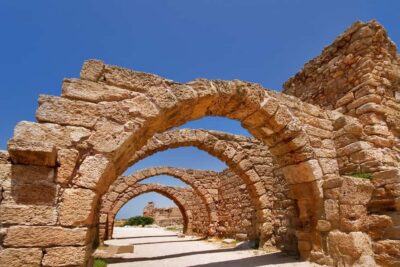
Caesarea, Acre & Rosh Hanikra Day Trip from Jerusalem
Read our review →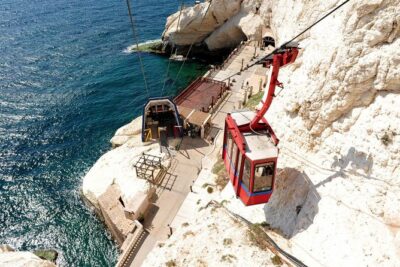
Unforgettable Tour to Caesarea, Haifa, Acre and Rosh HaNikra from Tel Aviv
Read our review →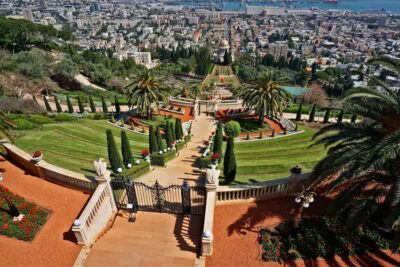
Tel Aviv/Jerusalem: Caesarea, Haifa & Akko Day Tour
Read our review →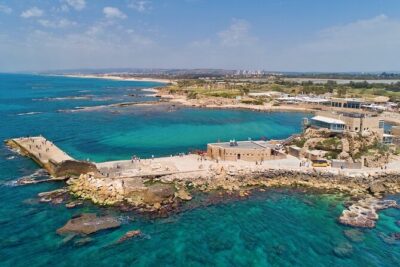
Browse the lists this tour appears in