
Reviewed · JERUSALEM TOURS
Israel Museum Must See High-Lights
The most rewarding part of this visit is the way it links objects to places and stories. The Second Temple model gives you a quick grasp of ancient Jerusalem, then the Shrine of the Book and museum galleries add the scrolls, artifacts, and Jewish traditions that make the city’s past easier to understand. Guide Uri Goldflam brings a strong focus on biblical history, geography, and Israeli culture.
I like two things here. First, this is a private tour, so Uri can shape the pace and explanation around your group rather than march everyone through the museum. Second, the route covers both famous treasures and daily Jewish life, from the Dead Sea Scrolls to customs shared across Jewish communities. That mix gives you more than an archaeological display case.
The main consideration is time. The museum is huge, while this visit lasts about two to four hours, so you are seeing selected sections rather than the whole institution. The published details also list admission as included at some stops but not at the main Israel Museum section, so confirm exactly what your price covers before booking.
Key points to know before you book
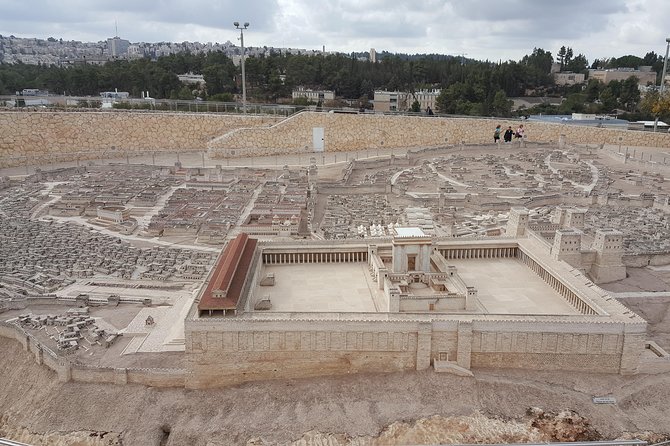
- The Second Temple model comes first: A 1:50 scale model helps you see Jerusalem as it looked during the Second Temple period and the time of Jesus.
- The Dead Sea Scrolls are the centerpiece: The Shrine of the Book displays ancient biblical texts, including a facsimile of the complete Book of Isaiah.
- Uri Goldflam leads the visit: His explanations focus on biblical connections, Israeli history, geography, Jewish culture, and the relationship between sites and events.
- This is a private group experience: Your party alone takes part, with a maximum of six people.
- The route balances archaeology and living tradition: You move from biblical-era objects to Jewish weekly, seasonal, and life-cycle customs.
- Pickup is available in Jerusalem: Front-door pickup and drop-off can be arranged, while the listed meeting point is at the museum shops.
Why this museum visit needs a plan
The Israel Museum is not a quick stop where you wander in, see one famous object, and leave. Its collections cover thousands of years, and the scale can make it hard to know what deserves your attention first.
That is where this tour earns its place. Instead of asking you to make sense of every gallery, the visit focuses on four connected stops. You begin with a large visual model, move to the Dead Sea Scrolls, then enter the archaeological collections before finishing with Jewish culture and life-cycle displays.
I like this order because it moves from the city itself to the written record, then to material evidence and community life. You get a framework before the details begin. If you are visiting Jerusalem for the first time, that structure can save time and prevent the museum from becoming a blur of labels and dates.
The tour is private for up to six people. That matters most in a museum, where one person may want more biblical context while another wants to focus on objects, art, or family traditions. A private guide can pause, explain, or move on without waiting for a large group.
The advertised duration is roughly two to four hours. The listed stops add up to about three hours and 45 minutes, so plan on a substantial half-day outing if the visit runs to its full schedule. You should not expect to see every department. The point is a focused introduction to the museum’s most meaningful sections.
More museums and memorials in Jerusalem:
- Jerusalem Yad Vashem Holocaust History Museum Tour
★ 5.0 · 98 reviews
The Second Temple model and Jerusalem in miniature
Your first stop is the Second Temple Jerusalem Model, also called the Holy-land Model. It is built at a 1:50 scale and presents Jerusalem during the Second Temple period, including the setting associated with the time of Jesus.
This is more than a large model for taking photographs. Jerusalem’s hills, valleys, walls, and major buildings can be hard to picture from written descriptions alone. Here, you can take in the city with a single look and begin to understand how its geography shaped movement, worship, defense, and daily life.
The scheduled time is 45 minutes, which gives Uri room to explain the layout rather than rush past it. If biblical places often seem disconnected when you read about them, this model can supply the missing map. It helps put events into physical space.
I especially like starting here because it gives the rest of the tour a reference point. When you later see archaeological objects or hear about ancient Jerusalem, you have a clearer idea of where the city’s central areas stood and how the old city was arranged.
The possible drawback is that a model cannot show every period of Jerusalem’s past. It represents one historical moment, so it is best treated as a visual guide to the Second Temple era rather than a full picture of the city across all centuries.
Admission is listed as included for this stop. The meeting information places the activity at the Israel Museum area, with the ticket redemption point at Israel Museum/Ruppin in Jerusalem.
The Shrine of the Book and the Dead Sea Scrolls
Next comes the Shrine of the Book, the distinctive building that houses the Dead Sea Scrolls. This is the emotional center of the visit for many people, not because the scrolls are flashy, but because their age and survival make the display unusually powerful.
The scrolls include copies of biblical scripture dating from roughly 2,000 to 2,200 years ago. The exhibit also includes a facsimile of the complete Book of Isaiah. Seeing an entire biblical text in this setting connects the written words you may know with the physical materials that carried them through time.
The visit also explains the discovery of the scrolls, the excavations, and objects associated with the find. That wider story matters. You are not simply looking at fragments behind glass. You are learning how ancient texts, archaeological work, and modern preservation come together.
The Shrine of the Book’s architecture is part of the experience. Its unusual design was made for these objects and gives the stop a setting unlike a standard museum room. The scheduled time is 45 minutes, enough for an explanation of the scrolls and their place in Jewish and biblical history.
If you have strong religious interests, this section may be the reason to choose the tour. Uri’s approach, based on the information provided, includes biblical relationships and Jewish heritage while remaining respectful of Christianity. That is useful for a mixed group with different reasons for visiting Jerusalem.
One practical note deserves attention. The itinerary lists admission as included for the Shrine of the Book, but the general tour details do not spell out every ticket component. Confirm the admission arrangement when you book, especially since the main Israel Museum section is separately marked as not included.
Biblical archaeology inside the Israel Museum
The longest portion of the tour is a 90-minute visit to the Israel Museum’s archaeological wing. This is where Uri links artifacts to the biblical narrative and to the development of ancient societies in the region.
You will not be trying to absorb the entire archaeological collection. Instead, the tour uses selected findings to explain how material evidence can add context to biblical accounts. That can mean examining objects, places, and periods alongside the stories connected to them.
This is the part where a guide’s background matters most. Uri Goldflam is described as focusing on Israeli history, geography, biblical connections, and the relationships among major sites and events. Those subjects can turn a museum visit from a collection of isolated objects into a connected timeline.
I would choose this tour over a self-guided visit if you want help deciding what an artifact means. Labels often assume you already understand the period, location, or religious setting. A guide can supply the missing link and help you notice why one object matters beside another.
At the same time, you should be comfortable with a strong biblical and historical focus. This is not presented as a general art tour or a survey of every museum department. If your main interest is modern Israeli art, contemporary design, or an exhaustive archaeological catalog, this route may feel too narrow.
The published details mark admission for this Israel Museum stop as not included. Treat that as an important cost question, since the total price is $512.83 per group of up to six. Ask for a clear breakdown of tickets before paying, rather than assuming every entrance is covered.
A few more Jerusalem half-days to weigh up
- From Tel Aviv: Jerusalem Old & New City Bus Tour
★ 4.2 · 824 reviews - Jerusalem: Guided Walking Tour of the Old City
★ 4.7 · 386 reviews - Full Day City Tour of Jerusalem
★ 4.1 · 367 reviews - Old and New Jerusalem Day Trip from Tel Aviv
★ 4.5 · 296 reviews
Jewish culture, customs, and the life cycle
The final stop lasts about 45 minutes and moves into the Jewish Culture and Life-Cycle wing. This section changes the tone of the visit. Instead of focusing mainly on ancient remains, it looks at how Jewish communities preserved traditions across different continents and generations.
The displays cover weekly, seasonal, and annual events, along with life-cycle customs. That makes this a useful complement to the archaeology galleries. You see not only what ancient people left behind, but also how Jewish identity has been expressed through recurring practices, objects, celebrations, and family milestones.
I like this ending because it widens the story beyond biblical times. A visit focused only on scrolls and ancient stones could leave you with the idea that Jewish history belongs entirely to the distant past. This gallery shows continuity and change across Jewish communities in many places.
It may also be the most accessible section for a group with different backgrounds. You do not need to know every biblical period to appreciate objects connected with home, family, holidays, or religious practice. Uri can explain how traditions fit together and where regional differences appear.
The trade-off is that 45 minutes is enough for an introduction, not a full study of Jewish customs around the world. If your family has a particular cultural or religious interest, tell the guide early so the conversation can spend more time where it matters to you.
Admission is listed as included for this stop. As with the other ticket notes, confirm the final arrangement because the activity information does not present every entrance fee in exactly the same way.
What Uri Goldflam adds to the experience
The strongest pattern in the available feedback is praise for Uri’s command of Israeli history, geography, religion, and current affairs, along with his ability to make information engaging. Several comments describe him as warm, accessible, and able to explain complex material without losing the human side of the story.
That matters here because the museum’s objects are important but not always self-explanatory. A guide who can connect a scroll to biblical history, a model to Jerusalem’s geography, and a cultural object to Jewish life gives you a better chance of remembering what you saw.
The feedback also points to Uri’s respectful approach toward both Jewish heritage and Christianity. For a group visiting the Holy Land for religious reasons, that balance can be valuable. You can ask questions from your own point of view without turning the visit into a narrow presentation.
His experience with families and teenagers is another useful detail. The comments describe him as making information fun and accessible, which may help if you are bringing younger members who do not want a long series of formal lectures. Still, the tour involves a substantial amount of history, so you should set expectations before arriving.
Do not book this simply because you want a quiet museum stroll. The experience is built around explanation and connections. You will get the most from it if you want to ask questions and talk through what you are seeing.
Price, pickup, and practical planning
At $512.83 for a group of up to six, the price works best when you fill most of the group. Divided among six people, it comes to about $85.47 per person before any separate admission costs. For two people, the effective cost is about $256.42 each, so group size has a major effect on value.
The private format is the main reason to consider that price. You are paying for a dedicated guide, a planned route, and the ability to keep the discussion relevant to your party. If you are already comfortable navigating museums and reading background material on your own, the cost may be harder to justify.
Front-door pickup and drop-off are offered from locations in Jerusalem on request. The listed start point is at the museum shops, and the activity ends back at the meeting point unless you arrange the pickup option. An air-conditioned vehicle is included.
The supplied opening information shows Tuesday hours from 4:00 PM to 9:00 PM for the displayed date range. Because the timing details are narrow, confirm the exact start time and operating day before booking. The tour itself is listed as lasting two to four hours, so an afternoon or early evening schedule may affect what else you can plan that day.
Most people can take part, and service animals are allowed. The experience is near public transportation, though pickup may be more convenient if you are staying elsewhere in Jerusalem.
Free cancellation is available up to 24 hours before the start time for a full refund. Cancellations or changes made less than 24 hours ahead are not accepted for a refund, with cut-off times based on local time.
Who should book this private museum tour?
I would recommend it to first-time Jerusalem visitors who want a clear introduction to the Israel Museum without spending an entire day trying to find the best galleries. It also suits families, couples, and small groups with a strong interest in biblical history, Jewish heritage, and archaeology.
It is a particularly good fit if you value a guide who can connect geography, objects, religion, and modern Israeli identity. The route gives you four different ways to understand the past, and Uri’s background appears best suited to making those connections.
You may want a different arrangement if your main goal is to see modern art, spend hours browsing independently, or visit every corner of the museum. The tour is intentionally selective. Its value comes from focus, not coverage.
Should you book it?
Book this tour if the Dead Sea Scrolls, biblical archaeology, Second Temple Jerusalem, and Jewish traditions are central to your Jerusalem plans. A private visit led by Uri Goldflam can give you a useful framework for understanding objects that might otherwise feel disconnected.
The decision depends heavily on your group size and ticket costs. With six people, the private rate is easier to defend. With only one or two, compare the cost with a standard museum visit and confirm precisely which admissions are included.
For the right group, this is a smart way to make sense of a very large museum in a limited amount of time. Just arrive with realistic expectations: you are getting a guided selection of major themes, not a complete survey of the Israel Museum.
FAQ
How long does the Israel Museum tour last?
The experience is listed as lasting approximately two to four hours. The four scheduled stops total about three hours and 45 minutes if completed as described.
How many people can join the private tour?
The price covers a private group of up to six people. Only your group takes part in the activity.
Who is the guide?
The experience provider is Uri Goldflam of Travel Trailer Israel. The tour focuses on his explanations of Israeli history, biblical connections, geography, Jewish culture, and religion.
What are the main stops?
The route includes the Second Temple Jerusalem Model, the Shrine of the Book, the Israel Museum archaeological wing, and the Jewish Culture and Life-Cycle wing.
Are hotel transfers available?
Pickup and drop-off from locations in Jerusalem are offered on request. The listed meeting point is at the museum shops, and the activity ends back at the meeting point.
Is admission included?
Admission is listed as included for the Second Temple Jerusalem Model, the Shrine of the Book, and the Jewish Culture and Life-Cycle stop. The Israel Museum archaeological stop is marked as not included, so confirm the full ticket arrangement before booking.
Is the tour available near public transportation?
Yes. The additional information states that the experience is near public transportation.
What is the cancellation policy?
You can cancel up to 24 hours before the experience starts for a full refund. Changes or cancellations made less than 24 hours before the start time are not accepted for a refund.
Just added around Jerusalem
- Tel Aviv & Old City of Jaffa – Tiny group from Tel Aviv★ 4.5 · 9 reviews
- Tel Aviv; Jaffa Old City, Port & Shuk Hapishpishim Walking Tour★ 4.5 · 11 reviews
- Discover the Secrets of the Underground Jerusalem with a private tour★ 5.0 · 4 reviews
- Private Tour : Jerusalem Old City Day Trip from Tel Aviv★ 5.0 · 19 reviews
- Private Tour from Tel Aviv to Jerusalem★ 5.0 · 3 reviews
- Luxury Private Tour to Jerusalem from Tel Aviv★ 5.0 · 22 reviews
- Tel Aviv Airport (TLV) to Jerusalem Hotels – Private Transfer★ 4.0 · 19 reviews
- Palm Sunday in Jerusalem: Mass at Bethpage and Via Dolorosa Procession with Transport from Tel Aviv★ 5.0 · 3 reviews
Jerusalem Tours, compared.




Browse the lists this tour appears in