
Reviewed · MARKET TOURS IN TEL AVIV
Tel Aviv: Carmel Market Food Tasting Tour “Shuk Hacarmel”
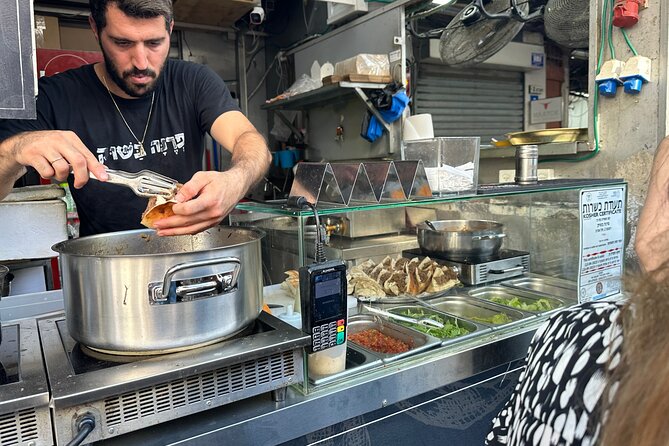
Carmel Market is at its best when you stop treating it as a place to shop and start tasting your way through it. This tour takes you from the stalls near Allenby Street into the market’s food lanes, with bites such as a malawach sandwich, fresh falafel, hummus, sabich, and shredded beef in pita.
I like the focus on family-run vendors and the Yemenite food connection. I also like that the tastings amount to a substantial lunch, not just a token nibble. You’ll hear about the market’s role in Tel Aviv’s growth and meet sellers whose businesses have lasted for generations.
The main caution is timing. The activity is advertised as 90 minutes, while the included information also refers to a 2.5-hour walking tour, and several bookings ended closer to an hour. If you want a long, wide-ranging market tour, confirm the expected length before paying.
Key points at a glance
- A meal-sized tasting route: Expect enough food for a substantial lunch, with Middle Eastern, Yemenite, and Israeli specialties.
- Malawach and falafel lead the way: The tasting list includes crisp Yemenite-style malawach, fresh falafel, hummus, sabich, shredded beef in pita, and sweet treats.
- A short walk through a busy market: The route covers about ¾ mile, or 1.2 kilometers, through Carmel Market’s narrow lanes.
- A guide-led look at local food culture: You’ll hear how Jewish communities from North Africa, the Middle East, and Europe shaped Israeli cooking.
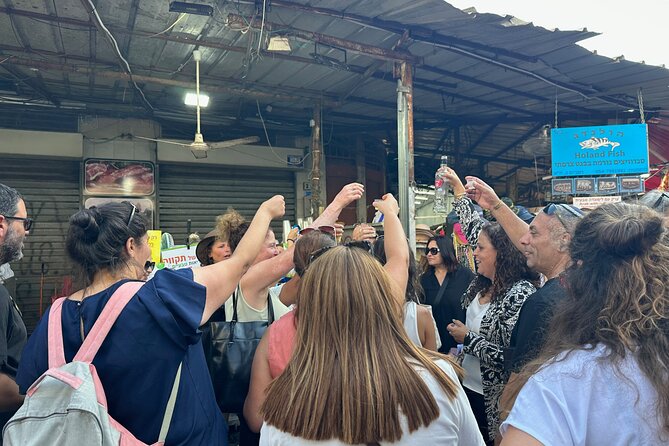
- A small-group feel: The maximum group size is 15, and a private option is available.
- Plan for uneven access and outdoor weather: Comfortable shoes, water, sunscreen, and a sun hat matter, and the tour runs rain or shine.
Starting at the Poli House corner
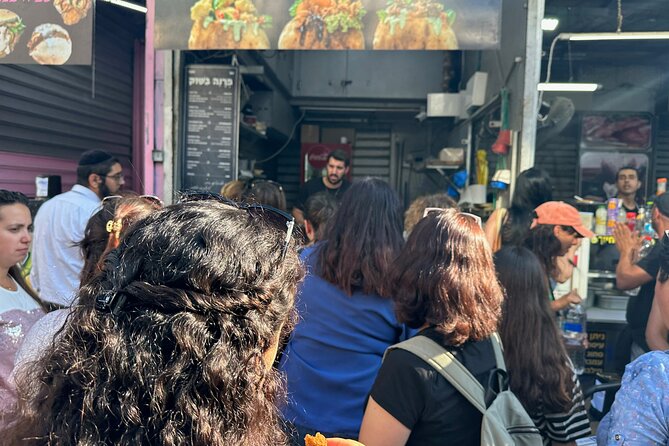
Your meeting point is the corner outside the Poli House hotel, where Carmel Market meets Allenby Street. This is a useful place to begin because the market changes quickly as you move away from the main road. The outer section includes plenty of general merchandise, while the inner lanes bring you closer to food stalls, bakeries, produce, spices, and prepared dishes.
I would arrive a few minutes early. A market entrance can be noisy and crowded, and the exact corner is easier to find before you are looking for a guide while dodging shoppers and vendors. The meeting point is not a separate tour office, so keep the hotel name and Allenby Street junction in mind.
The guide leads the route in English. Alina is named as a guide on several bookings, and one particularly strong account credits her with introducing new foods to someone who had already visited Israel before. That is a useful sign for repeat visitors, though guide assignments can change.
More Market Tours in Tel Aviv
- Carmel Market Tasting Tour – LocaLocal
★ 5.0 · 140 reviews - Tel Aviv: Jaffa & Carmel Market Walking Tour
★ 4.7 · 60 reviews - Tel Aviv: Carmel Market & Tel Aviv Tour with Tastings
★ 3.8 · 36 reviews
A first look at Carmel Market’s changing character
The early part of the walk gives you a sense of the market as a neighborhood shopping center, not just a food attraction. You may see clothing, household goods, souvenirs, and other everyday items before the route reaches the more food-focused middle section.
That contrast is worth noticing. Carmel Market serves daily local life as well as people looking for a quick taste of Tel Aviv. The changing stalls help explain why the market can feel less polished than a dedicated food hall. You are walking through a working market, where displays, smells, noise, and foot traffic are part of the experience.
The guide also places the market within Tel Aviv’s development. You’ll hear about the communities that brought cooking traditions from North Africa, the Middle East, and Europe, then combined them with ingredients common around the Mediterranean. This context helps you understand why Israeli food is difficult to reduce to one tradition.
Keep your expectations realistic. The market is relatively compact, and the route covers only about 1.2 kilometers. That makes the walk manageable, but it also means the tour is not an all-day exploration of every lane.
Malawach brings a Yemenite accent
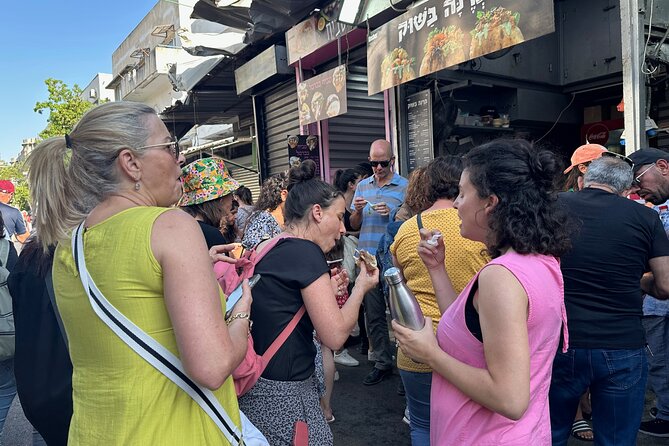
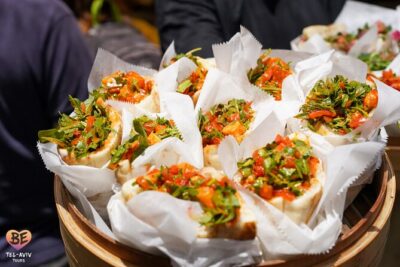
One of the most distinctive promised tastings is a malawach sandwich. Malawach is associated here with Yemenite Jewish cooking, and it gives the tour a clear point of difference from a standard falafel-and-hummus outing.
The pastry is filling and substantial, which helps explain why the food stops can replace lunch. It also gives the guide a practical way to discuss how Jewish communities from different regions contributed to modern Israeli food. For you, this is likely to be one of the more memorable bites because it is less familiar to many first-time visitors than falafel or hummus.
The tour may also include shredded beef in pita. That stop keeps the meal firmly in the category of hearty street food rather than small samples. Since the exact order and serving size can vary, arrive hungry but do not assume every item will be served as a full restaurant plate.
Falafel, hummus, sabich, and market staples
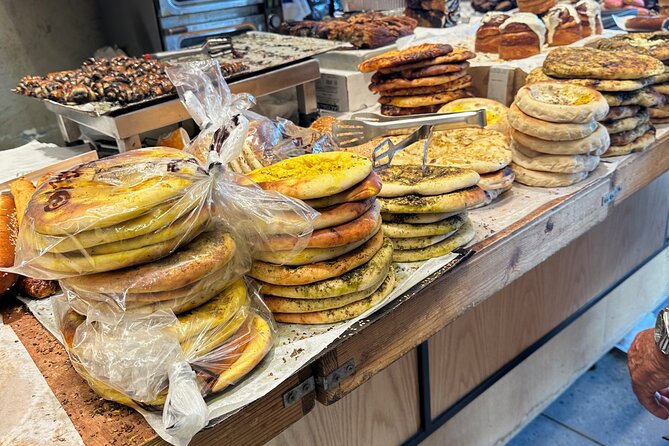
Falafel and hummus are central to the food stops. Falafel offers the familiar fried chickpea element, while hummus brings a creamy base for understanding how simple ingredients can anchor an entire meal. These are popular foods, but tasting them in a market setting gives the guide room to explain how they fit into everyday eating.
Sabich adds another layer. The dish is associated with Jewish Iraqi food and is commonly served in pita with eggplant and other fillings. The supplied information does not promise every ingredient in the portion, so expect an introduction to the dish rather than a fixed recipe lesson.
You may also taste Syrian olives, freshly baked bread, fragrant spices, and other market products. These items matter because they widen the experience beyond prepared sandwiches. The market’s food culture depends as much on ingredients, baking, and preserved foods as it does on dishes ready to eat.
One point to watch is variety. A booking described four tastings, all based around bread, with no drink or fruit included. If you have taken several food tours, that may feel narrow. The tour does list many foods, but the exact combination served on a particular day is not spelled out.
More food tours in Tel Aviv:
- Tel Aviv Food Tour of the Carmel Market
★ 4.0 · 29 reviews - Carmel Market Tasting Tour
★ 5.0 · 25 reviews - Levinsky Market Tasting Tour
★ 5.0 · 8 reviews - Urban Walking & Food Tour in Tel Aviv
★ 5.0 · 7 reviews
Sweet stops with halva and baklava
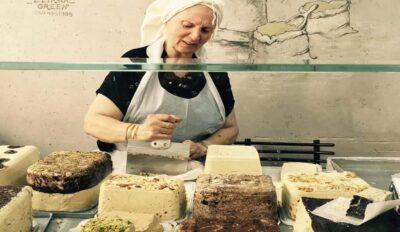
The route includes Middle Eastern-style desserts such as halva and baklava. After the savory food, these sweets provide a useful change in texture and flavor, especially if you have already eaten falafel, pita, and malawach.
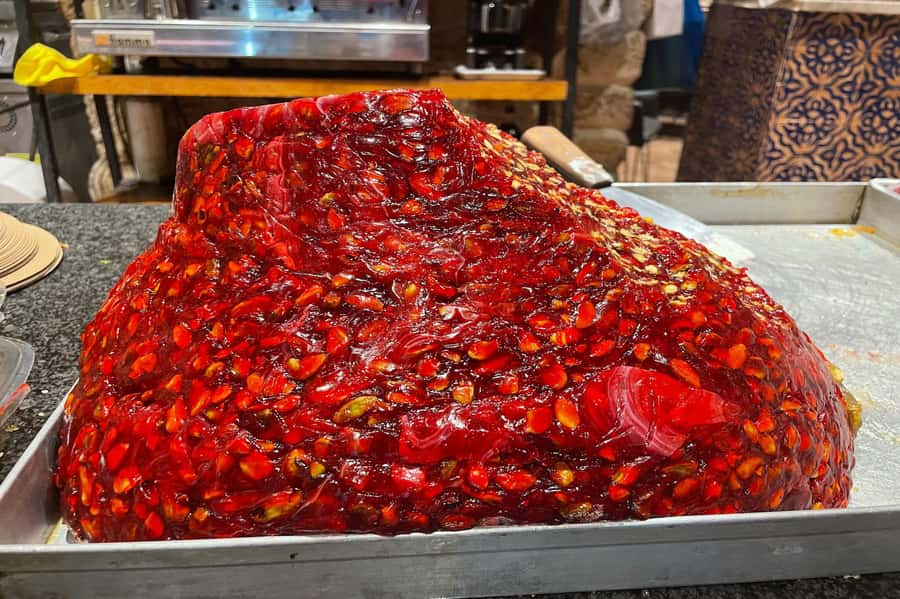
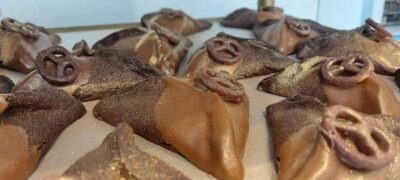
Halva is dense and sesame-based, while baklava is made with pastry, nuts, and syrup. You do not need a sweet tooth to appreciate their place in the market. They show how desserts carry regional influences just as clearly as the savory dishes do.
The food stops are described as enough for a substantial lunch. That makes the $63 price easier to assess. You are not paying only for a walk or a list of market facts. You are paying for a guided meal made up of several samples, plus the convenience of having someone choose the stops and explain them.
Still, value depends on the length and variety delivered. If the route lasts the full advertised 90 minutes and includes several of the named foods, the price is reasonable for a guided meal in central Tel Aviv. If it ends after roughly an hour and the tastings are mostly bread-based, the value becomes less convincing.
Stories about vendors and Tel Aviv food culture
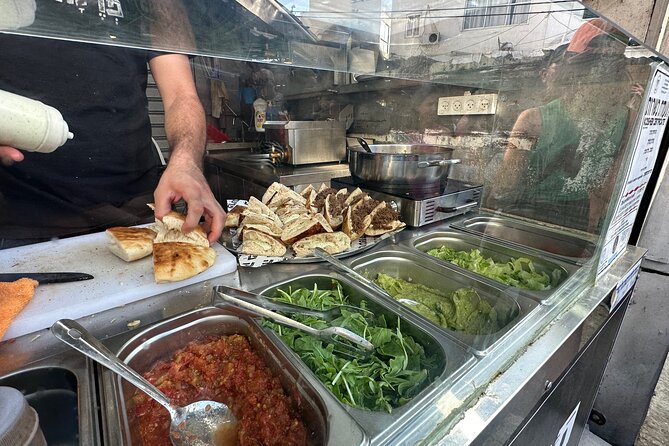
A strong part of the experience is the contact with vendors who have operated for generations. This can turn a simple food stop into a brief lesson about continuity, family work, and the way Carmel Market has changed as Tel Aviv expanded.
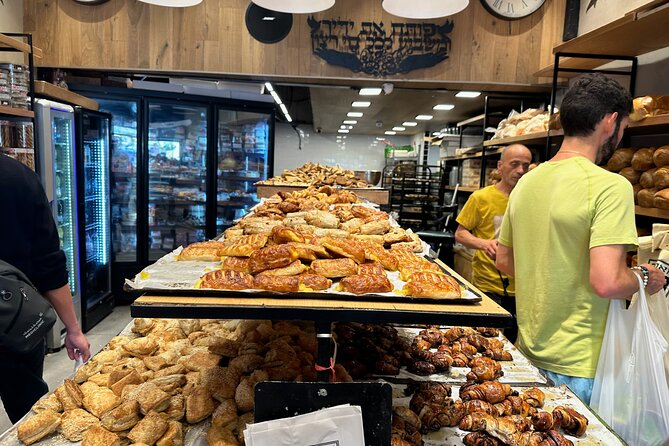
You may see bakers at work, spice displays, olives, sweets, and prepared foods packed close together. One booking described seeing an older woman making pita in a distinctive way, an image that captures the hands-on character of the market better than a formal lecture would.
The guide’s role matters here. A good guide keeps the history tied to what is in front of you: a bakery, a spice counter, a sandwich, or a vendor who has served the neighborhood for years. Alina received especially strong praise for combining cultural background with unfamiliar foods. Another booking raised concerns about a late start and difficulty communicating in English, so the quality of the explanation may depend on the individual guide assigned that day.
The history portion may suit you best if you want a basic introduction rather than an academic tour. Some information about Jewish communities and religion may feel familiar if you have studied the subject before. The payoff is strongest when the guide connects that background directly to what you are eating.
How long does the tour really take?
The advertised duration is 90 minutes, and the practical route is short enough to fit comfortably into that time. Yet the included description also calls it a 2.5-hour walking tour with food stops, creating an obvious mismatch.
Several bookings finished in less than two hours, and two accounts put the actual experience at about one hour. That does not automatically make the tour poor, especially if the food comes quickly and the route is well organized. It does mean you should not plan a major afternoon around the longer figure without confirming it.
For scheduling, I would treat the tour as a 90-minute activity and leave extra time afterward. That gives you room to browse, make additional purchases, or recover if the group moves slowly through the market.
Group size, weather, and walking conditions
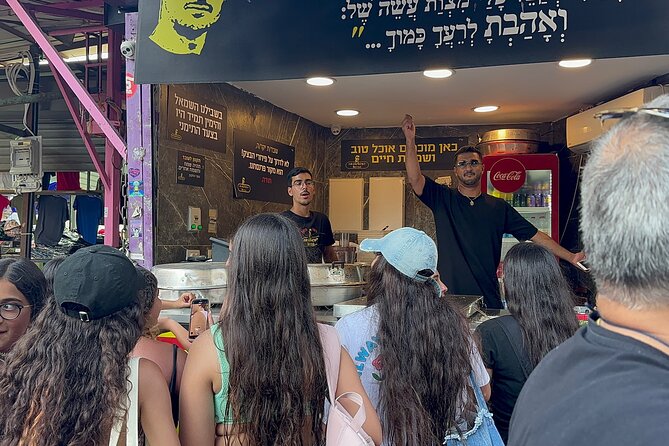
The maximum group size is 15 people, which is small enough for a guide to speak with the group while moving through narrow lanes. A private group option is available if you want a more personal pace or have specific food interests.
The tour takes place rain or shine. Carmel Market is outdoors, so bring water, sunscreen, and a sun hat in hot weather. Comfortable shoes are important even though the route is only about ¾ mile. You will be standing at food stops and walking through market lanes rather than following a smooth museum path.
This activity is not recommended for wheelchair users or people with mobility impairments. That restriction matters because markets can have tight passages, uneven surfaces, and crowded areas. Infants from zero to one year old are free but do not receive food samples, and children and infants must be with at least one paying adult.
The guide takes photos during the tour and can send them through WhatsApp or Dropbox. If you prefer not to be photographed, tell the guide at the beginning.
Is $63 a fair price?
At $63 per person, this is not the cheapest way to visit Carmel Market. You can walk through the market without paying an admission fee and choose your own food. The tour earns its price through the guide, the organized tastings, the vendor connections, and the cultural explanation.
I see the best value for a first visit to Tel Aviv, especially if you want lunch and an orientation at the same time. You avoid guessing which stalls to choose, and the guide gives you a path through the market’s mix of food and general merchandise.
I see weaker value for confident eaters who already know Israeli food or who want drinks, fruit, and a large range of separate tastings. The food is substantial, but the format may lean toward several filling bread-based dishes rather than many tiny samples.
Free cancellation up to 24 hours before the start and a reserve-now, pay-later option reduce the financial risk. They do not solve the duration question, so I would still confirm the timing before booking.
Who should book this Carmel Market tour?
I would recommend it to first-time visitors who want an easy introduction to Israeli street food, couples looking for a casual lunch activity, and anyone who enjoys hearing the story behind a dish. It also suits people who prefer a small group and want help finding family-run stalls.
It is a good fit if malawach, falafel, hummus, sabich, olives, halva, and baklava sound like a satisfying meal. You should also enjoy standing, walking, and eating in a working market rather than sitting in one restaurant.
I would hesitate if you need step-free access, dislike hot outdoor conditions, want a precise 2.5-hour itinerary, or expect drinks and fruit alongside every savory tasting. Food allergies and dietary restrictions are not addressed in the supplied details, so you should ask before booking if that affects your choice.
FAQ
How much does the Carmel Market food tour cost?
The tour costs $63 per person.
How long is the tour?
The activity is advertised as 90 minutes. The included information also refers to a 2.5-hour walking tour, while some bookings ended in about one hour, so confirm the expected duration before booking.
What food is included?
The listed tastings include malawach, shredded beef in pita, falafel, hummus, sabich, Syrian olives, freshly baked bread, spices, halva, and baklava. The exact selection may vary.
Where does the tour meet?
Meet at the corner outside the Poli House hotel, at the junction of Carmel Market and Allenby Street.
What language is the tour in?
The live tour guide speaks English.
Can I cancel the booking?
Yes. You can cancel up to 24 hours in advance for a full refund.
Is the tour suitable for wheelchair users?
No. The activity is not recommended for wheelchair users or people with mobility impairments.
Are infants charged?
Infants from zero to one year old are free, but they do not receive food samples. Children and infants must be accompanied by at least one paying adult.
Should you book it?
Book this tour if you want a guided introduction to Carmel Market with enough food for lunch and a clear Yemenite and Middle Eastern focus. The strongest reasons are the malawach, the family-run vendors, the market stories, and the chance to try several well-known Israeli foods without planning every stop yourself.
Skip it if you want a long market crawl, a drink with every tasting, or a fully predictable itinerary. For most first-time visitors who can manage the walking and outdoor conditions, the tour offers a friendly way to get oriented. Just treat 90 minutes as the realistic planning figure and confirm the length before you go.
More Market Mornings in Tel Aviv
- Tel Aviv: 2-Hour Carmel Market Tour in English with Lunch
★ 4.8 · 23 reviews - Tel Aviv: 2-Hour Levinsky Market Tour with Full Lunch
★ 4.7 · 10 reviews - Tel Aviv: 2-Hour Jaffa Flea Market Tour with Tastings
★ 4.9 · 8 reviews - Tel Aviv: Carmel Market Food Tasting Tour “Shuk Hacarmel”
★ 5.0 · 5 reviews
Just added around Tel Aviv
- Private wine tour of Northern Israel★ 5.0 · 4 reviews
- Package VIP Skip Line Services in BGN Airport with Transfer to Tel aviv Hotels★ 5.0 · 3 reviews
- Israel Holy Land Christian Tour Package 7 days – Private Tour Package★ 5.0 · 31 reviews
- VIP Tel Aviv airport Terminal 3 Fast Track Skip Line From plane★ 4.5 · 9 reviews
- Tel Aviv and Jaffa Most Exciting Private Tour★ 4.5 · 13 reviews
- Food & Drink Private Guided Tour in Tel Aviv★ 5.0 · 3 reviews
- Urban Walking & Food Tour in Tel Aviv★ 5.0 · 7 reviews
- Tel Aviv & Jaffa Urban Bike Expedition★ 5.0 · 33 reviews
Market Tours in Tel Aviv, compared.
Browse the lists this tour appears in