
Reviewed · BETHLEHEM & JERICHO TOURS
Jerusalem & Bethlehem Tour from Haifa Port 2024 – Small Group
Jerusalem and Bethlehem in one day is a big undertaking, but it gives you something few port excursions can: the chance to connect the major Christian and Jewish sites in a single, carefully timed outing. You start with Jerusalem’s broad view from the Mount of Olives, then move into tight lanes, ancient churches, and prayer sites before continuing to Bethlehem.
I like the ship-friendly pickup and the fact that transport, guide service, and entrance fees are included. I also like the chance to see Bethlehem as a Palestinian city, not just as a name on a Christmas card. The catch is simple: this is a long day, and traffic can eat into your time. You need to be comfortable seeing highlights rather than every corner of Jerusalem.
Key points to know before booking
- The day begins and ends at Haifa Port, with pickup arranged around your ship’s schedule.
- A maximum of 18 people keeps this smaller than a large coach tour, though a full vehicle may feel tight.
- The Mount of Olives gives you the essential Jerusalem view before you enter the Old City on foot.
- Bethlehem adds a different political and cultural setting as well as the Church of the Nativity.
- Avi and Abri are names to look for, as both have led highly regarded departures.
- Modest clothing is required, with shoulders and knees covered for religious sites.
Why this Haifa shore excursion is worth considering
At $255 per person, this is not a cheap city transfer. But it is also not merely a ride from the port. The price covers round-trip transport, an English-speaking government-licensed guide, the planned sightseeing, and entrance fees. For a cruise passenger, that package matters because you are paying for a day organized around the ship’s arrival and departure rather than trying to piece together separate taxis and guides.
The strongest reason to book is convenience. Haifa is not next door to Jerusalem, and Bethlehem adds another stretch of road. You can spend the day looking out the window, listening to the guide, and arriving back at the port with the return transfer already arranged.
The main tradeoff is time. One departure took roughly five hours just on the round trip, and heavy traffic in Jerusalem and Bethlehem can push the main sightseeing late into the day. If sunset comes early, the Old City portion may feel rushed. This tour works best if your priority is seeing the major sacred sites, not lingering over lunch or browsing every lane.
A few more Haifa half-days to weigh up
- Full-Day Holy City of Jerusalem and Bethlehem Private Guided Tour
★ 5.0 · 9 reviews - From Tel Aviv: Jerusalem and Bethlehem Guided Day Trip
★ 4.3 · 1,316 reviews - Day Tour to Jerusalem and Bethlehem from Tel Aviv
★ 4.5 · 720 reviews
Meeting your guide at Haifa Port
At the port, look for a guide holding a COMPASS sign at the exit of the arrival terminal. The operator collects the group before setting off, so bring the ship details supplied when you book: vessel name, docking time, disembarkation time, and the time you must be back on board.
That sign is important. The company name to look for is Compass, not necessarily the name of the booking website. A previous pickup was delayed because the passenger was watching for a different name, so check the meeting instructions carefully before leaving the ship.
The vehicle is air-conditioned, which is welcome on a long Israeli road day. The group size is capped at 18, though a full vehicle can still feel close, especially if people are carrying day bags or if couples are separated by the seating arrangement. Think small-group rather than intimate private tour.
The Mount of Olives puts Jerusalem in view
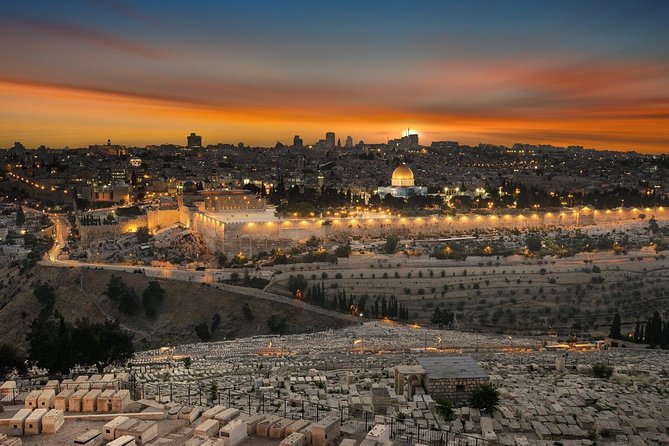
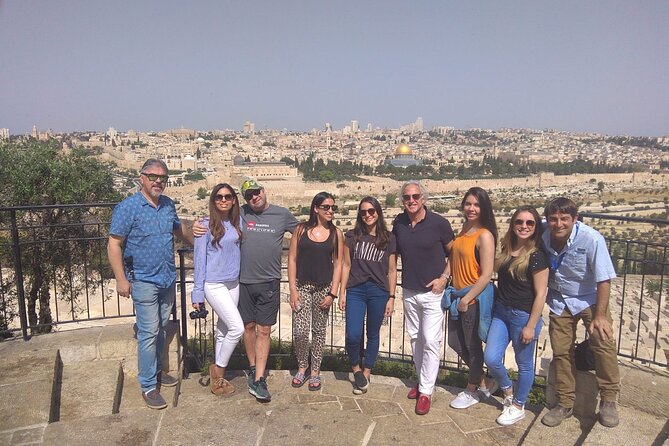
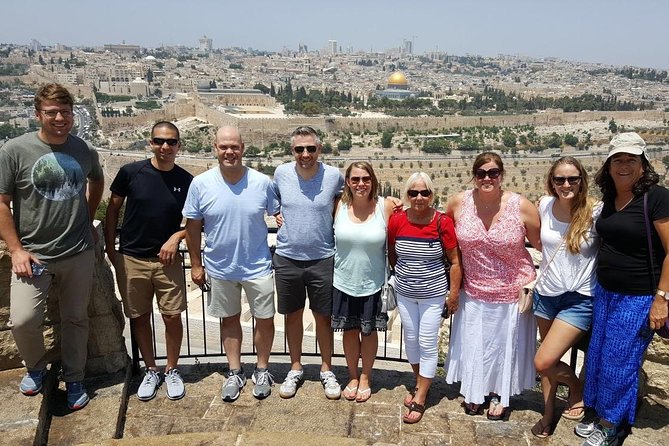
Your first Jerusalem stop is the Mount of Olives, where you get the classic panoramic view across the city. From here, the Temple Mount and the Old City sit in front of you, while the Judean Desert stretches eastward.
This is the right place to begin because the view gives the rest of the day a sense of direction. Your guide can point out the major parts of Jerusalem before you enter its crowded lanes. The stop is scheduled for about 30 minutes, enough for photographs and an explanation, but not for a long walk around the hill.
For Christian visitors, the Mount of Olives also carries strong Biblical meaning. The New Testament connects it with Jesus’ route toward Bethany, his sorrow over Jerusalem, and his ascension. Even if you are more interested in history than religious devotion, the viewpoint helps you understand why this hill has mattered for centuries.
Gethsemane brings the story down to ground level
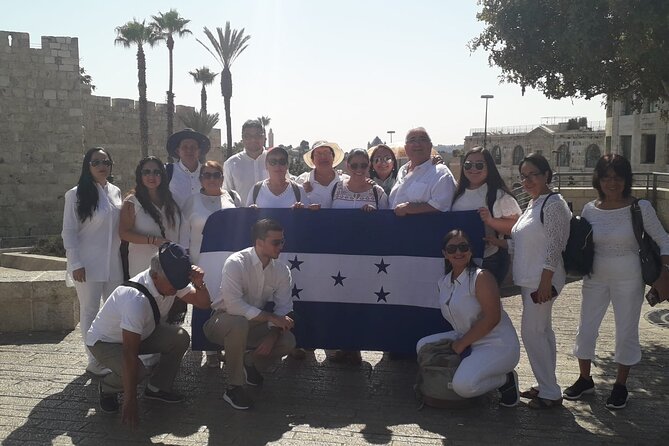
At the foot of the Mount of Olives, you visit the Garden of Gethsemane. The garden is associated with Jesus’ prayer and arrest before the crucifixion, and several adjacent church-owned olive groves are identified with the Biblical site.
This is a short stop, around 30 minutes, so expect a focused visit rather than a slow garden stroll. Ancient olive trees, church grounds, and the setting beneath the hill create a quieter contrast with the city streets ahead.
The value here is not the number of things you see. It is the connection between the view from the hill and the events remembered below it. Keep your expectations realistic: this is a compact stop within a packed day.
Same part of the country, a completely different day out:
- From Haifa: Guided Day Trip to Nazareth and Sea of Galilee
★ 3.9 · 51 reviews - Haifa Culinary Private Tour
★ 5.0 · 38 reviews - Haifa Port Shore Excursion: Nazareth and Sea of Galilee Day Tour from Haifa Port
★ 4.0 · 36 reviews - Holy Jerusalem Private Tour
★ 5.0 · 24 reviews
Mount Zion connects Jewish and Christian traditions
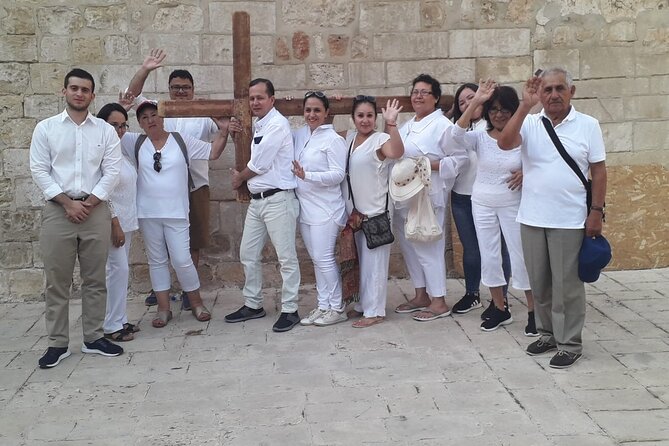
Mount Zion brings two major sites together: King David’s Tomb and the Room of the Last Supper. The hill has a layered meaning in Jewish and Christian tradition, and the stop gives your guide room to explain how the same place can carry different forms of religious importance.
King David’s Tomb is considered one of Judaism’s sacred sites, though there is no certainty that the burial place is truly David’s. Biblical references place David’s burial in the City of David, lower down near the Temple Mount. That distinction is worth hearing because sacred tradition and archaeological certainty are not always the same thing.
The Room of the Last Supper is on an upper floor above the tomb area. The visit lasts about an hour, though the exact time can depend on crowd levels and the pace of the group. This is one place where a clear guide makes a real difference. Avi, in particular, has been praised for linking Biblical detail with the practical needs of a shore excursion, while Abri has also led informative departures.
Walking the Armenian and Jewish quarters
You then enter the Old City and walk through the Armenian and Jewish quarters toward the Cardo. The Cardo is a restored and excavated Roman road, with the southern section built during the reign of Byzantine Emperor Justinian between 527 and 565.
This section is a welcome change from the religious intensity of the churches. You see how Jerusalem was planned and rebuilt over different periods, with ancient street lines appearing beneath the modern city. The scheduled visit is about an hour, and you should expect walking on uneven stone surfaces and through narrow passages.
The Old City is best experienced on foot, but the walking also makes this tour more demanding. Wear firm, comfortable shoes. You will not be covering every quarter in detail, and the exact balance can shift if the group is delayed earlier in the day.
The Via Dolorosa and the Church of the Holy Sepulchre
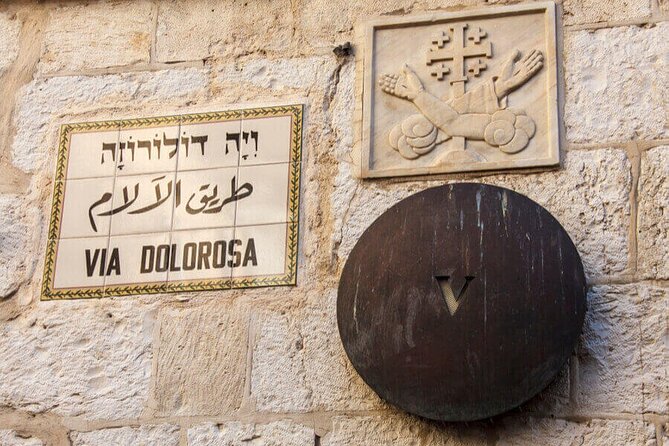
The Christian Quarter brings you to the Via Dolorosa, the processional route associated with Jesus’ final walk toward crucifixion. Its lanes are narrow and stone-paved, with religious meaning built into nearly every turn.
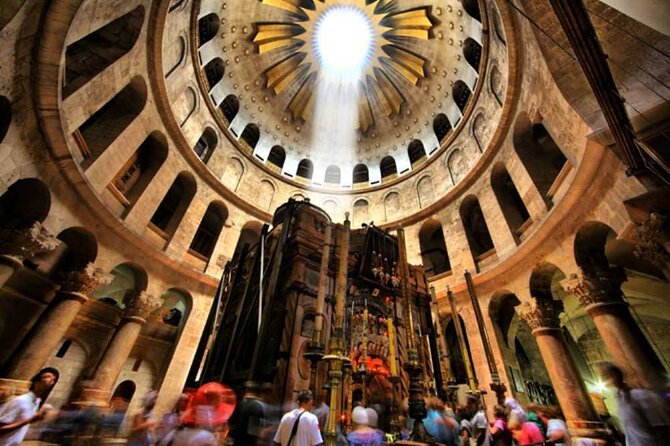
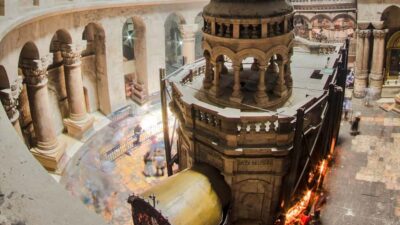
The route leads to the Church of the Holy Sepulchre, the central Christian site in Jerusalem. The church contains the locations traditionally associated with the crucifixion, burial, and resurrection of Jesus. Helena, mother of the Roman Emperor Constantine, identified this area with Calvary, also called Golgotha.
Allow your guide to set expectations. The church is not a quiet, empty sanctuary. It is a working place of worship with several traditions sharing one complex, and access can be affected by services and crowds. One departure saw only the Holy Sepulchre and Western Wall in the main Jerusalem portion, rather than every promised stop, so you should understand that the schedule is subject to traffic and conditions.
That limitation does not make the church less important. It means you should value the explanation and the chance to enter rather than expect a leisurely, uninterrupted visit.
The Western Wall offers a different kind of sacred experience
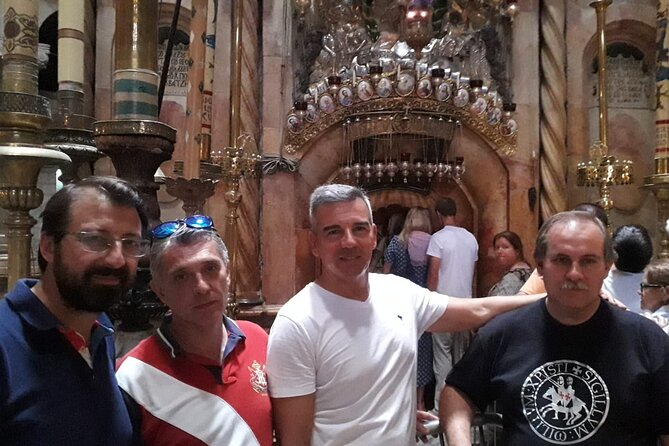
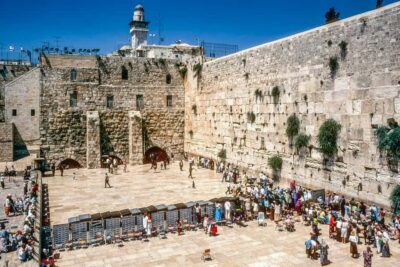
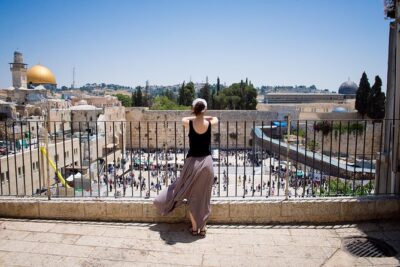
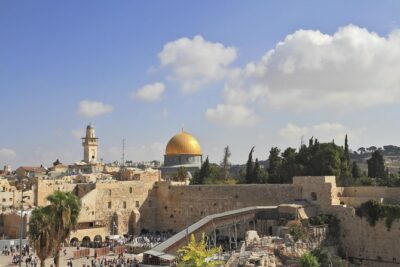
The Western Wall, also called the Kotel, is part of the ancient retaining wall around the Temple Mount. It is Judaism’s holiest accessible place for prayer because entry restrictions limit access to the Temple Mount itself.
You have about 30 minutes here. That is enough to observe the prayer area, take in the atmosphere, and approach the wall according to the site’s rules. The visit is shorter than the Christian sites, but it gives the day a necessary balance. Jerusalem is not only a Christian pilgrimage destination, and this stop helps show the city’s Jewish importance.
Dress and conduct matter at all religious sites. Cover your shoulders and knees, and choose modest smart-casual clothing from the start. Shorts and sleeveless tops can lead to refused entry, which is a needless way to lose time.
Bethlehem and the Church of the Nativity
After Jerusalem, the tour continues to Bethlehem for the Church of the Nativity and Manger Square. This is the part of the day that gives the excursion a second setting, not simply another church in the same city.
Bethlehem is a Palestinian city, and visiting it adds cultural and political context to the religious story. The Church of the Nativity contains the grotto traditionally identified as the birthplace of Jesus. The site is far removed from the polished Christmas-card image many people carry in their minds. The birthplace is a dim rock grotto, and the sense of age comes from the continued use of the place for Christian worship.
The Bethlehem stop is planned for about two hours, making it one of the longer visits. That extra time matters because queues and access inside the church can affect the pace. One departure found Bethlehem especially rewarding because it was not crowded at the time of the visit, but conditions can change from day to day.
Manger Square gives you a little breathing room around the church. Use it to understand the setting rather than rushing straight back to the vehicle. The trip is strongest when you treat Bethlehem as a living city, not only as a Biblical backdrop.
How the timing works from a cruise ship
The full experience lasts about eight to ten hours, adjusted to the ship’s anchoring schedule. That sounds generous until you account for the road distance, traffic, border and city delays, group collection, and the number of sites included.
You should expect a full day with little idle time. A departure that reaches Jerusalem late in the afternoon may have to shorten the Old City portion, particularly in winter when daylight fades early. Another group managed the scheduled sights despite crowds because the guide and driver adjusted the route and used back streets, but that kind of flexibility depends on conditions.
The return transfer is included and coordinated with the ship’s departure time. Still, give the operator accurate re-boarding information when booking. A shore excursion is only good value if it gets you back to the port with a sensible margin.
The guides can make or break the day
The best feedback centers on the guides’ ability to explain Biblical and historical details while adjusting the order of stops. Avi has been singled out for being personable, flexible, and especially good at shaping the day around what the group had already seen. Abri has also led a well-received departure and managed to fit smaller sites into a busy schedule.
That flexibility is useful in Jerusalem, where fixed plans can collide with crowds, ceremonies, traffic, and access rules. A good guide will help you understand what is being shortened and why.
There is also a serious warning. One booking ended with a passenger waiting two hours because the guide did not appear and no contact was made. That is an extreme failure, not a normal feature of the tour, but it makes the COMPASS meeting sign and the emergency contact details worth taking seriously. Arrive at the stated meeting point and keep your phone available.
Who should book this tour?
Book it if you are arriving by cruise ship, want the major Christian and Jewish sites, and prefer one organized day over arranging several separate transfers. It is particularly well suited to a first visit, a religious pilgrimage with limited time, or anyone who wants Bethlehem included without planning the cross-border logistics alone.
It is less suitable if you want a relaxed Jerusalem day. Jerusalem itself can fill an entire day, and adding Bethlehem means long hours on the road and a brisk pace at several stops. It is also not ideal if you need generous personal space in the vehicle or dislike fixed group schedules.
The $255 price is fair when you count the port pickup, return transfer, licensed guide, air-conditioned transport, and included entrance fees. It becomes less attractive if your main goal is slow exploration, a long meal, or independent shopping. Food and drinks are not included, so plan for your own lunch and carry water.
Should you book the Jerusalem and Bethlehem tour?
I would book this tour for the breadth of the experience and the practical value of a ship-timed return. You can see the Mount of Olives, Gethsemane, Mount Zion, the Old City, the Holy Sepulchre, the Western Wall, and Bethlehem in one demanding day.
Book with clear expectations: traffic may cut into sightseeing, a full small group can feel cramped, and not every stop is guaranteed to receive equal time. If those limits sound acceptable, this is an efficient way to reach the region’s most important sacred places from Haifa Port. If you want depth rather than coverage, choose a Jerusalem-only visit instead.
FAQ
Where does the tour begin and end?
The tour begins at Haifa Port and includes a return transfer to Haifa Port, coordinated with your cruise ship’s schedule.
How long does the tour last?
The tour lasts approximately eight to ten hours, depending on the ship’s anchoring schedule and the day’s road and sightseeing conditions.
What sites are visited in Jerusalem?
The planned Jerusalem stops include the Mount of Olives, Garden of Gethsemane, Mount Zion, King David’s Tomb, the Room of the Last Supper, the Armenian and Jewish quarters, the Cardo, the Via Dolorosa, the Church of the Holy Sepulchre, and the Western Wall.
Is Bethlehem included?
Yes. The tour continues to Bethlehem for the Church of the Nativity and Manger Square, with approximately two hours planned there.
What should I wear?
Wear smart-casual clothing that covers your shoulders and knees. Shorts and sleeveless tops are not allowed at the religious sites and may result in refused entry.
Is lunch included?
No. Food and drinks, including lunch, are not included in the tour price.
Just added around Haifa
- Full Day Tour to Nazareth and the Sea of Galilee★ 5.0 · 4 reviews
- VIP Culinary Tour in Haifa★ 5.0 · 13 reviews
- Full-Day Private Tour from Haifa to Old City of Acre★ 5.0 · 5 reviews
- Haifa’s specials spots★ 5.0 · 6 reviews
- Holy Jerusalem Private Tour★ 5.0 · 24 reviews
- Haifa and Acre Private Tour★ 5.0 · 7 reviews
- Haifa Shore Excursion: Private Jerusalem and Dead Sea Day Trip★ 4.5 · 5 reviews
- Haifa Shore Excursion: Private Nazareth and Sea of Galilee Day Trip★ 4.5 · 7 reviews
Bethlehem & Jericho Tours, compared.
Day Tour to Jerusalem and Bethlehem from Tel Aviv
Read our review →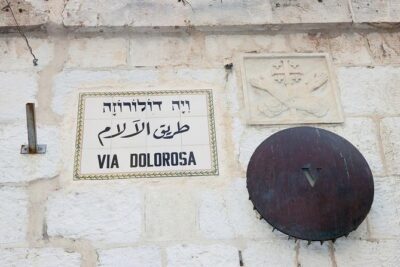
Jerusalem and Bethlehem Day Tour from Jerusalem
Read our review →
Travel to Bethlehem Half Day Guided Tour from Jerusalem & TelAviv
Read our review →
Ashdod Shore Excursion: Jerusalem and Bethlehem – for cruise ship guests only
Read our review →
Browse the lists this tour appears in