
Reviewed · CAESAREA & ACRE TOURS
Highlights of Caesarea, Haifa, Acre and Rosh Hanikra Tour from Tel Aviv
Caesarea’s Roman amphitheater, Acre’s Crusader citadel, and Rosh Hanikra’s sea caves pack thousands of years into one long day. I like the door-to-door pickup and the fact that entrance fees are included, so you can focus on the sights instead of the logistics. I also like the mix of Roman ruins, Baha’i architecture, Crusader remains, and modern borderland scenery.
The trade-off is time. This is a broad sampler, not a slow look at each place. A full vehicle may carry up to 35 people, and one departure had about 40, so the day can feel hurried if your ideal outing includes long museum visits or quiet wandering.
Key points to know before booking
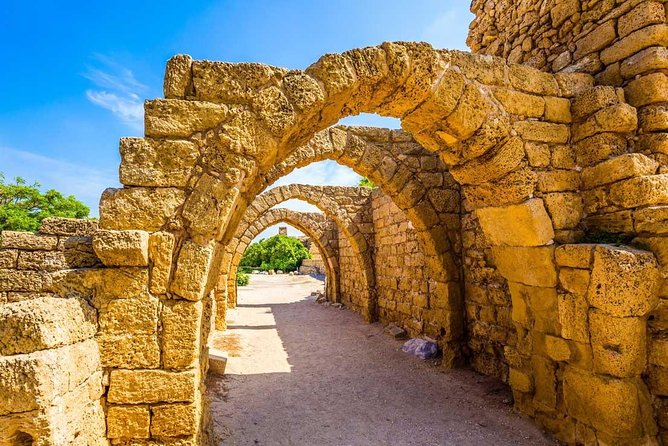
- Caesarea opens the day with Roman ruins, including a theater still used for performances and part of an ancient hippodrome.
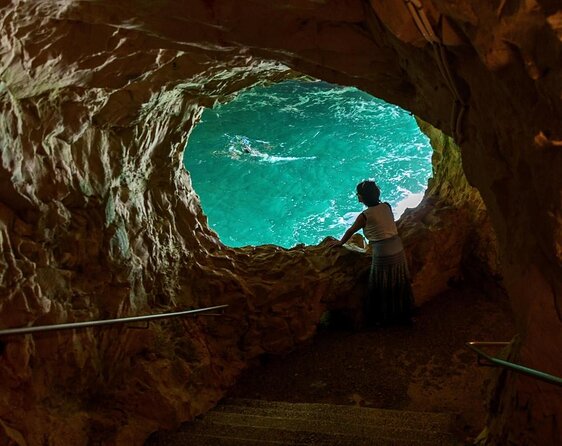
- Rosh Hanikra brings the biggest visual surprise, with a cable-car descent to limestone grottoes at Israel’s northern edge.
- Acre gives you the most substantial historic visit, including the Old City and Crusader remains inside the citadel.
- Haifa is a short scenic stop, focused on the Baha’i Shrine and its 19 flower-filled terraces.
- Hotel pickup, drop-off, transport, guiding, and entry fees are included, while food and drinks are not.
- The early 6:40 am start and 10-hour schedule matter, since this tour covers a great deal of ground in one day.
Four northern coast highlights in one demanding day
This tour is built for a specific kind of day: you want to see as much of Israel’s northern Mediterranean coast as possible, but you do not have several extra days to arrange it yourself. From Tel Aviv, you ride in an air-conditioned vehicle, stop at four major destinations, and return to your hotel after roughly 10 hours.
I see the appeal. Caesarea, Haifa, Acre, and Rosh Hanikra are not interchangeable stops. Each gives you a different piece of the country’s story. Caesarea is Roman and seafront. Haifa is modern, orderly, and tied to the Baha’i faith. Acre is a layered old port with Crusader and Ottoman remains. Rosh Hanikra is about cliffs, waves, caves, and the Lebanese border.
The schedule also explains the limits. You are not getting a full day in Acre or a museum-by-museum visit in Caesarea. You are getting a guided introduction, useful context, and an efficient route that would be difficult to duplicate in one day without a vehicle.
Guide quality can shape the whole experience. Michael A. is specifically associated with attentive, polite, clear guiding, while another departure used both English and French, which made the commentary harder to follow. If you want a quiet, self-directed day, this may feel too managed. If you want someone else handling directions and site connections, that is a major benefit.
More Caesarea, Acre and Rosh Hanikra days:
- From Tel Aviv: Caesarea, Haifa and Akko Day Trip
★ 4.4 · 744 reviews - Caesarea, Rosh Hanikra and Acre Day Trip from Tel Aviv
★ 4.5 · 406 reviews - Caesarea, Haifa & Akko Day Trip from Jerusalem
★ 4.3 · 96 reviews
Caesarea, where Herod built a Roman showpiece
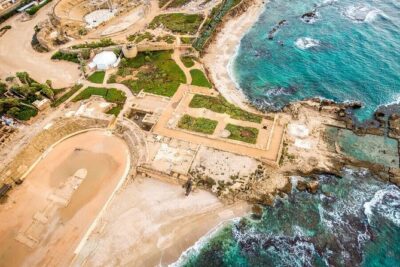
Your first major stop is Caesarea National Park, about an hour in the supplied schedule. Herod built the city and named it for Caesar, and the surviving remains show that this was no modest harbor town. The ruins include gateways, a moat, walls, rooms, and public entertainment spaces.
The Roman amphitheater is the star. It remains remarkably complete and is still used for performances by Israeli and international artists. That modern use helps you picture the building as more than a pile of stones. It was designed for crowds, spectacle, and public life, and its position near the Mediterranean gives the visit a strong sense of place.
Next to the amphitheater, you can see part of the old hippodrome. This was built for races, so the site offers two different forms of Roman entertainment in one compact area. I like this stop because you can understand the city’s ambition without needing a long lecture or an enormous museum collection.
One hour is enough for a brisk introduction. It is not enough for an unhurried archaeological study. You will want comfortable shoes and a willingness to keep moving, since the group then heads north. The included admission fee is helpful here, as it removes one extra expense from a day already priced at $931.
That price deserves attention. At first glance, $931 is high for a 10-hour excursion, especially if you are booking for more than one person. Its value depends heavily on what that figure covers in your booking and how much you value private planning, hotel transport, a guide, and several entrance fees. This is not a budget sightseeing bus. It is a convenience-heavy day for someone short on time.
Haifa and the 19 terraces of the Baha’i Gardens
The Haifa stop is brief, about 20 minutes. You pass through the city and pause to see the Baha’i Shrine and gardens, where 19 terraces descend down the mountain toward the city.
The terraces are carefully planted and arranged, with flowers and geometric garden designs running down the slope. From the viewing area, you get both the formal gardens and the city below. It is a strong photo stop and a welcome change from ancient stone.
Do not book this outing expecting a full visit to Haifa. The timing is designed for a view, not for a long walk through the gardens, a museum visit, or a detailed exploration of the city. The gardens are free to see from the stop, which keeps the pace moving and the costs simpler.
This is also the part of the day most likely to feel too short. One departure could not go into the Baha’i Gardens, so access may depend on timing and site conditions. You should treat Haifa as a scenic pause rather than a main destination.
Still, it earns its place. After Caesarea’s ruins, the terraces give you a clear look at a living religious center and a very different style of design. In a packed day, that contrast matters.
Rosh Hanikra, cable cars and wave-cut grottoes
Rosh Hanikra is the northernmost point on Israel’s Mediterranean coast and, for many people, the most memorable stop. You descend by cable car into limestone grottoes formed by the repeated force of the sea against the rocks.
The ride down adds a little drama, but the caves are the real reason to come. Inside, the water and rock create a cooler, darker setting than the open coast. The sound of the waves becomes part of the experience, and the formations feel very different from the engineered ruins at Caesarea or Acre.
The schedule gives Rosh Hanikra about an hour, followed by another 40-minute portion described around the grottoes and Lebanese border area. In practical terms, this is a substantial stop, though the exact order may vary. You will have time to see the caves and look toward the border, but not to turn the visit into a long coastal walk.
The Lebanese border adds political and geographic weight to the stop. You are not simply visiting a scenic cave. You are at the far northern end of Israel, close to Lebanon, looking at a boundary that has shaped the modern region. The tour keeps this visit focused and structured rather than offering an extended border discussion.
Because Rosh Hanikra depends on the cable car and the sea caves, conditions can affect the experience. The supplied information does not promise that every feature will operate in every circumstance. Consider this before treating the stop as the single reason to book.
A few more Tel Aviv half-days to weigh up
- Walking Tour of Akko (Half-day)
★ 5.0 · 84 reviews - Caesarea, Acre & Rosh Hanikra Day Trip from Jerusalem
★ 4.0 · 78 reviews - Unforgettable Tour to Caesarea, Haifa, Acre and Rosh HaNikra from Tel Aviv
★ 4.0 · 56 reviews - Tel Aviv/Jerusalem: Caesarea, Haifa & Akko Day Tour
★ 4.5 · 53 reviews
Acre’s Old City and the Crusader citadel
Acre, also called Akko, receives about two hours when the Old City and citadel portions are considered together. This is the tour’s most layered historic stop, and I would give it close attention.
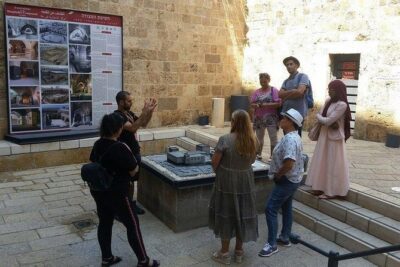
The Old City has the feel of a working place as well as an archaeological one. You get streets, old buildings, and the sense of a port that has been used and contested across centuries. The short visit is not designed for wandering every lane, but it gives you time to see why Acre is such an important stop on Israel’s coast.
The citadel adds the strongest historical detail. You can see Crusader remains, a prison used under Turkish rule, and gallows connected to the British Mandate period. The gallows were used to hang Jews who violated British limits on Jewish immigration to Palestine after World War II. That is a difficult subject, but it gives the site a direct connection to the events that preceded the creation of modern Israel.
The combination of Crusader stonework, later prison use, and Mandate-era history makes the citadel more than a medieval monument. Different authorities reused the same place for different purposes. Your guide’s explanation is especially useful here because the remains alone do not tell the whole story.
The drawback is pace. You may have time to eat, shop, and use the bathroom, but you probably will not have enough time to follow every sign or explore every corner. One departure moved so efficiently that the group covered a remarkable amount in one day, while another felt rushed through descriptions. Your experience will depend partly on the guide and the group’s size.
What the 6:40 am start really gives you
Pickup begins early, with a stated start time of 6:40 am. That is not a minor detail. You will spend much of the day on the road, and the early departure is what makes the four-stop route possible.
Hotel pickup and drop-off from Tel Aviv remove a major headache. You do not need to find a meeting point across the city or arrange separate transport to Caesarea. At the end of the day, you return to your hotel rather than trying to navigate home after a long day.
The air-conditioned vehicle is another practical advantage. Northern coastal weather can be hot, and the distance between sites would make a self-drive day tiring. You can rest between stops, listen to the guide, and avoid dealing with directions.
The group limit is listed as 35 people, though one account describes a group of about 40. That difference matters. A smaller group usually makes it easier to hear explanations, stay together, and ask a question. A larger group can feel like a procession, especially at Acre or Rosh Hanikra, where there is a lot to see in a short period.
Food and drinks are not included. You should plan for that, since the day runs from early morning into the afternoon or evening. The available information confirms time for eating, shopping, and bathroom breaks, but it does not identify a specific meal stop or restaurant. Bring your own plan rather than expecting a provided lunch.
Is $931 a fair price for this day?
The listed price of $931 places this tour in the expensive category. I would not call it a bargain. You are paying for hotel transport, an air-conditioned vehicle, a professional guide, entrance fees, and the ability to cover four distant coastal sites without building the route yourself.
The value is strongest if you are in Tel Aviv for a short visit. Booking separate transport to Caesarea, Haifa, Acre, and Rosh Hanikra would take planning, and a private vehicle for the full route could cost a great deal. The tour also handles parking, route decisions, and timing.
The value is weaker if you are staying in Israel long enough to visit the north at a slower pace, or if the $931 applies to just one participant. In that case, compare the cost with a separate visit to Acre and Caesarea, since those places reward extra time. You should also confirm exactly how the quoted price applies to your party before paying.
The included entrance fees help. You will not need to keep adding admission charges at Caesarea or the citadel, and the tour presents the costs upfront. Insurance, food, and drinks are not included, so leave room in your budget for those items.
Who will get the most from this tour?
I would choose this tour if you have limited time, want a broad introduction to northern Israel, and prefer not to drive. It suits first-time visitors who want clear context and a fixed route rather than a self-guided day.
It also works well for families with older children. The minimum age is four, most people can participate, and the variety helps keep the day from feeling like one long archaeological visit. Still, the early start and 10-hour length may test young children.
History fans will find plenty to like at Caesarea and Acre. People drawn to scenery will prefer Rosh Hanikra and the Haifa viewpoint. You get both, but neither type of experience receives a full day.
I would hesitate if you dislike group travel, need a slow pace, or want extended time at the Baha’i Gardens. The schedule is ambitious by design. You should be comfortable seeing the main points, listening while moving, and accepting that some locations will receive only a short visit.
Should you book the northern coast tour?
Book it if your priority is coverage. In one day, you see Roman Caesarea, Haifa’s terraced gardens, the grottoes at Rosh Hanikra, the Lebanese border area, and Acre’s Old City and citadel. Hotel pickup and included admissions make the day easy to manage.
Skip it if you want depth. Acre alone can fill much more than an hour, Caesarea deserves time for careful exploration, and Haifa receives only a brief stop. The $931 price also demands that you value convenience and transport.
My practical advice is simple: use this as a high-speed introduction, not your final word on the northern coast. If Rosh Hanikra and Acre are priorities and you have only one free day, the route makes sense. If you can spare several days, slow down and visit the places separately.
Free cancellation is available when you cancel at least 24 hours before the start time. Cancellations within 24 hours are not refunded, and changes inside that window are not accepted.
FAQ
Where does the tour start?
The tour starts with hotel pickup in Tel Aviv. The stated start time is 6:40 am.
How long does the tour last?
The tour lasts approximately 10 hours, including travel between the northern coastal sites and the return to your Tel Aviv hotel.
Which places does the tour visit?
The route includes Caesarea National Park, Haifa’s Baha’i Gardens, Rosh Hanikra, the Lebanese border area, Acre’s Old City, and the Citadel of Acre.
Is hotel pickup and drop-off included?
Yes. Pickup and drop-off from your Tel Aviv hotel are included.
Are entrance fees included?
Yes. The tour includes entrance fees for the included attractions.
Is food included?
No. Food and drinks are not included. Time is provided for eating, but no specific meal arrangement is stated.
How many people can join the tour?
The stated maximum is 35 people. One account describes a departure with about 40 people, so the actual group size may vary.
Can children join the tour?
Yes. The minimum starting age is four years old, and most people can participate.
What is the cancellation policy?
You receive a full refund if you cancel at least 24 hours before the experience starts. Cancellations or changes made less than 24 hours before the start time are not accepted and are not refunded.
Just added around Tel Aviv
- Private wine tour of Northern Israel★ 5.0 · 4 reviews
- Package VIP Skip Line Services in BGN Airport with Transfer to Tel aviv Hotels★ 5.0 · 3 reviews
- Israel Holy Land Christian Tour Package 7 days – Private Tour Package★ 5.0 · 31 reviews
- VIP Tel Aviv airport Terminal 3 Fast Track Skip Line From plane★ 4.5 · 9 reviews
- Tel Aviv and Jaffa Most Exciting Private Tour★ 4.5 · 13 reviews
- Food & Drink Private Guided Tour in Tel Aviv★ 5.0 · 3 reviews
- Urban Walking & Food Tour in Tel Aviv★ 5.0 · 7 reviews
- Tel Aviv & Jaffa Urban Bike Expedition★ 5.0 · 33 reviews
Caesarea & Acre Tours, compared.
Caesarea, Rosh Hanikra and Acre Day Trip from Tel Aviv
Read our review →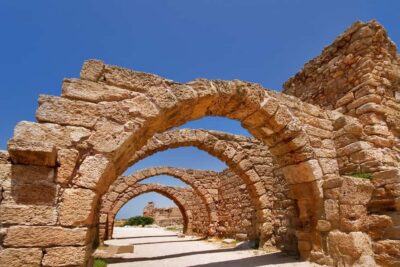
Caesarea, Acre & Rosh Hanikra Day Trip from Jerusalem
Read our review →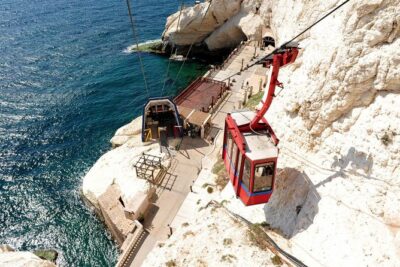
Unforgettable Tour to Caesarea, Haifa, Acre and Rosh HaNikra from Tel Aviv
Read our review →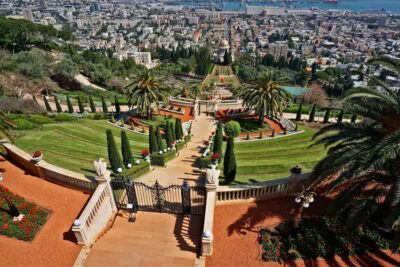
Tel Aviv/Jerusalem: Caesarea, Haifa & Akko Day Tour
Read our review →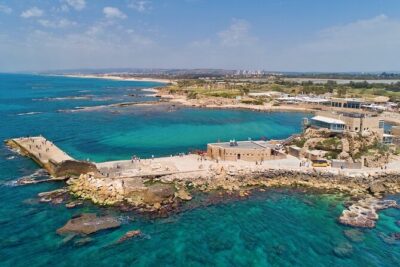
Browse the lists this tour appears in