
Reviewed · WALKING TOURS IN TEL AVIV
Urban Walking & Food Tour in Tel Aviv
Tel Aviv’s story unfolds best on foot, and this tour connects the city’s founding streets with its everyday pleasures. You begin at Habimah Square, follow Rothschild Boulevard through the White City, then move into Neve Tzedek, Carmel Market, and the old Yemenite quarter of Kerem HaTeimanim. Guide Menno adds personal stories, urban detail, and plenty of food stops.
I like the way the route links architecture with immigration history, rather than treating Tel Aviv as only a beach and nightlife city. I also like the generous food portion at Carmel Market, where tastings can serve as a real meal rather than a few token bites. The main consideration is the price: $500 per group is reasonable for a private group of up to six, but food costs about $40 per person extra, and five hours of walking can feel long in hot weather.
Key points to know before booking
- Follow Tel Aviv’s founding story: Rothschild Boulevard, Ahuzat Bayit, the Founders Monument, and Meir Dizengoff’s house explain how the modern city began.
- See the White City up close: Bauhaus and International-style buildings appear throughout the central route, not behind museum glass.
- Expect a strong guide-led experience: Menno is praised for clear historical explanations, local recommendations, and contagious enthusiasm.
- Save room for Carmel Market: The market section lasts about an hour and 45 minutes, with food tastings and time around stalls, cafés, and small eateries.
- Prepare for a full morning on foot: The tour lasts about five hours and includes several short stops, neighborhood walks, and market wandering.
- Budget beyond the tour fee: The group price covers fees, but food and drinks are estimated at about $40 per person.
Starting at Habimah Square and Rothschild Boulevard
The meeting point is Habimah Theatre at Tarsat Avenue 2, with a 10:00 am start. Habimah Square is a useful place to begin because several major streets meet here, including Rothschild Boulevard, Hen Boulevard, Dizengoff Street, and Ben-Zion Boulevard.
The square is home to Israel’s national theatre, one of the country’s first Hebrew-language theatres. Your guide uses this opening point to place Tel Aviv in its modern cultural setting before turning to the city’s earliest neighborhoods.
From here, you walk along Rothschild Boulevard, Tel Aviv’s first major boulevard and one of its best-known streets. The route is not simply a parade of façades. Menno explains how the boulevard relates to the city’s growth, the families who funded early development, and the movement from a small Jewish neighborhood into a modern Israeli capital.
The boulevard is also where the city’s Bauhaus identity becomes clear. Many buildings use the International style, with clean lines and practical forms designed for the hot climate. You will see these buildings as part of ordinary city life, mixed with cafés, offices, trees, traffic, and newer construction.
The route includes a few short detours but returns to Rothschild Boulevard until reaching Ahuzat Bayit, the first neighborhood of Tel Aviv. This makes the opening section especially useful if you are new to the city. You gain a basic map of central Tel Aviv while hearing why the streets look the way they do.
More Walking Tours in Tel Aviv
- Tel Aviv: Jaffa Half-Day Walking Tour
★ 4.5 · 70 reviews - Tel Aviv: Florentin Saturday Walking Tour
★ 3.5 · 65 reviews - Tel Aviv: Jaffa & Carmel Market Walking Tour
★ 4.7 · 60 reviews
Small architectural details and unusual addresses
Several brief stops add texture to the main story. At King Albert Square, near Nachmani Street 23, you see the Norman Hotel and the Pagoda House. The contrast is part of the appeal: one is a grand boutique hotel, while the other has an eclectic design that feels less expected in this polished central district.
At Beit Levin, also called the Castle and the KGB House, the guide explains the building’s unusual nicknames. The stop is only about five minutes, but it gives you the kind of local detail that is easy to miss when walking independently.
The route then passes Yehuda Ha-Levi Street, where you see one of the stations connected with Tel Aviv’s new light rail. This is a small but useful urban-planning note. Tel Aviv is not frozen in its early architectural image. The city is still changing, and the new rail system is part of that change.
The Great Synagogue is another quick stop with a good lesson in city design. It is a large and important building, yet its appearance and setting make it easy to walk past without noticing. The guide explains how it was planned by Tel Aviv’s founders but built years after their original neighborhood took shape.
These short stops are not attractions that require long visits. Their value comes from the explanation around them. If you prefer to spend a great deal of time inside museums or historic buildings, this tour may feel too focused on outdoor interpretation. If you enjoy learning why an ordinary street corner matters, the pace works well.
Founders, mayors, and the birth of a city
On Rothschild Boulevard, the Founders Monument and Fountain marks the Jewish families who contributed money to create a new modern neighborhood. This is one of the tour’s strongest history points because it turns a broad story about Tel Aviv’s origins into a specific public memorial.
You also see the statue of Meir Dizengoff, Tel Aviv’s first mayor, on horseback in front of his former home. The house carries national importance as the place where David Ben-Gurion declared the new Jewish state in 1948.
That connection gives the walk a wider frame. Tel Aviv is not only a young city of restaurants, design shops, and nightlife. Its streets are tied to the creation of a Jewish state and to the political decisions that shaped modern Israel.
Migdal Shalom Tower offers a different view of development. It was the first skyscraper in the Middle East and was built on the location of HaGymnasia, the first Hebrew high school. The site shows how quickly the city’s priorities changed from low-rise neighborhood building to commercial and metropolitan growth.
At Herzl Street 2, you see the house of Akiva Weiss, who initiated the building of Tel Aviv, along with a statue of Alfred Dreyfus. Dreyfus, a Jewish captain in the French Army, became a symbol of antisemitism and a major influence on Theodor Herzl. This is a compact stop, but it connects Tel Aviv’s founding with the wider Jewish political movement in Europe.
Neve Tzedek, from early suburb to design district
Neve Tzedek was the first small Jewish neighborhood outside the walls of Jaffa in the 19th century. Other small neighborhoods followed, each associated with different Jewish social or ethnic groups. Today, the name Neve Tzedek is used for the wider area.
You walk past houses and synagogues that are more than a century old, then see the neighborhood’s present-day character: low-rise streets, design shops, fashion boutiques, handicraft stores, cafés, and restaurants. The change is easy to read in a short walk.
This is one of the tour’s most appealing sections because the neighborhood carries several eras at once. Old homes sit near polished storefronts. The area has been gentrified, so it is not a preserved time capsule, but that is part of the point. You see how Tel Aviv reuses older districts instead of leaving them outside the city’s modern life.
The Aharon Chelouche House adds a less familiar immigration story. Chelouche arrived in the Holy Land during a Mizrahi immigration wave, about 50 years before later Ashkenazi immigration movements were given numbered names. He paid for the land that became Neve Tzedek and built its first house with a private synagogue.
That detail broadens the usual account of Tel Aviv’s beginnings. The city’s early Jewish population was not one uniform community. Different groups arrived with distinct backgrounds, customs, and resources, and those differences shaped the neighborhoods that later became part of Tel Aviv.
The route continues through Park HaMesila, a newer urban park built along the old Ottoman railway route. It is planned to connect the beach with downtown, while the Red Line of the Tel Aviv light rail will run below it. This stop brings the story into the present, showing how old transport routes are being adapted for public space and new transit.
At the Suzanne Dellal Centre, you see a restored piazza built on the former Alliance School for Boys and Yechieli Girls School, dating from 1908. The centre is now associated with modern dance, including the Batsheva Dance Company and Inbal Dance Theater. It is a pleasant place to pause and a good example of a historic site given a new cultural purpose.
More food tours in Tel Aviv:
- Carmel Market Tasting Tour – LocaLocal
★ 5.0 · 140 reviews - Tel Aviv Food Tour of the Carmel Market
★ 4.0 · 29 reviews - Carmel Market Tasting Tour
★ 5.0 · 25 reviews - Levinsky Market Tasting Tour
★ 5.0 · 8 reviews
Carmel Market and the Yemenite quarter
The longest part of the tour takes place at Carmel Market, also called Shuk HaCarmel. Allow about an hour and 45 minutes here. The market sells clothing, spices, vegetables, electronics, and a wide range of prepared food.
This is where the tour changes from city history to eating and people-watching. You may encounter traditional stalls beside newer cafés, bars, restaurants, and chef-owned food counters. The supplied food budget is about $40 per person, and the tastings are described as varied enough to fill you for the rest of the evening.
That matters when comparing this tour with a standard food walk. You are not just stopping for one pastry and a sample of cheese. The market portion is long enough for a substantial food experience, although the exact dishes can vary.
The tour materials describe lunch as a feature, but the cost details state that lunch, food, and drinks are not included and will run about $40 per person. Plan on paying this additional amount. If you have allergies, dietary restrictions, or strong food preferences, ask for details before booking because the available information does not specify a fixed menu.
The market can be crowded and noisy, and the ground may be uneven in places. That is part of its character, but it can also make conversation harder than on the quieter boulevard sections. Menno’s role is important here, since a local guide can help you understand what you are seeing and direct you toward the food stops included in the experience.
The final neighborhood is Kerem HaTeimanim, or the Yemenite Quarter. It began as a poor district for Jewish immigrants from Yemen in the early 19th century. The original tin shacks and wooden houses are gone, but the narrow streets and low ground-level homes remain.
The Yemenite community also helped create Carmel Market, which began as a market serving local needs and grew into Tel Aviv’s largest marketplace. This connection gives the food section more meaning. The market is not just a modern dining zone. It grew from the history of a neighborhood and the people who lived there.
The tour ends at Coffee at the Market, HaCarmel Street 33. You finish in the middle of the market area rather than returning to the starting point, so the location is useful if you want to continue eating, shopping, or exploring central Tel Aviv afterward.
How the five-hour route feels
The tour is described as a private activity, with only your group participating. The price is $500 per group of up to six, which works out to about $83 per person before food if you fill all six places. For two people, it becomes a much higher per-person cost, but you receive a private guide and do not share the pace or questions with strangers.
The supplied details also mention a maximum of 10 participants. Since the price is specifically given for a group of up to six and the activity is described as private, confirm the group limit when booking if your party is larger than six.
Five hours is enough time to cover a large part of central Tel Aviv without rushing through every stop. Still, this is a serious walking morning. The route includes Rothschild Boulevard, Neve Tzedek, Park HaMesila, Carmel Market, and Kerem HaTeimanim. In hot weather, the pace may feel demanding.
One useful point comes from Menno’s handling of the heat. He is described as seeking shade, bathrooms, and benches during the walk. That does not remove the need for sun protection and comfortable shoes, but it suggests the route is adjusted with real conditions in mind.
The tour is near public transportation, starts at 10:00 am, and ends at Carmel Market. Most people can take part, and service animals are allowed. The ticket is mobile, so you do not need a printed voucher.
What makes Menno’s guiding style useful
Menno is the named guide connected with the experience, and his role appears to be a major part of its appeal. He explains history, architecture, and urban development in clear terms, while also pointing out bars and restaurants for the rest of your stay.
That combination is especially useful on a first visit. You learn where the city began, how its neighborhoods changed, and where you might return for a meal or a drink later. His personal connection to Tel Aviv also helps keep the tour from feeling like a list of dates and building names.
The strongest praise focuses on his enthusiasm, clear explanations, professionalism, and ability to combine history with practical local advice. That makes this a good first-day activity if you want help deciding how to spend the rest of your time in Tel Aviv.
Who should book this walking and food tour?
I would choose this tour if you want a broad introduction to Tel Aviv in one morning and enjoy moving between history, architecture, neighborhoods, and food. It suits first-time visitors especially well, since the route gives you a working map of the city center and several ideas for later meals and outings.
It is also a good match for families or small private groups who want to ask questions freely. The private format lets you spend more time on the subjects that interest you, although the listed stop times suggest that many individual locations receive only a short explanation.
I would think twice if you want a relaxed food-only tour, a museum visit, or a short stroll. The first half is strongly focused on city history and architecture, while the food comes later. The five-hour length and extra food cost should also fit your plans.
Cancellation is free up to 24 hours before the 10:00 am start. Changes made within 24 hours are not accepted, and poor weather may lead to a new date or a full refund.
Final verdict: a strong first look at Tel Aviv
This experience earns its price best when you fill the group and want a private introduction rather than a simple market tasting. Its strongest feature is the combination of Tel Aviv’s founding story, Bauhaus streets, immigrant neighborhoods, and a substantial market stop.
Book it if you want Menno’s historical context and local recommendations, and if you are comfortable adding about $40 per person for food and drinks. Choose another option if you want a shorter walk, a set menu, or a tour devoted almost entirely to eating.
FAQ
Where does the tour begin?
It begins at Habimah Theatre, Tarsat Avenue 2, in Tel Aviv-Yafo.
What time does the tour start?
The start time is 10:00 am.
Where does the tour end?
It ends at Coffee at the Market, HaCarmel Street 33, in the Carmel Market area.
How long does the tour last?
The tour lasts approximately five hours.
Is the tour private?
Yes. The activity is described as private, so only your group participates.
How many people can join?
The price is listed for a group of up to six people. The tour details also mention a cap of 10 participants, so confirm the limit if your group is larger than six.
Is lunch included in the price?
Food and drinks are not included in the stated tour price. You should budget about $40 per person for lunch, food, and drinks.
What neighborhoods are included?
The route includes the area around Habimah Square, Rothschild Boulevard, Neve Tzedek, Carmel Market, and Kerem HaTeimanim.
Are service animals allowed?
Yes, service animals are allowed.
What happens if the weather is poor?
The experience requires good weather. If it is canceled because of poor weather, you will be offered another date or a full refund.
Just added around Tel Aviv
- Private wine tour of Northern Israel★ 5.0 · 4 reviews
- Package VIP Skip Line Services in BGN Airport with Transfer to Tel aviv Hotels★ 5.0 · 3 reviews
- Israel Holy Land Christian Tour Package 7 days – Private Tour Package★ 5.0 · 31 reviews
- VIP Tel Aviv airport Terminal 3 Fast Track Skip Line From plane★ 4.5 · 9 reviews
- Tel Aviv and Jaffa Most Exciting Private Tour★ 4.5 · 13 reviews
- Food & Drink Private Guided Tour in Tel Aviv★ 5.0 · 3 reviews
- Tel Aviv & Jaffa Urban Bike Expedition★ 5.0 · 33 reviews
- Tel Aviv: Carmel Market Food Tasting Tour “Shuk Hacarmel”★ 5.0 · 5 reviews
Walking Tours in Tel Aviv, compared.
The full walk of Tel Aviv! – The city,Jaffa and the German colony
Read our review →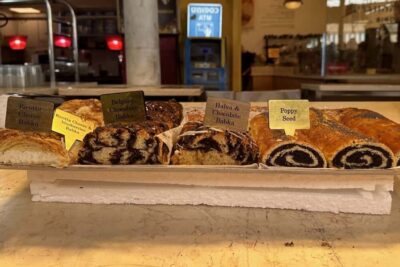
Browse the lists this tour appears in